JSTOR Global Plants Home
  • Home
  • Browse
  • About
  • Access
  • Account
    • Saved Items
    • Profile
  • Log in

Global Plants

Skip to Main Content
  • JSTOR Global Plants Home
  • Global Plants

    • Browse
    • About
    • Access
    • Account
      • Saved Items
      • Profile
Log in
  • Browse
  • About
  • Access
  • Account
    • Saved Items
    • Profile
Advanced Search

Compilation
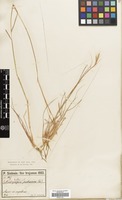
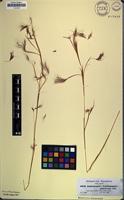
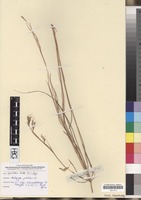
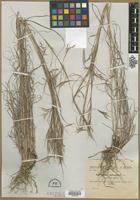
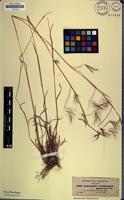
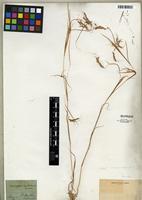
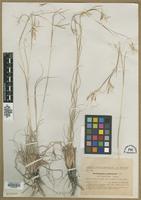
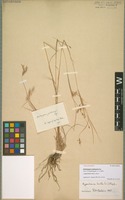
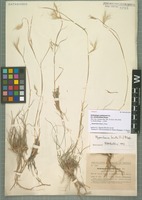
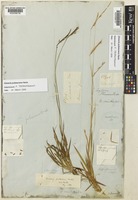
Andropogon pubescens

10 Images see all

Filed as Hyparrhenia hirta (L.) Stapf. [family GRAMINEAE]
Filed as Hyparrhenia hirta Stapf [family POACEAE]
Filed as Hyparrhenia hirta (L.) Stapf [family GRAMINEAE/POACEAE]
Filed as Andropogon pubescens var. filifolia Sennen [family POACEAE]
Filed as Hyparrhenia hirta Stapf [family POACEAE]
Isotype of Hyparrhenia hirta (L.) Stapf [family POACEAE]
Filed as Andropogon pubescens var. breviaristata Sennen [family POACEAE]
Type? of Andropogon pubescens Vis. [family POACEAE]
Isotype of Andropogon pubescens Vis. variety breviaristatus Sennen [family POACEAE]
Dimeria pubescens Hack. [family POACEAE]
Previous
Next

Name

Identification
Hyparrhenia hirta (L.) Stapf [family GRAMINEAE/POACEAE ] (stored under name); Verified by HBG-formal name change, 2011 Andropogon pubescens Vis. [family GRAMINEAE/POACEAE ] Verified by Not on sheet,
Related name
  • Hyparrhenia hirta
  • Andropogon pubescens

Flora

Entry for ANDROPOGON hirtus Linn. [family POACEAE]
Herbarium
Royal Botanic Gardens, Kew (K)
Collection
Flora Capensis
Resource Type
Reference Sources
Entry From
Flora Capensis, Vol 7, page 310, (1900) Author: (By O. STAPF.)
Names
ANDROPOGON hirtus Linn. [family POACEAE], Sp. Plant. 1046;—Thunb. Prodr. 20; Fl. Cap. ed. Schult. 108; Host, Gram. Austr. iv. t. 1; Kunth, Enum. ii. 492; Reichb. Ic. Fl. Germ. i. fig. 1498; Nees, Fl. Afr. Austr. 110; A. Rich. Tent. Fl. Abyss. ii. 459; Steud. Syn. Pl. Glum. i. 384; Hack. Androp. in DC. Monogr. Phan. vi. 618, and in Bull. Herb. Boiss. iv. App. iii. 11; Durand & Schinz, Consp. Fl. Afr. v. 714.
ANDROPOGON pubescens Vis. [family POACEAE], in Flora, 1829, i. Erg. Bl. 3; Fl. Dalm. t. ii. fig. 2; Nees, Fl. Afr. Austr. 111.
Trachypogon hirtus Nees [family POACEAE], Agrost. Bras. 346.
Heteropogon hirtus Anderss. [family POACEAE], in Schweinf. Beitr. Fl. Aeth. 310.
Heteropogon pubescens Anderss. [family POACEAE], in Schweinf. Beitr. Fl. Aeth. 310.
Information
perennial, tufted; innovation shoots mostly intravaginal; culms erect, rather slender, 1–3 ft. long, glabrous, simple or more or less branched and 3–6-noded below the panicle, longest internode generally less than 1/2 ft. long; sheaths tight, glabrous, the lowest crowded, compressed, firm, persistent, the upper terete, shorter than the internodes; ligules oblong, obtuse, up to 1 1/2 lin. long; blades narrow, linear, tapering to a long fine point, 4 in. to more than 1 ft. by 3/4–1 1/2 lin., glabrous, finely scaberulous, more or less glaucous, turning reddish, midrib white; panicle spathaceous, lax, contracted, sometimes reduced to a few simple branches, 1/2 to more than 1 ft. long; racemes 3/4–1 1/2 lin. long, silvery, villous, on very slender, usually nodding, pubescent or villous, rarely glabrous peduncles, which are 1–3 lin. long, and more or less exserted from the long very narrow finely acuminate glabrous or scantily hairy reddish spathes; joints filiform, obliquely truncate, up to 2 lin. long, densely ciliate, pedicels very similar, often produced (in the South African species) into a linear or subulate appendage facing the upper glume; spikelets of the lowest pair of the sessile raceme alike, ♂, the sessile of all the other pairs hermaphrodite, the pedicelled ♂; hermaphrodite spikelets linear-oblong, 2–3 lin. long, pale or purplish; lower glume chartaceous, minutely truncate, dorsally flattened, villous, keels obscure except close to the membranous reddish tips, intracarinal nerves about 5, evanescent below; upper glume lanceolate-oblong, obtuse, mucronate, 3-nerved, margins ciliate, keel hirsute above; lower valve hyaline, linear-oblong, obtuse, faintly 2-nerved, softly ciliate; upper very narrow, linear, bifid, about 1 1/2 lin. long, ciliate, base margins and lobes hyaline, awn stout, pubescent, 1–1 1/2 in. long, kneed below the middle; pale very minute or 0; anthers 3/4–1 lin. long; pedicelled spikelets lanceolate, 2 1/2–3 lin. long; lower glume herbaceous, 7–11-nerved, mucronate or shortly awned; upper lanceolate-oblong, acute, 3-nerved, softly ciliate; lower valve as in the hermaphrodite spikelets, but 1–3-nerved; upper linear, ciliate, nerveless, usually much shorter than the lower or obsolete. null
Range
The typical form very common throughout the Mediterranean region; var. β through East Africa to Abyssinia.
Distribution
CENTRAL REGION Graaff Reinet Div.; stony hill-sides, near Graaff Reinet, 2700 ft., Bolus, 462! Cradock Div.; without precise locality, Cooper, 3376! Aliwal North Div.; by the Orange River, 5000–6000 ft., Zeyher!COAST REGION Cape Div.; mountains near Cape Town, Thunberg! Ecklon, 87! Burchell, 7! at the foot of Table Mountain and Devils Mountain, below 1000 ft., Drège! Lions Head, Dodd, 2347! Claremont Flats, Schlechter, 327! cornfield below Klein Constantia, Dodd, 2070! Simons Bay, Wright! MacGillivray, 390! Milne, 238! Worcester Div.; Brand Vlei, Rehmann, 2419! Stellenbosch Div.; Lowrys Pass, 500 ft., Schlechter, 7821! Riversdale Div.; near Riversdale, 6000 ft., Schlechter, 1869! Uitenhage Div.; in the rocky bed of Zwartkops River, Ecklon and Zeyher, 485! Albany Div.; mountain sides near Grahamstown, MacOwan, 494! King Williamstown Div.; between Yellow-wood River and Zandplaat, 1000–2000 ft., Drège!EASTERN REGION Natal; without precise locality, Gerrard, 670! 674! Var. β: Natal, Umpumulo, 2000–2500 ft., Buchanan! Riet Vlei, 6000 ft., Buchanan! Biggars Bergen, Rehmann, 7120! 7121! Fark Kop, Rehmann, 7668! and without precise locality, Buchanan, 62! 121!KALAHARI REGION Griqualand West; Hay Div., at Klipfontein, Burchell, 2152! Doorn River, Burchell, 2136/1! and at Griquatown, Burchell, 1887! Orange Free State; Bloemfontein, Rehmann. 3735! Bechuanaland; between Takun and Molito on the Moshowa River, Burchell, 2316! Transvaal; Bosch Veld, between Elands River and Klippan, Rehmann, 5110!SOUTH AFRICA without precise locality; Var. β, Drège, 4345!
Notes
Peduncles having long tubercle-based hairs occur also occasionally in the typical form in the Cape as well as in the Mediterranean countries; but they do not differ otherwise from it, whence I exclude them from the var. podotrichus, confining this to the tall, long-leafed form which represents Hochstetter's A. podotrichus.

Related Materials

  • Terms and Conditions
  • Privacy Policy
  • Cookie Policy
  • Cookie Settings
  • Accessibility
  • Help
  • Contact Us
  • Facebook
  • Twitter
ITHAKA

JSTOR is part of ITHAKA, a not-for-profit organization helping the academic community use digital technologies to preserve the scholarly record and to advance research and teaching in sustainable ways.

©2000-2026 ITHAKA. All Rights Reserved. JSTOR®, the JSTOR logo, JPASS®, Aluka®, and ITHAKA® are registered trademarks of ITHAKA.

╳