JSTOR Global Plants Home
  • Home
  • Browse
  • About
  • Access
  • Account
    • Saved Items
    • Profile
  • Log in

Global Plants

Skip to Main Content
  • JSTOR Global Plants Home
  • Global Plants

    • Browse
    • About
    • Access
    • Account
      • Saved Items
      • Profile
Log in
  • Browse
  • About
  • Access
  • Account
    • Saved Items
    • Profile
Advanced Search

Compilation
Andropogon mollicomus

13 Images see all

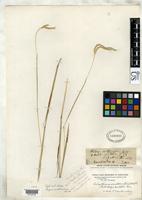
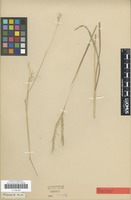
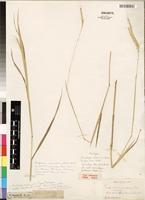
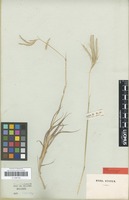
Isotype of Andropogon mollicomus Kunth, C.S. 1830 [family POACEAE]
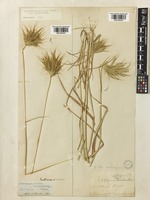
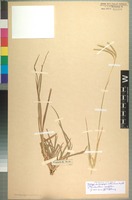
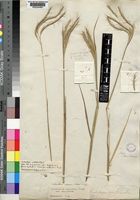
Dichanthium sericeum (R.Br.) A.Camus [family POACEAE]
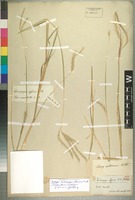
Dichanthium aristatum (Poir.) C.E.Hubb. [family POACEAE]
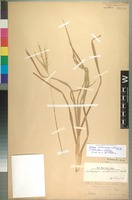
Type of Andropogon mollicomus Kunth [family POACEAE]
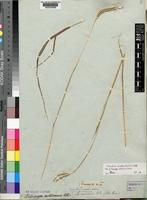
Isotype of Andropogon mollicomus Kunth [family POACEAE]
Dichanthium aristatum (Poir.) C.E.Hubb. [family POACEAE]
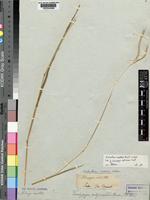
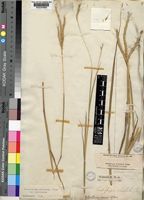
Type of Andropogon mollicomus Kunth [family POACEAE]
Isotype of Dichanthium aristatum (Poir.) C.E. Hubb. [family POACEAE]
Dichanthium aristatum (Poir.) C.E.Hubb. [family POACEAE]
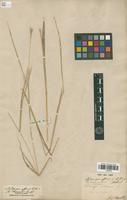
Isotype of Andropogon mollicomus Kunth [family POACEAE]
Syntype of Andropogon mollicomus Kunth [family POACEAE]
Previous
Next

Name

Identification
Dichanthium aristatum (Poir.) C.E.Hubb. [family POACEAE ] (stored under name); Andropogon mollicomus Kunth [family POACEAE ] Dichanthium nodosum Willem. [family POACEAE ] Trachypogon polymorphus Hack. [family POACEAE ]
Related name
  • Heteropogon molliconum
  • Dichanthium aristatum
  • Trachypogon polymorphus
  • Dichanthium caricosum
  • Dichanthium nodosum
  • Andropogon aristatum
  • Andropogon mollicomus
  • Heteropogon mollicomus
  • Andropogon caricosus

Flora

Entry for Dichanthium aristatum Poir C.E. Hubb. [family GRAMINEAE]
Herbarium
Royal Botanic Gardens, Kew (K)
Collection
Flora Zambesiaca
Resource Type
Reference Sources
Entry From
FZ, Vol 10, Part 4, (2002) Author: T. A. Cope
Names
Dichanthium nodosum Willemet [family GRAMINEAE], in Usteri, Ann. Bot. 18: 11 (1796), nom. superfl., based on Andropogon annulatus Forssk. (but the description is that of D. aristatum).
Andropogon aristatus Poir. [family GRAMINEAE], in Lam., Encycl., Suppl. 1: 585 (1810).
Andropogon mollicomus Kunth [family GRAMINEAE], Révis. Gramin. 1: 365 (1830). Type from Mauritius.
Diplasanthum lanosum Desv. [family GRAMINEAE], Opusc. Sci. Phys. Nat.: 67 (1831). Type from India.
Lepeocercis mollicoma Kunth Nees [family GRAMINEAE], in Edinburgh New Philos. J. 18: 185 (1835).
Andropogon caricosus subsp. mollicomus Kunth Hack. [family GRAMINEAE], in A. & C. de Candolle, Monogr. Phan. 6: 569 (1889).
Andropogon nodosus Willemet Nash [family GRAMINEAE], N. Amer. Fl. 17: 122 (1912).
Diplasanthum caricosum var. mollicomus Kunth Haines [family GRAMINEAE], Bot. Bihar Orissa 5: 1039 (1924). —Stent & Rattray in Proc. & Trans. Rhodesia Sci. Assoc. 32: 9 (1933).
Dichanthium aristatum Poir C.E. Hubb. [family GRAMINEAE], in Bull. Misc. Inform., Kew 1939: 654 (1939). —Sturgeon in Rhodesia Agric. J. 51: 19 (1954). —Chippindall in Meredith, Grasses & Pastures S. Africa 481 (1955). —Simon in Kirkia 8: 17, 50 (1971). —Clayton & Renvoize in F.T.E.A., Gramineae: 723 (1982). —Gibbs Russell et al., Grasses South. Africa [Mem. Bot. Surv. S. Africa No. 58]: 105 (1990). —Setshogo in Kirkia 17: 143 (2001). Type from Mauritius.
Information
Caespitose perennial with short stolons; culms up to 110 cm high, robust, erect or sometimes decumbent; nodes exposed and glabrous; internodes glabrous; leaf sheaths glabrous; ligule a scarious membrane; leaf laminas up to 25 cm × 2–5 mm, linear-lanceolate, glabrous for most of their length but long-pilose near the ligule. Racemes 1–5, subdigitate, shortly pedunculate, the peduncles and the culm below the inflorescence pubescent; rhachis internodes and pedicels usually pilose on one side, glabrous on the other; the lowermost 1–6 spikelet pairs usually homogamous, male or neuter. Sessile spikelets 2–5 mm long, obovate; inferior glume slightly concave, pilose below the middle, glabrous or shortly pilose above the middle towards the margins and apex, narrowly winged towards the apex; superior glume as long as the inferior, glabrous except for the often shortly ciliate keel and margins; inferior floret barren, the lemma hyaline; superior floret stipitiform, the lemma hyaline; awn c. 22 mm long, minutely pubescent on both column and bristle; anthers c. 2 mm long. Pedicelled spikelets similar to the sessile spikelets in size and shape, male or neuter.
Habitat
Grows in damp places on disturbed ground
Range
Native of India, introduced to Africa, Australia and America for its value as a fodder grass
Altitude range
10–1600 m.
1600
10
Distribution
Zambia C Luangwa Valley, South Luangwa National Park, near the Lundu Plains, 760 m, 4.v.1966, Astle 4865 (K; SRGH).Zimbabwe C Harare, university campus on southern slope, 14.iii.1985, K.E. Bennett in GHS 283137 (K; PRE).Mozambique M Matutuíne (Bela Vista), bank of Maputo River, 11.vii.1958, Mogg 27911A (K; PRE).
Notes
The species is characterized by its robust, suberect habit, by having the peduncles to the racemes villous and by having the culm below the inflorescence strongly pilose. It is related to, and sometimes regarded as conspecific with, D. caricosum (L.) A. Camus (Tanzania and tropical Asia), but this has a glabrous culm below the inflorescence.

Related Materials

  • Terms and Conditions
  • Privacy Policy
  • Cookie Policy
  • Cookie Settings
  • Accessibility
  • Help
  • Contact Us
  • Facebook
  • Twitter
ITHAKA

JSTOR is part of ITHAKA, a not-for-profit organization helping the academic community use digital technologies to preserve the scholarly record and to advance research and teaching in sustainable ways.

©2000-2026 ITHAKA. All Rights Reserved. JSTOR®, the JSTOR logo, JPASS®, Aluka®, and ITHAKA® are registered trademarks of ITHAKA.

╳