JSTOR Global Plants Home
  • Home
  • Browse
  • About
  • Access
  • Account
    • Saved Items
    • Profile
  • Log in

Global Plants

Skip to Main Content
  • JSTOR Global Plants Home
  • Global Plants

    • Browse
    • About
    • Access
    • Account
      • Saved Items
      • Profile
Log in
  • Browse
  • About
  • Access
  • Account
    • Saved Items
    • Profile
Advanced Search

Compilation
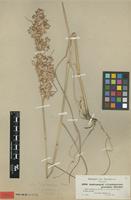
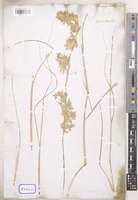
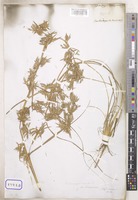
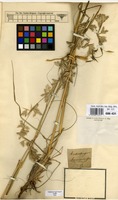
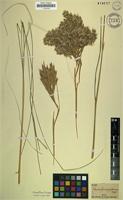
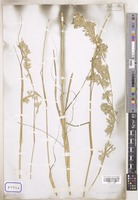
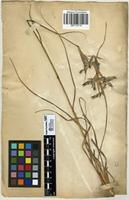
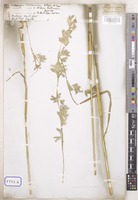
Andropogon iwarancusa

16 Images see all

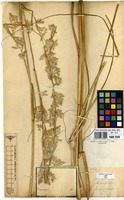
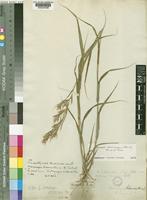
Syntype of Andropogon proximus Hochst. ex A.Rich. [family POACEAE]
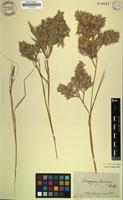
Andropogon iwarancusa Roxb. [family POACEAE]
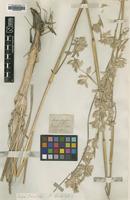
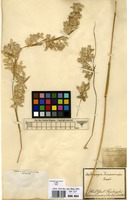
Type of Andropogon iwarancusa Roxb. [family GRAMINEAE]
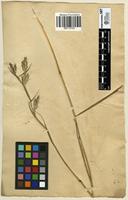
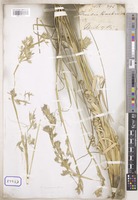
Filed as Andropogon iwarancusa [family POACEAE]
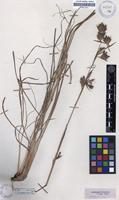
Andropogon iwarancusa Roxb. [family POACEAE]
Type of Andropogon iwarancusa Roxb. [family GRAMINEAE]
Type of Andropogon iwarancusa Roxb. [family POACEAE]
Holotype of Andropogon sennarensis Hochst. [family POACEAE]
Andropogon iwarancusa Roxb. [family POACEAE]
Filed as Andropogon iwarancusa [family POACEAE]
Filed as Andropogon iwarancusa Nees [family POACEAE]
Cymbopogon pruinosus (Nees ex Steud.) Chiov. [family POACEAE]
Holotype of Andropogon sennarensis Hochst. [family POACEAE]
Type of Andropogon iwarancusa Roxb. [family GRAMINEAE]
Andropogon iwarancusa Roxb. [family POACEAE]
Previous
Next

Name

Identification
Cymbopogon jwarancusa (Jones) Schult. [family POACEAE ] (stored under name); Andropogon iwarancusa Roxb. [family POACEAE ]
Related name
  • Andropogon sennarensis
  • Cymbopogon jwarancusa
  • Apluda arist.(?)
  • Andropogon schoenanthus
  • Andropogon pruinosus
  • Cymbopogon schoenanthus
  • Andropogon proximus
  • Cymbopogon pruinosus
  • Andropogon iwarancusa

Flora

Entry for ANDROPOGON Nardus Hack. var. marginatus [family POACEAE]
Herbarium
Royal Botanic Gardens, Kew (K)
Collection
Flora Capensis
Resource Type
Reference Sources
Entry From
Flora Capensis, Vol 7, page 310, (1900) Author: (By O. STAPF.)
Names
ANDROPOGON Nardus Hack. var. marginatus [family POACEAE], Androp. in DC. Monogr. Phan. vi. 606;—Hack. in Bull. Herb. Boiss. iv. App. iii. 11; Durand & Schinz, Consp. Fl. Afr. v. 718.
ANDROPOGON Schœnanthus Thunb. [family POACEAE], Prod. 20; Fl. Cap. ed. Schult. 108, not Linn.
ANDROPOGON marginatus Steud. [family POACEAE], in Flora, 1829, 472.
ANDROPOGON pseudohirtus Steud. [family POACEAE], l.c. 471.
ANDROPOGON Iwarancusa Nees [family POACEAE], Fl. Afr. Austr. 117; Steud. Syn. Pl. Glum. i. 388 (Iwarankusa), not Blane.
Trachypogon Schœnanthus Nees [family POACEAE], in Linnæa, vii. 281.
Information
perennial, densely tufted, innovation shoots intravaginal; culms slender, erect, 1–2 1/2 ft. long, glabrous, smooth, simple and 1–2-noded below the spurious panicle, longest internode 6–8 in., rarely up to 1 ft. long; leaves mainly crowded near the base, sheaths tight, glabrous except the lowermost, which are fugaciously hairy to tomentose at the very base and 2–4 in. long, very firm and persistent, the upper 1–2 much shorter than the internodes; ligules very firm, rounded, up to 1 lin. long; blades narrow, linear, very long, tapering to a fine point, 4 in. to almost 1 ft. by 1–2 1/2 lin., flat, rigid, glabrous, margins scabrid; panicles more or less compound, spathaceous, usually narrow, 4–8 in. long; racemes 1/2– 3/4 in. long, finally deflexed or horizontally spreading, subtended by lanceolate, boat-shaped, many-nerved, scarious, often reddish spathes 3/4–1 1/4 in. long, on slender common peduncles, which are 4–8 in. long; joints and pedicels linear, slender, about 1 lin. long, densely hairy along the margins, tips cupular, irregularly toothed; spikelets of the lowest pair of the sessile raceme ♂ like the pedicelled, the sessile of all the other pairs hermaphrodite; hermaphrodite spikelets lanceolate, 2 1/2–3 lin. long, reddish above; lower glume sub-chartaceous, minutely 2-toothed or subacute; dorsally flattened or slightly depressed, glabrous, keels widened above into narrow or broad, often serrulate, scarious wings, intracarinal nerves 2–4, unequal, evanescent below, callus short, minutely bearded; upper glume lanceolate, acute or mucronate, 1-nerved, glabrous, keel narrowly winged; valves hyaline, the lower lanceolate-linear, 1 1/2–2 lin. long, ciliate; upper linear, very narrow, bifid, 1 1/4–1 3/4 lin. long, 1-nerved, lobes fine, ciliate, awn slender, 6–7 lin. long, kneed at or below the middle, glabrous below; pale 0; anthers 1 lin. long; grain 1 1/4 lin. long; pedicelled spikelets ♂, lanceolate, acute, 2 1/2 lin. long; lower glume many-nerved, upper 3-nerved, keels of both scabrid; lower valve linear, obtuse, nerveless or 2-nerved at the base, 1 1/4 lin. long, upper 0; pale 0. null
Range
Var. δ occurs also in Tropical Transvaal.
Distribution
CENTRAL REGION Var. α: Aliwal North Div.; between Krai River and Witte Bergen, Zeyher! Var. β: Aliwal North Div. (?); by the Orange River, 5000–6000 ft., Ecklon and Zeyher!COAST REGION Var. α: Cape Div.; Table Mountain, Milne, 240! Devils Mountain, Ecklon, 919! near Cape Town, Burchell, 470! Cape Flats, near Rondebosch, Burchell, 200! Simons Bay, Wright! MacGillivray, 402! Orange Kloof, Dodd, 2219! 2959! top of Kloof between Millers Point and Smithwinkel, Dodd, 2974! Low hills, South of Kommetje, Dodd, 1571! Ladies Mile, Dodd, 2071! Tokay Plantation, Dodd, 377! Worcester Div.; Dutoits Kloof, 2000–3000 ft., Drège! Caledon Div.; Nieuw Kloof, Houw Hoek Mountain, Burchell, 8054! Riversdale Div.; near the Zoetemelks River, Burchell, 6692/1! 6790/2! near Riversdale, on the Lange Bergen Range, Schlechter, 1867! Var. β: Mossel Bay Div.; mouth of the Gauritz River, Mund and Maire! Port Elizabeth Div.; Port Elizabeth, E.S.C.A. Herb. 118! Bathurst Div.; between Port Alfred and Kaffir Drift, Burchell, 3845! Albany Div., moist places on mountains near Grahamstown, 2200 ft., MacOwan, 116! and without precise locality, Atherstone, 51! Fort Beaufort Div.; Nieuw Veld, near Bok Poort, 3500–4500 ft., Drège, 700! Cathcart Div.; Windvogels Berg, 4000 ft., Baur, 1114!EASTERN REGION Var. β: Natal; Riet Vlei, 5000 ft., Buchanan, 230! Umpumulo, Buchanan 232! Biggars Berg, Rehmann, 7108! Var. γ: Natal; near Durban, Williamson, 52! in damp places throughout the colony, Krauss, 87! Inanda, at Umtamtootu, Wood, 1622! Pietermaritzburg, Rehmann, 7600!KALAHARI REGION Var. β: Orange Free State, Cooper, 1065!SOUTH AFRICA without precise locality, Var. β, Drège, 4354! Var. γ, Zeyher, 1800!
Notes
The African specimens of A. Nardus have a peculiar facies which distinguishes them in most cases from the Indian, which include the type. It is mainly due to the less compound structure of the panicle and the, on the whole, slightly larger spikelets. The lower glumes of the hermaphrodite spikelets of the Indian varieties have also generally 1–2 shallow pits on the back, a peculiarity which I have never observed in the African material. The 3 varieties described above are very different, if extreme forms are compared; they seem, however, so closely linked by intermediate states, that I cannot separate them specifically.

Related Materials

  • Terms and Conditions
  • Privacy Policy
  • Cookie Policy
  • Cookie Settings
  • Accessibility
  • Help
  • Contact Us
  • Facebook
  • Twitter
ITHAKA

JSTOR is part of ITHAKA, a not-for-profit organization helping the academic community use digital technologies to preserve the scholarly record and to advance research and teaching in sustainable ways.

©2000-2026 ITHAKA. All Rights Reserved. JSTOR®, the JSTOR logo, JPASS®, Aluka®, and ITHAKA® are registered trademarks of ITHAKA.

╳