JSTOR Global Plants Home
  • Home
  • Browse
  • About
  • Access
  • Account
    • Saved Items
    • Profile
  • Log in

Global Plants

Skip to Main Content
  • JSTOR Global Plants Home
  • Global Plants

    • Browse
    • About
    • Access
    • Account
      • Saved Items
      • Profile
Log in
  • Browse
  • About
  • Access
  • Account
    • Saved Items
    • Profile
Advanced Search

Compilation
Andropogon hohenackeri

10 Images see all

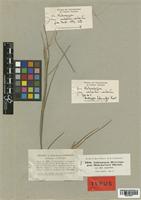
Type of Andropogon hohenackeri Hochst. ex Steud. [family POACEAE]
Syntype of Andropogon hohenackeri Steud. [family POACEAE]
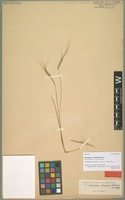
Andropogon hohenackeri Steud. [family POACEAE]
Syntype of Andropogon hohenackeri Steud. [family POACEAE]
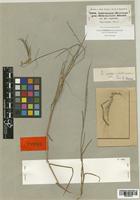
Isotype of Andropogon hohenackeri Steud. [family POACEAE]
Andropogon hohenackeri Steud. [family POACEAE]
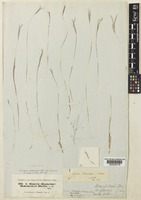
Syntype of Andropogon hohenackeri Steud. [family POACEAE]
Isotype of Heteropogon hohenackeri Hochst. ex Miq. [family POACEAE]
Syntype of Andropogon hohenackeri Steud. [family POACEAE]
Isotype of Dimeria hohenackeri Hochst. ex Miq. [family POACEAE]
Previous
Next

Name

Identification
Heteropogon contortus (L.) P.Beauv. ex Roem. & Schult. [family POACEAE ] (stored under name); Andropogon hohenackeri Hochst. ex Steud. [family POACEAE ]
Related name
  • Heteropogon contortus
  • Andropogon hohenackeri

Flora

Entry for HETEROPOGON contortus Roem. & Schult. [family POACEAE]
Herbarium
Royal Botanic Gardens, Kew (K)
Collection
Flora of Tropical Africa
Resource Type
Reference Sources
Entry From
Flora of Tropical Africa, Vol 9, page 1, (1917) Author: (By O. STAPF.)
Names
HETEROPOGON contortus Roem. & Schult. [family POACEAE], Syst. Veg. ii. 836. —Nees in Linnæa, vii. 284, and Fl. Afr. Austr. 101; Webb in Hook. Niger Fl. 190; Benth. Fl. Austral. vii. 517; Duthie, Fodd. Grass. N. Ind. 32, Ill. t. 19; Maiden, Us. Pl. Austral. 90; Stapf in Kew Bulletin, 1907, 211; Burtt-Davy in Ann. Transvaal Mus. iii. 129; Nash in North Amer. Fl. xvii. 128.
HETEROPOGON hirtus Pers. [family POACEAE], Syn. ii. 533; Balf. f. Bot. Socotra, 316; Rendle, Cat. Afr. Pl. Welw. ii. 153 (includ. var. glaber).
HETEROPOGON glaber Pers. [family POACEAE], l.c.; Beauv. Agrost. 134, t. 23, fig. 8.
HETEROPOGON hirsutus Beauv. [family POACEAE], l.c. 134.
HETEROPOGON Allionii Roem. & Schult. [family POACEAE], l.c. 835; Nees, Gen. Fl. Germ. Monocot. i. t. 94; Reichenb. Icon. Fl. Germ, i. t. 53, fig. 1496–7.
HETEROPOGON polystachyus Nees [family POACEAE], Agrost. Bras. 364; Peters, Reise Mossamb. Bot. 563.
HETEROPOGON Roxburghii Walk.-Arn. ex Nees [family POACEAE], in Nov. Act. Nat. Cur. xix. Suppl. i. 183.
HETEROPOGON messanensis Guss. [family POACEAE], l.c.
HETEROPOGON Hohenackeri Hochst. ex Miq. [family POACEAE], Anal. Bot. Ind. ii. 24.
HETEROPOGON hispidissimus Hochst. ex Steud. [family POACEAE], Syn. Pl. Glum. i. 367.
HETEROPOGON besukiensis Miq. [family POACEAE], Fl. Ind. Bat. iii. 494.
Andropogon contortus Linn. [family POACEAE], Sp. Pl. ed. i. 1045; Lam. Ill. t. 840; All. Fl. Pedem. ii. 260, t. 91, fig. 4; Kunth, Enum. i. 486; Steud. Syn. Pl. Glum. i. 367; A. Rich. Tent. Fl. Abyss. ii. 453; Baker, Fl. Maurit. 444; Hack. in Bolet. Soc. Brot. iii. 137, and v. 213, and in DC. Monogr. Phan. vi. 585 (incl. all the varieties), and in Bull. Herb. Boiss. iv. App. iii. 11; Klatt in Jahrb. Hamb. Wiss. Anst. ix. 121; Engl. Hochgebirgsfl. Trop. Afr. 113; Glied. Veg. Usambara, 35; Pflanzenw. Afr. i. 566, fig. 502; Schweinf. in Bull. Herb. Boiss. ii. App. ii. 13 and 93; Durand & Schinz, Consp. Fl. Afr. v. 709; K. Schum. in Engl. Pfl. Ost-Afr. C. 98; Franch. in Bull. Soc. Hist. Nat. Autun, viii. 27 (of reprint); Hook. f. Fl. Brit. Ind. vii. 199; Chiov. in Ann.Istit. Bot. Roma vii. 61, and viii. 25 and 284–285; Stapf in Dyer, Fl. Cap. vii. 350; De Wild. & Durand, Reliq. Dewevr. 254; De Wild. Études Fl. Baset Moyen-Congo, ii. 9; Wood, Natal Pl. t. 121; Th. & Hél. Durand, Syll. Fl. Congol. 624; Pilg. in Engl. Pflanzenw. Afr. ii. 156, fig. 116 B, and in Mildbr. Wiss. Ergebn. Deutsch. Zentr.-Afr. Exped. ii. 43; Eyles in Trans. Roy. Soc. S. Afr. v. 295.
Andropogon secundus Willd. ex Nees [family POACEAE], Agrost. Bras. 364; not of Kunth.
Andropogon firmus J. S. Presl [family POACEAE], in C. B. Presl, Rel. Haenk. i. 334.
Andropogon firmus Kunth [family POACEAE], Enum. i. 486.
Andropogon messanensis Bivona ex Guss. [family POACEAE], Fl. Sic. i. 164.
Andropogon besukiensis Steud. [family POACEAE], in Zoll. Syst. Verz. ii. 59.
Andropogon Bellardii Bubani [family POACEAE], in Nuov. Giorn. Bot. v. 317.
Andropogon Hohenackeri Hochst. [family POACEAE], in DC. l.c. 587.
Andropogon hispidissimus Hochst. ex Hack. [family POACEAE], in DC. l.c. 587.
Information
Perennial, cæspitose, up to over 3 ft. high, innovations extra- and intravaginal. Culms erect or geniculate-ascending, more or less compressed in the lower internodes, glabrous, smooth, quite simple or more often only for the first 3 or 4 internodes, then branched; lowest branches barren or mixed or like the following entering into the formation of a spatheate panicle. Leaves glaucous-pruinose; sheaths compressed, keeled, with the keels sometimes raised, quite glabrous, or with a few tubercle-based hairs at or towards the mouth, rarely ciliate on the upper margins, smooth; ligules short, truncate, ciliolate; blades linear from an equally wide base, acute or the lowest subacute to obtuse, the upper sometimes long-tapering to a fine point, 3–9 in. by 1 1/2–3 1/2 lin., folded in bud, then opening out and mostly quite flat, suberect and somewhat stiff, glabrous or with some tubercle-based hairs towards the base, particularly on the margins, the latter cartilaginous, slightly rough at least upwards, midrib slender, prominent below, primary lateral nerves 3–4 on each side, prominulous. Inflorescence consisting of a single terminal raceme or more often of several flowering branches, simple or divided from the base, forming tiers and collected into a scanty rarely copious and more or less fastigiate spatheate panicle; all or most of the rays simple (sometimes one or the other replaced by a leafy branch), slender, stiff, erect, from 1 1/2 to over 6 in. long (up to the insertion of the spatheole); subtending leaves like the preceding ones. Spatheoles narrow, long-tapering to an acute point, about 3–4 in. long, herbaceous to subherbaceous, glabrous, soon tightly inrolled; peduncle stoutly filiform, strict or slightly arched, usually subterminally exserted during flowering, then lengthening out and often exceeding the spatheole by more than 1 in. Racemes somewhat stout, 1–3 in. long, of 3–10 homogamous and frequently up to 12 heterogamous pairs; internodes of the tough portion of the raceme 2–1 lin. long, glabrous, of the fertile portion (joints) over 1 lin. long, the free part above the insertion of the sessile spikelet 1/4– 3/8 lin. long, slender, glabrous, with a very oblique tip, the part below (callus) completely fused with the base of the lower glume, subcylindric, up to 1 lin. long, very acute to pungent (with a short oblique articulation-face), rufously ciliate on the sides, cilia increasing upwards and forming a dense beard concealing the joint and the base of the pedicel; pedicels glabrous, 1/2 lin. long, disarticulating at the base with a very oblique scar. Fertile spikelets cylindric, slender, 3–3 1/2 lin. long (excluding the callus), brown, at length very dark. Glumes equal, coriaceous; lower tightly involute, truncate, minutely pubescent or hirtellous, about 9-nerved, nerves slightly raised, very obscure in transmitted light, with a few transverse veins in the tips; upper glume narrowly linear-oblong, subobtuse, sides much thinner than the hispidulous coriaceous very obtuse dorsal keel. Lower floret reduced to a linear-oblong hyaline ciliolate nerveless valve, 1 1/2 lin. long. Upper floret hermaphrodite: valve stipitiform from a very slender hyaline base, cartilaginous above it and passing into a stout geniculate awn, 2 to over 4 in. long, column at length dark brown, shortly greyish-pubescent, somewhat longer than the paler bristle; valvule 0. Lodicules microscopic. Stamens 0 or reduced to microscopic rudiments. Stigmas exserted terminally. Grain linear, 1 1/2–1 3/4 lin. long, semiterete, grooved on the face, whitish. Male spikelets all alike or the lowest somewhat reduced, dorsally flattened, oblong-lanceolate, subacute, 4–5 lin. long, green, the sessile almost symmetric, the pedicelled somewhat asymmetric and contorted; glumes subequal, the lower herbaceous, closely many-nerved, glabrous or variously hairy, hairs tubercle-based, few or many in a single row along the margin, or spread over a marginal zone or all over and then sometimes long, rigid and spreading, keels more or less unequally winged upwards, inflexed flaps very narrow; upper glume membranous, acute, 3-nerved, ciliate upwards; valves linear-oblanceolate, hyaline, 1-nerved, ciliolate, of the lower floret 3–3 1/2 lin., and obtuse, of the upper slightly shorter, narrower, acute; lodicules small; anthers 1 1/2 lin. long.
Range
Common throughout the whole of Tropical Africa, and the adjacent islands, ascending in Eritrea to over 8800 ft. The species extends all over Africa, the Mediterranean region, and the tropical and subtropical regions generally.
Notes
As it is quite unmistakable, it is unnecessary to enumerate the very many specimens examined. A good fodder grass when young, but very troublesome to man and beast and even dangerous to the latter when mature on account of the sharply pointed calli of the fertile spikelets which penetrate the skin and the membranes of the mouth; hence the name “spear-grass.” Hackel (in DC. Monogr. Phan. vi. 586–588) distinguishes two varieties and 6 subvarieties according to the degree of hairiness or the reverse of the male spikelets and the degree of ramification of the culms; but the inconstancy of these characters is so evident that it is not worth while to discriminate between the forms corresponding to them.

Related Materials

  • Terms and Conditions
  • Privacy Policy
  • Cookie Policy
  • Cookie Settings
  • Accessibility
  • Help
  • Contact Us
  • Facebook
  • Twitter
ITHAKA

JSTOR is part of ITHAKA, a not-for-profit organization helping the academic community use digital technologies to preserve the scholarly record and to advance research and teaching in sustainable ways.

©2000-2026 ITHAKA. All Rights Reserved. JSTOR®, the JSTOR logo, JPASS®, Aluka®, and ITHAKA® are registered trademarks of ITHAKA.

╳