JSTOR Global Plants Home
  • Home
  • Browse
  • About
  • Access
  • Account
    • Saved Items
    • Profile
  • Log in

Global Plants

Skip to Main Content
  • JSTOR Global Plants Home
  • Global Plants

    • Browse
    • About
    • Access
    • Account
      • Saved Items
      • Profile
Log in
  • Browse
  • About
  • Access
  • Account
    • Saved Items
    • Profile
Advanced Search

Compilation
Andropogon excavatus

8 Images see all

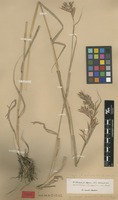
Isotype of Andropogon excavatus Hochst. [family POACEAE]
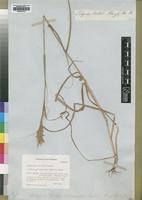
Filed as Cymbopogon schoenanthus (L.) Spreng. [family GRAMINEAE]
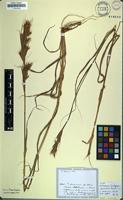
Syntype of Andropogon connatus Hochst. ex A.Rich. [family POACEAE]
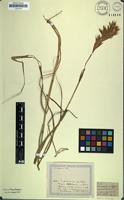
Isotype of Andropogon excavatus Hochst. ex Krauss [family POACEAE]
Syntype of Andropogon connatus Hochst. ex A.Rich. [family POACEAE]
Isotype of Andropogon excavatus Hochst. ex Krauss [family POACEAE]
Isotype of Andropogon excavatus Hochst. [family POACEAE]
Previous
Next

Name

Identification
Isotype of Andropogon excavatus Hochst. [family POACEAE ] Cymbopogon excavatus (Hochst.) Stapf ex Burtt Davy [family POACEAE ] (stored under name);
Related name
  • Andropogon excavatus
  • Cymbopogon excavatus
  • Andropogon schoenanthus
  • Cymbopogon schoenanthus
  • Cymbopogon caesius

Flora

Entry for ANDROPOGON Schœnanthus Hack. var. versicolor [family POACEAE]
Herbarium
Royal Botanic Gardens, Kew (K)
Collection
Flora Capensis
Resource Type
Reference Sources
Entry From
Flora Capensis, Vol 7, page 310, (1900) Author: (By O. STAPF.)
Names
ANDROPOGON Schœnanthus Hack. var. versicolor [family POACEAE], Andr. in DC. Monogr. Phan. vi. 610;—Durand & Schinz, Consp. Fl. Afr. v. 722.
ANDROPOGON connatus Hochst. ex A. Rich. [family POACEAE], Tent. Fl. Abyss. ii. 464.
ANDROPOGON nardoides Nees var. β minor [family POACEAE], Fl. Afr. Austr. 116.
ANDROPOGON excavatus Hochst. [family POACEAE], in Flora, 1846, 116.
ANDROPOGON pruinosus Steud. [family POACEAE], Syn. Pl. Gram. i. 388.
ANDROPOGON versicolor Steud. [family POACEAE], Syn. Pl. Gram. i. 388.
ANDROPOGON foliatus Steud. [family POACEAE], l.c. 389.
ANDROPOGON Schœnanthus Baker [family POACEAE], Fl. Maurit. 446.
Gymnanthelia connata Aschers. and Schweinf. [family POACEAE], in Schweinf. Beitr Fl. Aeth. 310.
Information
perennial, frequently with extravaginal innovation shoots beside some intravaginal ones, or annual (or at least flowering the first year); culms fascicled, erect or shortly ascending, stout or rather so, 2–4 ft. long, simple and 4–7-noded below the spurious panicle; sheaths tight, quite glabrous, subherbaceous or the lowermost firmer and sometimes subpersistent, 2–3 in. long; upper shorter than the internodes; ligules very short, rounded; blades linear to linear-lanceolate from a broader rounded or subcordate base, tapering to a long setaceous point, 1/2–1 ft. by 3–6 lin. (in the South African specimens), flat, rather flaccid, dull-green or subglaucous, glabrous, smooth or the margins scabrid; panicles more or less compound, narrow, often interrupted, 4–6 in. long, rarely longer; racemes 4–9 lin. long, 2-nate, at length reflexed, or horizontally spreading on slender peduncles, which are 2–4 in. long, and subtended by lanceolate boat-shaped many-nerved scarious reddish spathes 1/2 to 1 in. long; joints and pedicels linear, slender or the lowest somewhat stout, 1–1 1/4 lin. long, densely hairy, mainly along the margins, tips minutely cupular, toothed; spikelets of the lowest pair of the sessile raceme alike, ♂, the sessile of all the other pairs hermaphrodite, the pedicelled ♂; hermaphrodite spikelets lanceolate, 2–2 1/4 lin. long, often variegated; lower glume subacute or obscurely 2-toothed, dorsally flattened with a narrow groove from the middle downward corresponding to a keel on the inner side, keels narrowly or obscurely winged and scabrid above, evanescent below; upper glume lanceolate, acute, 1-sub-3-nerved; valves hyaline, lower oblong, 1 3/4 lin. long, 2-nerved, ciliate; upper scarcely shorter, very narrow, linear, deeply bifid, lobes very fine, awn 5–7 lin. long, slender, bent just below the middle, glabrous below the bend; pale 0; anthers 1 lin. long; pedicelled spikelets oblong, subacute, 2 lin. long; lower glume 9–11-nerved, upper 3-nerved; lower valve oblong, almost equalling the glumes, 2-nerved, upper and pale 0; anthers 1 1/2 lin. long. null
Range
Also in the Mascarene Islands and in India.
Distribution
EASTERN REGION Griqualand East; rocky slopes, near Kokstad, Tyson, 1412! near Clydesdale, 2500 ft.; Tyson, 3121! Natal; very common on the plains between Boshmanns Rand and the Drakensberg Range, Krauss, 26! Umpumulo, 2400 ft., Buchanan, 231!KALAHARI REGION Griqualand West; Hay Div., at Klip Fontein, Burchell, 2165! Orange Free State; Caledon River, Burke, 199! near Winburg, Buchanan, 235! Bloemfontein, Rehmann, 3729! Bechuanaland; between Kosi Fontein and Knegts Fontein, Burchell, 2602! Transvaal; Johannesburg, E.S.C.A. Herb. 311! Apies River, Nelson, 70*! Houtbosch, Rehmann, 5682!SOUTH AFRICA without precise locality, Drège, 4358! Zeyher, 1798!
Notes
The specimens from Bloemfontein and Johannesburg have very narrow leaves, and meagre inflorescences, like those of var. cæsius (Hackel); but I consider them only as slight variations due to a particularly dry habitat. Hackel indicates also the typical form, which is a more robust plant having longer and much broader blades and larger more compound panicles, from “Caffraria.” I have not seen it from extra-tropical South Africa, unless a specimen, collected by Buchanan, 134 in part, on the Natal Coast is referable to it. A specimen, collected by Fleck at Rehoboth, Great Namaqualand is referred by Hackel (in Bull. Herb. Boiss. iv. App. iii. 12) to A. “Schœnanthus, L. sens. ampl.” Thunberg enumerates A. Schœnanthus in Prod. Pl. Cap. 20 and in Fl. Cap. ed. i. 407 and ed. Schult. 108. Nees refers it to his A. Iwarancusa which is A. Nardus var. marginatus. There is, however, no such plant in Thunberg's Cape collection so far as I have seen it; but the localities given by Thunberg in his Flora Capensis, namely, Lange Kloof and Kromme River, render it very probable that Nees was right.

Related Materials

  • Terms and Conditions
  • Privacy Policy
  • Cookie Policy
  • Cookie Settings
  • Accessibility
  • Help
  • Contact Us
  • Facebook
  • Twitter
ITHAKA

JSTOR is part of ITHAKA, a not-for-profit organization helping the academic community use digital technologies to preserve the scholarly record and to advance research and teaching in sustainable ways.

©2000-2026 ITHAKA. All Rights Reserved. JSTOR®, the JSTOR logo, JPASS®, Aluka®, and ITHAKA® are registered trademarks of ITHAKA.

╳