JSTOR Global Plants Home
  • Home
  • Browse
  • About
  • Access
  • Account
    • Saved Items
    • Profile
  • Log in

Global Plants

Skip to Main Content
  • JSTOR Global Plants Home
  • Global Plants

    • Browse
    • About
    • Access
    • Account
      • Saved Items
      • Profile
Log in
  • Browse
  • About
  • Access
  • Account
    • Saved Items
    • Profile
Advanced Search

Compilation
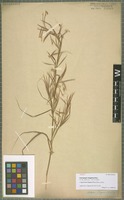
Andropogon dregeanus

13 Images see all

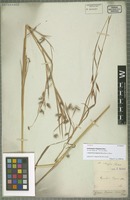
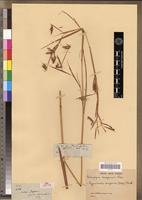
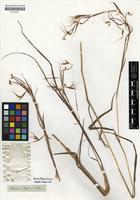
Syntype of Hyparrhenia dregeana (Nees) Stapf ex Stent [family POACEAE]
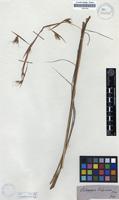
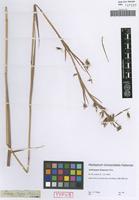
Syntype of Andropogon dregeanus Nees [family POACEAE]
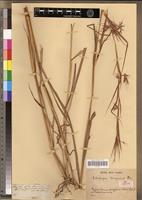
Type of Andropogon dregeanus Nees [family POACEAE]
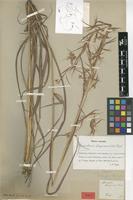
Hyparrhenia dregeana (Nees) Stapf. ex Stent [family POACEAE]
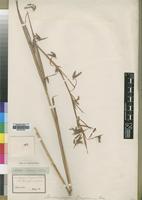
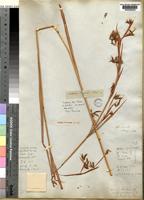
Syntype of Andropogon dregeanus Nees [family POACEAE]
Filed as Andropogon dregeanus Nees [family POACEAE]
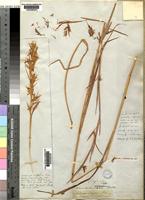
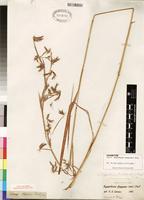
Hyparrhenia dregeana (Nees) Stapf. ex Stent [family POACEAE]
Isosyntype of Andropogon dregeanus Nees [family POACEAE]
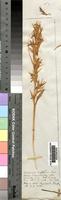
Syntype of Andropogon dregeanus Nees [family POACEAE]
Isosyntype of Hyparrhenia dregeana (Nees) Stapf ex Stent [family POACEAE]
Syntype of Hyparrhenia dregeana (Nees) Stapf ex Stent [family POACEAE]
Previous
Next

Name

Identification
Andropogon dregeanus Nees [family POACEAE ] Hyparrhenia dregeana (Nees) Stapf ex Stent [family POACEAE ] (stored under name);
Related name
  • Hyparrhenia dregeana
  • Andropogon dregeanus

Flora

Entry for ANDROPOGON dregeanus Nees [family POACEAE]
Herbarium
Royal Botanic Gardens, Kew (K)
Collection
Flora Capensis
Resource Type
Reference Sources
Entry From
Flora Capensis, Vol 7, page 310, (1900) Author: (By O. STAPF.)
Names
ANDROPOGON dregeanus Nees [family POACEAE], Fl. Afr. Austr. 112
ANDROPOGON Schimperi Hack. [family POACEAE], Androp. in DC. Monogr. Phan. vi. 623, and Durand & Schinz, Consp. Fl. Afr. v. 721 (in part).
Information
perennial, compactly tufted; culms erect, rather slender, 3–4 ft. long, glabrous, shining, about 5-noded below the panicle; sheaths of innovation shoots compressed, fugaciously tomentose at the base, sheaths of the culms terete, quite glabrous or the uppermost scantily hairy, smooth; ligules obtuse, up to 2 1/2 lin. long, hairy behind; blades linear from a narrow base, tapering to a fine point, up to 1 ft. by 2–3 lin. long, erect, rather rigid, flat, glabrous, or the uppermost scantily hairy, subglaucous, turning reddish, scabrid, margins spinulous; panicle narrow, 1–1 1/2 ft. long, remotely branched, contracted, spathes narrow, lanceolate, acute, about 1 1/2 in. long, scarious, reddish; common peduncles finely filiform, long exserted, glabrous except the strongly curved or curled tips, which are densely beset with long spreading, yellowish, tubercle-based hairs; racemes 1/2–1 in. long, lax, scarcely spreading; joints 5–10, filiform, obliquely truncate, up to 1 1/2 lin. long, shortly ciliate; pedicels very similar; spikelets of the lowest pair of the sessile raceme alike, ♂, the sessile of all the other pairs hermaphrodite, the pedicelled ♂ or sometimes with stamens and an apparently perfect pistil; sessile hermaphrodite spikelets linear-oblong, 2 lin. long, purplish, pale below; lower glume subchartaceous above, membranous near the base, minutely truncate, dorsally flattened, glabrous or minutely and scantily pubescent or villous, intracarinal nerves about 5, evanescent below the tip, keels rigidly ciliate above, callus shortly bearded; upper glume membranous, 3-nerved, nerves scabrid above; lower valve oblong, obtuse, faintly 2-nerved, ciliate; upper shortly bifid, 1-nerved, lobes oblong, obtuse, ciliate, awn about 6–8 lin. long, very slender, pubescent and kneed below the middle; pale ovate, obtuse, 1/2 lin. long; anthers 3/4 lin. long; pedicellate spikelets oblong-linear, 2 1/2 lin. long, dull purplish, glabrous or hairy; lower glume subherbaceous, acute, 9–11-nerved; upper very acute, 3-nerved, long ciliate; lower valve linear-oblong, obtuse, equalling the glumes, 3-nerved; upper 1/4– 1/3 shorter, spathulate-linear from an extremely fine base, sub-1-nerved; anthers more than 1 lin. long. null
Range
A. Schimperi, to which Hackel referred A. dregeanus, is a more robust plant, having much larger, and more compound panicles, shorter, less curved common peduncles, which are usually not exserted at all, and more conspicuously nerved and setulously ciliate lower glumes. The plant distributed by Schimper from Abyssinia as A. dregeanus is also distinct from Nees' A. dregeanus.
Distribution
EASTERN REGION Transkei; between the Kei River and Gekau (Geua or Geuu River), 1000–2000 ft., Drège! Natal; between Umtata River and St. Johns River, Drège, between Umzimkulu River and Umkomanzi River, Drège, and Griffins Hill at Eastcourt, Rehmann, 7310!

Related Materials

  • Terms and Conditions
  • Privacy Policy
  • Cookie Policy
  • Cookie Settings
  • Accessibility
  • Help
  • Contact Us
  • Facebook
  • Twitter
ITHAKA

JSTOR is part of ITHAKA, a not-for-profit organization helping the academic community use digital technologies to preserve the scholarly record and to advance research and teaching in sustainable ways.

©2000-2026 ITHAKA. All Rights Reserved. JSTOR®, the JSTOR logo, JPASS®, Aluka®, and ITHAKA® are registered trademarks of ITHAKA.

╳