JSTOR Global Plants Home
  • Home
  • Browse
  • About
  • Access
  • Account
    • Saved Items
    • Profile
  • Log in

Global Plants

Skip to Main Content
  • JSTOR Global Plants Home
  • Global Plants

    • Browse
    • About
    • Access
    • Account
      • Saved Items
      • Profile
Log in
  • Browse
  • About
  • Access
  • Account
    • Saved Items
    • Profile
Advanced Search

Compilation
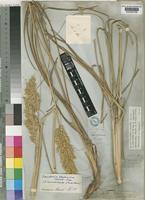
Andropogon arundinaceus

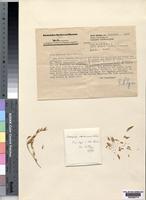
2 Images see all

Rytidosperma aureocephalum (Anders.) Forsan [family POACEAE]
Sorghum arundinaceum (Desv.) Stapf [family POACEAE]
Previous
Next

Name

Identification
Andropogon arundinaceus Willd. [family POACEAE ] Sorghum arundinaceum (Desv.) Stapf [family POACEAE ] (stored under name);
Related name
  • Danthonia elephantina
  • Rytidosperma aureocephalum
  • Danthonia arundinacea
  • Andropogon arundinaceus
  • Sorghum arundinaceum

Flora

Entry for ANDROPOGON halepensis Stapf var. effusus [family POACEAE]
Herbarium
Royal Botanic Gardens, Kew (K)
Collection
Flora Capensis
Resource Type
Reference Sources
Entry From
Flora Capensis, Vol 7, page 310, (1900) Author: (By O. STAPF.)
Names
ANDROPOGON halepensis Stapf var. effusus [family POACEAE], in Hook. f. Fl. Brit. Ind. vii. 183
ANDROPOGON Sorghum Hack. var. effusus [family POACEAE], Androp. in DC. Monogr. Phan. vi. 503; Durand & Schinz, Consp. Fl. Afr. v. 724.
ANDROPOGON arundinaceus Willd. [family POACEAE], Spec. iv. 906.
Rhaphis arundinaceus Desv. [family POACEAE], Opusc. 69.
Sorghum halepense Nees [family POACEAE], Fl. Afr. Austr. 88.
Information
perennial; culms erect, usually very tall, up to 10–16 ft. long, stout, simple or scantily branched; sheaths glabrous, except the minutely silky nodes, strongly striate; ligules membranous, short, ciliate, hairy inside; blades linear-lanceolate or linear from an often rounded base, long tapering to a fine point, 1–2 ft. long, 3/4–2 1/2 in. broad, flat, glabrous, or with a silky line on the back at the union with the sheath, margins serrulate, midrib stout; panicle decompound, very large, up to 1 1/2 ft. long, effuse, nodding, lower branches up to 1 ft. long, often undivided to the middle; rhachis and branches or at least the ultimate branchlets scabrid and minutely bearded at the nodes; racemes 1/2–1 in. long, linear; joints 3–7, more than half as long as the sessile spikelets, more or less ciliate, pedicels very similar; sessile spikelets ovate-lanceolate, 3–4 1/2 lin. long, 1–1 1/2 lin. broad, pale, ultimately sometimes darker or even black, shining; lower glume more or less hairy, at least on the sides, 7–13-nerved, callus shortly bearded; upper lanceolate, acuminate, shining, 5–7-nerved; upper valve broadly oblong or ovate, 2-lobed, half as long as the glumes, ciliate, 1-nerved, awn 4–6 lin. long, rarely longer, kneed, sometimes reduced to a bristle or suppressed; pale linear-oblong, slightly shorter than the valve; anthers 1 1/4–1 1/2 lin. long; grain obovate or obovate-oblong, 1/3 shorter than the glumes; pedicelled spikelets almost as long as the sessile, but narrower, ♂ or barren; lower glume herbaceous, glabrous, 5–9-nerved, keels aculeolate or scabrid; upper similar, 3–5-nerved; valves, when present, hyaline, ciliate, 2–1-nerved. null
Range
Throughout the tropics, but particularly in Africa.
Distribution
COAST REGION Knysna Div.; hills near Melville, Burchell, 5465! Komgha Div., banks of the Kei River, below 500 ft., Drège.EASTERN REGION Tembuland; by the Umtata River, Drège, Pondoland; between the Umtata River and St. Johns River, 1000–2000 ft., Drège, by the St. Johns River, in coffee plantations, Drège. Natal; near Durban, Drège, banks of Tugela River, Buchanan, 296! by the Umlazi River, Krauss, 184! Umhlanga, Wood, 1332! and without precise locality, Gerrard, 690!WESTERN REGION Little Namaqualand; in thickets by the Orange River, near Verleptpram, below 500 ft., Drège!
Notes
The form from which the species was originally described is apparently only a weaker state with smaller spikelets.

Related Materials

  • Terms and Conditions
  • Privacy Policy
  • Cookie Policy
  • Cookie Settings
  • Accessibility
  • Help
  • Contact Us
  • Facebook
  • Twitter
ITHAKA

JSTOR is part of ITHAKA, a not-for-profit organization helping the academic community use digital technologies to preserve the scholarly record and to advance research and teaching in sustainable ways.

©2000-2026 ITHAKA. All Rights Reserved. JSTOR®, the JSTOR logo, JPASS®, Aluka®, and ITHAKA® are registered trademarks of ITHAKA.

╳