JSTOR Global Plants Home
  • Home
  • Browse
  • About
  • Access
  • Account
    • Saved Items
    • Profile
  • Log in

Global Plants

Skip to Main Content
  • JSTOR Global Plants Home
  • Global Plants

    • Browse
    • About
    • Access
    • Account
      • Saved Items
      • Profile
Log in
  • Browse
  • About
  • Access
  • Account
    • Saved Items
    • Profile
Advanced Search

Compilation
Andropogon apricus

15 Images see all

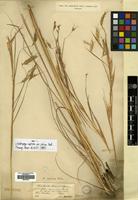
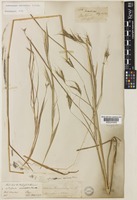
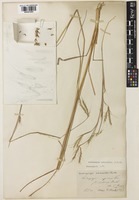
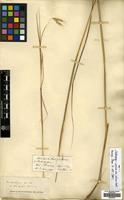
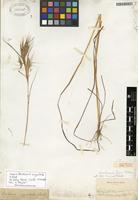
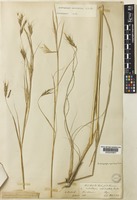
Type of Andropogon apricus Trin. var. indicus Hack. [family GRAMINEAE]
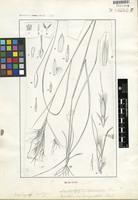
Isotype of Andropogon angustatus (J. Presl) Steud. [family POACEAE]
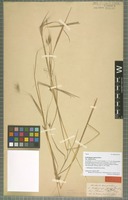
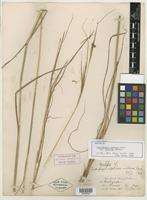
Type of Andropogon apricus Nees variety indicus Hack. [family POACEAE]
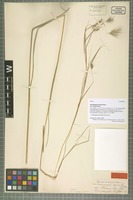
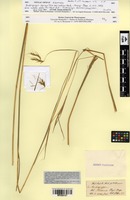
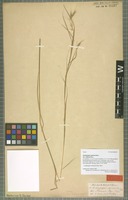
Holotype of Andropogon pseudapricus Stapf [family POACEAE]
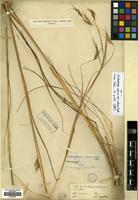
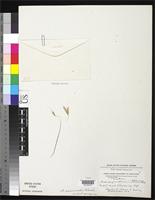
Type of Andropogon apricus Nees variety indicus Hack. [family POACEAE]
Isotype of Andropogon apricus Trin. var. indicus Hack. [family POACEAE]
Type? of Andropogon apricus var. indicus Hack. [family POACEAE]
Isotype of Andropogon apricus Trin. var. indicus Hack. [family POACEAE]
Type of Andropogon apricus Trin. var. indicus Hack. [family GRAMINEAE]
Andropogon chinensis (Nees) Merr. [family POACEAE]
Type of Andropogon apricus Trin. var. indicus Hack. [family GRAMINEAE]
Type of Andropogon apricus Nees variety indicus Hack. [family POACEAE]
Filed as Andropogon apricus var. indicus Hackel, E. 1889 [family POACEAE]
Isotype of Andropogon angustatus (J. Presl) Steud. [family POACEAE]
Isotype of Andropogon apricus Trin. var. indicus (Nees) Hack. [family POACEAE]
Previous
Next

Name

Identification
Andropogon null [family GRAMINEAE ] Verified by Not on sheet, Andropogon ascinodis C.B. Clarke [family GRAMINEAE ] (stored under name); Verified by Not on sheet, Andropogon apricus Trin. [family GRAMINEAE ] Verified by Not on sheet,
Related name
  • Andropogon
  • Andropogon apricus
  • Diectomis laxa
  • Diectomis angustata
  • Andropogon pseudapricus
  • Cymbopogan hirtina
  • Andropogon ascinodis
  • Andropogon angustatus

Flora

Entry for ANDROPOGON pseudapricus Stapf [family POACEAE]
Herbarium
Royal Botanic Gardens, Kew (K)
Collection
Flora of Tropical Africa
Resource Type
Reference Sources
Entry From
Flora of Tropical Africa, Vol 9, page 1, (1917) Author: (By O. STAPF.)
Names
ANDROPOGON pseudapricus Stapf [family POACEAE]
ANDROPOGON apricus Hack. var. africanus [family POACEAE], in DC. Monogr. Phan. vi. 457; Durand & Schinz, Consp. Fl. Afr. v. 706 and Études Fl. Congo, 315; Pobéguin, Ess. Fl. Guin. Franç. 216; Th. & Hél. Durand, Syll. Fl. Congol. 624.
ANDROPOGON appendiculatus Durand & Schinz var. genuinus [family POACEAE], Études Fl. Congo, 314 (partly).
Information
Annual, rarely perennial, with a few intravaginal innovations, usually 2–4 ft. high, occasionally much higher. Culms slender, erect, simple except for the inflorescence or with a long branch resembling the primary culm from one of the upper nodes, up to over 6-noded below the panicle, terete, glabrous, smooth. Leaf-sheaths terete, tight, striate, often flushed with purple below, glabrous, rarely loosely hairy, smooth, produced at the mouth into short auricles; ligules scarious, truncate, adnate to the auricles of the sheath, up to 1 lin. (rarely more) long; blades linear from a narrow base, long-tapering to a setaceous point, up to over 1/2 (sometimes 1) ft. long, 1–1 1/2 (rarely 2 1/2) lin. wide, rather firm, but flexuous, glabrous or sparingly hairy, pale green, turning reddish, scaberulous, particularly upwards, midrib slender, whitish, primary lateral nerves 2–3 on each side, very fine. Inflorescence an elongate or fastigiate obpyramidal and often ample spatheate panicle, 1/2–1 1/2 ft. long, of 5–7 frequently mixed tiers, approximate upwards and up to 5- (rarely 7-) rayed; lowest spathes like the preceding leaves, but with shorter, almost setaceous blades, the following rapidly approaching the spatheoles in shape and size; rays slender, filiform, those of mixed tiers usually very unequal, the compound ones often over-topping the next or 2 next tiers, the simple 3/4 to over 1 1/2 in. long. Spatheoles more or less scarious, linear-lanceolate, long-tapering upwards, acute to setaceously acuminate, glabrous or nearly appressedly hairy, 2–2 1/2 (rarely 3) in. long and at length tightly inrolled; peduncles finely filiform, at length slightly (rarely much) exceeding the spatheole or permanently shorter than it, puberulous or scaberulous towards the subcupular tips. Racemes 2-nate, one subsessile, the other with a short base, from less than 1 to 2 1/2 in. long, flexuous, villous, mostly laterally exserted from the spathe, at least before maturity; joints and pedicels clavate-cuneate, attenuated to a very slender base, tips very obliquely truncate, obscurely hollowed out, the pedicels often unequally 2-toothed, margins silky-ciliate, upper cilia up to 1 1/2 (rarely 2) lin. long. Sessile spikelets of all pairs heterogamous (or those of the subsessile more or less imperfect), laterally much compressed, loosely wedged in between joint and pedicel, narrowly linear in front view, 2 1/2–2 3/4 lin. long, pale yellowish-green; callus slender, subacute, 1/2 lin. long, shortly and densely bearded. Glumes equal, lower chartaceous along the keels, otherwise membranous, deeply and narrowly grooved between the narrow keels which are smooth below and scaberulous near the tips, minutely truncate, glabrous or very sparingly and minutely hairy upwards, nerves 2 or 3, very fine and close in each keel; upper glume submembranous, boat-shaped, acute, 1-nerved, eciliate, with a fine terminal bristle up to 4 lin. long. Lower floret reduced to an oblong hyaline ciliolate 2-nerved valve, 2 lin. long. Upper floret hermaphrodite: valve narrow, oblong, shortly 2-fid, up to 2 lin. long, ciliolate; awn 1–1 1/2 in. long, slender, column 1/2– 2/3 in. long, scaberulous, dark brown, bristle yellowish; valvule an oblong obtuse hyaline scale. Anthers 1 1/4 lin. long. Pedicelled spikelet ♂ or neuter, lanceolate-oblong, 2 1/2–3 lin. long, greenish or sometimes dull brown or purple; lower glume membranous, about 7-nerved, scaberulous and often more or less hairy upwards on the back (hairs up to 2 1/2 lin. long), with a fine terminal bristle up to 6 lin. long; upper glume subhyaline, acute, with or without a bristle, 3-nerved; valves of both florets hyaline, ciliolate, slightly shorter than the glumes, of the lower 2-, of the upper 3-nerved; the latter awnless.
Distribution
Congo Lower Guinea Lutete, borders of streams, Hens, 290! Stanley Pool, in sand, Hens, 319 partly! Kisantu, Gillet, 878!Angola Lower Guinea moist meadows at Old Munonque, Gossweiler, 4153!Nyasaland Mozamb. Dist. Zomba, Whyte !Bagirmi North Central region of Lake Fittri, near Massenia, Chevalier, 9634!French Guinea Upper Guinea Timbo, Pobéguin, 1781 b ! 1782! 1783! 1785! Baffing Valley, Pobéguin, 1783 b ! Kankan, Bardou, 24! Kouroussa, Pobéguin, 516! 518! between Nyamina and Koulikoro, Chevalier, 2347!Nigeria Upper Guinea Lokoja, Dalziel, 287! Nupe, Barter, 936! Katagum District, Dalziel, 264! Sokoto, Dalziel, 490! 490 a !
Notes
Gossweiler's specimens are the only ones which are distinctly perennial. They are at the same time very robust with more elongated and loose panicles, the racemes being generally exserted by 1–1 1/2 in. from the tops of the spatheoles and of a slightly greyish colour. Their facies on that account is not quite that of ordinary A. pseudapricus. Yet the structure of the spikelets as to shape and size is so like that of the common state that we may assume the difference to be due to conditions of habitat or to a slight racial deviation. A. apricus, Trin. (A. apricus, var. genuinus, Hack. l.c.) has scantier panicles with very slender racemes and slender joints and pedicels, but is in other respects very similar to meagre specimens of A. pseudapricus. It seems to be confined to tropical America. Hackel's Indian variety of A. apricus is a distinct cæspitose perennial. It is A. ascinodis, C. B. Clarke.

Related Materials

  • Terms and Conditions
  • Privacy Policy
  • Cookie Policy
  • Cookie Settings
  • Accessibility
  • Help
  • Contact Us
  • Facebook
  • Twitter
ITHAKA

JSTOR is part of ITHAKA, a not-for-profit organization helping the academic community use digital technologies to preserve the scholarly record and to advance research and teaching in sustainable ways.

©2000-2026 ITHAKA. All Rights Reserved. JSTOR®, the JSTOR logo, JPASS®, Aluka®, and ITHAKA® are registered trademarks of ITHAKA.

╳