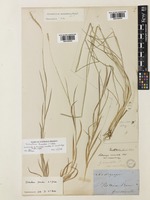
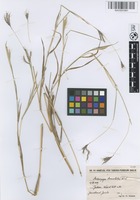
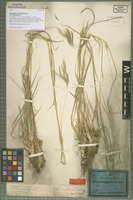
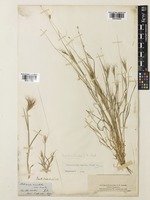
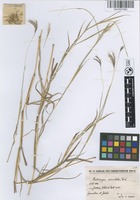
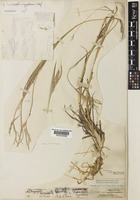
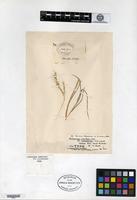
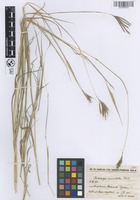
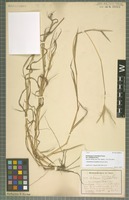
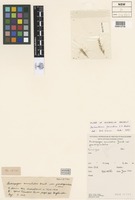
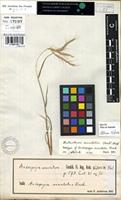
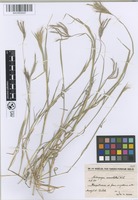
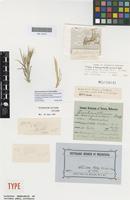
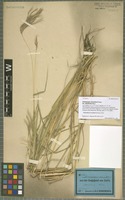
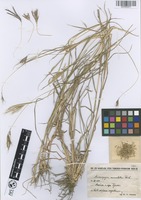
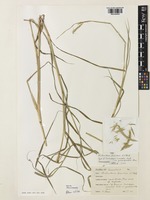
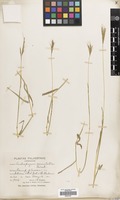
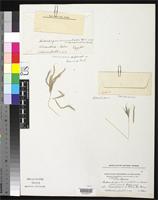
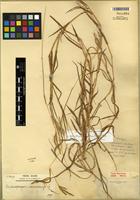
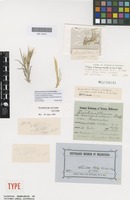
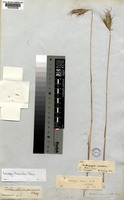
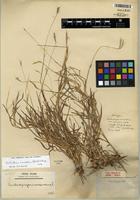
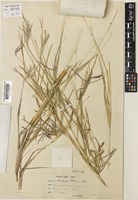
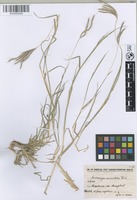
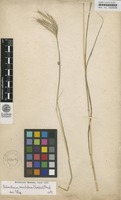
perennial, cæspitose; stem erect or ascending, simple, rarely with 1–2 flowering branches from the upper nodes, 3 ft. long; sheaths terete or obscurely keeled above, tight, glabrous except the bearded nodes, margins sometimes ciliate above; ligules 1–2 lin. long, obtuse, glabrous; blades linear, tapering to a long fine point, 2–10 in. by 1 1/2–3 lin., rigid, glaucous, scabrid, glabrous or with tubercle-based hairs; racemes 5–7, rarely fewer, or solitary, or many (15), slender 1 1/2–3 1/2 in. long, rather flaccid, pale or purplish, peduncles short, glabrous, joints and pedicels about half the length of the spikelets, ciliate; all sessile spikelets hermaphrodite, or the lowest one like the pedicelled and ♂; hermaphrodite spikelets oblong, 1 1/2–2 1/2 lin. long, callus minute; lower glume very obtuse, concave, usually more or less hairy all over the back, with tubercle-based hairs, intracarinal nerves 5–9, evanescent below the tip, keels spinulously ciliate; upper lanceolate; lower valve as long as the upper glume, linear-oblong, obtuse, nerveless, glabrous; upper stipitiform, awn slender, scabrid, 8–12 lin. long; pedicelled spikelets hairy all over, flatter than the hermaphrodite; lower glume usually long, ciliate all along the margins, 7–11-nerved; valves more or less reduced, or the upper or both suppressed. null