JSTOR Global Plants Home
  • Home
  • Browse
  • About
  • Access
  • Account
    • Saved Items
    • Profile
  • Log in

Global Plants

Skip to Main Content
  • JSTOR Global Plants Home
  • Global Plants

    • Browse
    • About
    • Access
    • Account
      • Saved Items
      • Profile
Log in
  • Browse
  • About
  • Access
  • Account
    • Saved Items
    • Profile
Advanced Search

Compilation
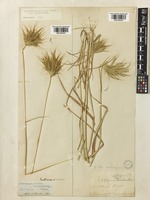
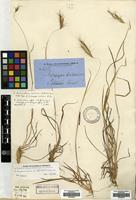
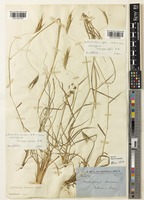
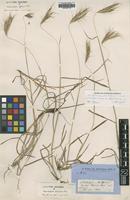
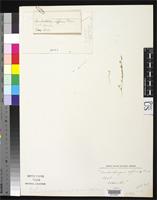
Andropogon affinis

9 Images see all

Dichanthium sericeum (R.Br.) A.Camus [family POACEAE]
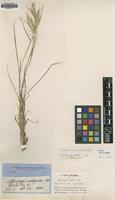
Isolectotype of Andropogon sericeus R.Br. [family GRAMINEAE]
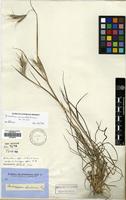
Isolectotype of Andropogon affinis R.Br. [family POACEAE]
Lectotype of Andropogon sericeus R.Br. [family POACEAE]
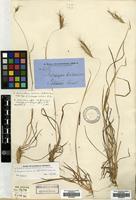
Syntype of Andropogon affinis R.Br. [family POACEAE]
Syntype of Andropogon affinis R.Br. [family GRAMINEAE]
Isolectotype of Andropogon sericeus R.Br. [family GRAMINEAE]
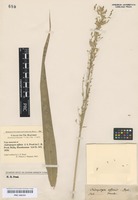
Type of Andropogon affinis J. Presl [family POACEAE]
Filed as Andropogon affinis Presl, C.B. 1830 [family POACEAE]
Previous
Next

Name

Identification
Dichanthium sericeum (R.Br.) A.Camus [family POACEAE ] (stored under name); Dichanthium sericeum (R.Br.) A.Camus [family POACEAE ] Verified by Bryan Kenneth Simon, Dichanthium sericeum (R.Br.) B.K.Simon [family POACEAE ] Verified by Bryan Kenneth Simon, Andropogon sericeus R.Br. [family POACEAE ] Andropogon affinis R.Br. [family POACEAE ]
Related name
  • Dichanthium sericeum affine
  • Dichanthium affine
  • Dichanthium sericeum
  • Andropogon sericeus
  • Andropogon affinis

Flora

Entry for Dichanthium sericeum R. Br. A. Camus [family GRAMINEAE]
Herbarium
Royal Botanic Gardens, Kew (K)
Collection
Flora Zambesiaca
Resource Type
Reference Sources
Entry From
FZ, Vol 10, Part 4, (2002) Author: T. A. Cope
Names
Dichanthium sericeum R. Br. A. Camus [family GRAMINEAE], in Bull. Mus. Hist. Nat. (Paris) 27: 549 (1921). —Burbidge, Australian Grasses 1: 146 (1966). —Lazarides, The Grasses of Central Australia: 70 (1970). —Wheeler, Jacobs & Norton, Grasses of New South Wales: 163 (1982). —Simon, A Key to Australian Grasses, ed. 2: 98 (1993). —Simon & Latz, A Key to the Grasses of the Northern Territory, Australia: 26 (1994). Type from Australia.
Andropogon sericeus R. Br. [family GRAMINEAE], Prodr. Fl. Nov. Holl.: 201 (1810).
Andropogon affinis R. Br. [family GRAMINEAE], Prodr. Fl. Nov. Holl.: 201 (1810). Type from Australia.
Andropogon chrysantherus F. Muell. [family GRAMINEAE], in Linnaea 25: 443 (1852). Type from Australia.
Andropogon jubatus Balansa [family GRAMINEAE], in Bull. Soc. Bot. France 19: 322 (1872). Type from New Caledonia.
Andropogon acutiusculus Hack. [family GRAMINEAE], in A. & C. de Candolle, Monogr. Phan. 6: 575 (1889). Type from Australia.
Andropogon sericeus var. mollis F.M. Bailey [family GRAMINEAE], in Queensland Agric. J. 30: 316 (1913). Type from Australia.
Dichanthium acutiusculum Hack. A. Camus [family GRAMINEAE], in Bull. Mus. Hist. Nat. (Paris) 27: 549 (1921).
Information
Caespitose perennial with short rhizomes; culms up to 100 cm high, robust, erect or slightly decumbent; nodes exposed and bearded; internodes glabrous; leaf sheaths glabrous to pilose; ligule a scarious membrane up to 1.5 mm long; leaf laminas up to 15 cm long, linear-lanceolate, glabrous to pilose throughout. Racemes 1–15, digitate, sessile to subsessile, white-villous, the culm below the inflorescence glabrous; rhachis internodes and pedicels thinly pilose; the lowermost 1–6 spikelet pairs usually homogamous, male or neuter. Sessile spikelets elliptic-oblong; inferior glume pilose or rarely glabrous on the back below the middle, always with tubercle-based cilia (up to 6 mm long) along the margins and forming a transverse subapical fringe; superior glume slightly longer than the inferior, glabrous; inferior floret barren, the lemma hyaline; superior floret stipitiform, the lemma hyaline, without a palea; awn c. 30 mm long; anthers c. 2 mm long. Pedicelled spikelets c. 4 mm long, obovate-oblong.
Range
Native of Australia; cultivated in tropical Africa.
Distribution
Zimbabwe C Harare (Salisbury), cult., 1460 m, xii.1919, Eyles 1971 (K; PRE).
Notes
The racemes are sessile or very shortly pedunculate. The inferior glume of the sessile spikelet is covered in long white silky hairs and has an arch of extremely long cilia near the apex, many of which arise from tubercles.

Related Materials

  • Terms and Conditions
  • Privacy Policy
  • Cookie Policy
  • Cookie Settings
  • Accessibility
  • Help
  • Contact Us
  • Facebook
  • Twitter
ITHAKA

JSTOR is part of ITHAKA, a not-for-profit organization helping the academic community use digital technologies to preserve the scholarly record and to advance research and teaching in sustainable ways.

©2000-2026 ITHAKA. All Rights Reserved. JSTOR®, the JSTOR logo, JPASS®, Aluka®, and ITHAKA® are registered trademarks of ITHAKA.

╳