JSTOR Global Plants Home
  • Home
  • Browse
  • About
  • Access
  • Account
    • Saved Items
    • Profile
  • Log in

Global Plants

Skip to Main Content
  • JSTOR Global Plants Home
  • Global Plants

    • Browse
    • About
    • Access
    • Account
      • Saved Items
      • Profile
Log in
  • Browse
  • About
  • Access
  • Account
    • Saved Items
    • Profile
Advanced Search

Compilation
Amyris gileadensis

4 Images see all

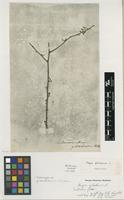
Type? of Amyris gileadensis L. [family BURSERACEAE]
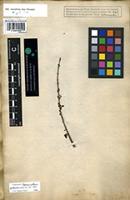
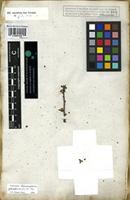
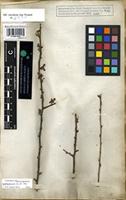
Syntype of Amyris opobalsamum Forssk. [family RUTACEAE]
Previous
Next

Name

Identification
Amyris opobalsamum Forssk. [family RUTACEAE ] Verified by Not on Sheet, Commiphora gileadensis (L.) Christensen [family BURSERACEAE ] (stored under name); Verified by F.N. Hepper, 1984 Amyris gileadensis L. [family RUTACEAE ] Verified by Not on Sheet,
Related name
  • Amyris gileadensis
  • Commiphora gileadensis
  • Balsamodendrum gileadense
  • Amyris opobalsamum

Flora

Entry for COMMIPHORA gileadensis (L.) C. Chr. [family BURSERACEAE]
Herbarium
Royal Botanic Gardens, Kew (K)
Collection
Flora Somalia
Resource Type
Reference Sources
Entry From
Flora Somalia, Vol 2, (1999) Author: by M. Thulin [updated by M. Thulin 2008]
Names
COMMIPHORA gileadensis (L.) C. Chr. [family BURSERACEAE], (1922);
Amyris gileadensis L. [family RUTACEAE], (1764);. [type as above]
Amyris opobalsamum L. [family RUTACEAE], (1764);. [type as above]
COMMIPHORA opobalsamum (L.) Engl. [family BURSERACEAE], (1883). Fig. 143. [type as above]
COMMIPHORA albiflora Engl. [family BURSERACEAE], (1904).
COMMIPHORA velutina Chiov. [family BURSERACEAE], (1916);. types: S1, near “Biobahal”, Paoli 857 (FT syn.), and near “Lugh”, Paoli 997 (FT syn.).
COMMIPHORA anfractuosa Chiov. [family BURSERACEAE], (1932);. type: S2, near “Moccoidere”, Paoli 1335 (FT holo.).
COMMIPHORA cassan Chiov. [family BURSERACEAE], (1932);. types: C2, between “Oddur” and “Baidoa”, Senni 828 (FT syn.), “Uegit”, Senni 779 (FT syn.).
COMMIPHORA coronillifolia Chiov. [family BURSERACEAE], (1932);. type: C2, “El Dubbo”, Guidotti 6 (MOD holo.).
COMMIPHORA microcarpa Chiov. [family BURSERACEAE], (1932);. types: C2 and S1, Senni 756, 758, 765 bis, 818, 862 ter (FT syn.).
COMMIPHORA ancistrophora Chiov. [family BURSERACEAE], (1932);. types: S2, “Mahaddei”, Confalone 31, 89 (FT syn.).
COMMIPHORA suckertiana Chiov. [family BURSERACEAE], (1934);. type: C2, between “Bulo Burti” and “El Mocoile”, Suckert 57 (FT holo., K iso.).
COMMIPHORA gillettii Chiov. [family BURSERACEAE], (1941);. type: N1, “Haiti tug”, 45°20’E, 10°22’N, Gillett 4817 (K holo., FT iso.).
Information
Shrub or tree, up to 5 m tall, unarmed, sometimes with long slender drooping branches; bark yellowish to dull orange or grey or black, smooth, sometimes peeling in small papery flakes; branchlets longitudinally ridged, glabrous to pubescent. Leaves 3–9(–11)-foliolate, glabrous to densely pubescent, sometimes with hooked hairs; petiole 2–35 mm long, sometimes narrowly winged; rhachis sometimes narrowly winged; leaflets linear to oblanceolate, obovate or suborbicular, 0.3–3.2 x 0.1–2(–2.5) cm, subacute to retuse at the apex, with entire margins, the lateral leaflets smaller than the terminal one. Flowers in 1–several-flowered glabrous to pubescent cymes or clusters; peduncle c. 0.5–5 mm long; pedicels 0.5–2.5(–6) mm long. Calyx 1–1.5 mm long, glabrous or pubescent. Petals c. 2–5 mm long, white or cream, glabrous or pubescent outside. Fruits ellipsoid to ovoid, obtuse and apiculate at the apex, 5–10 x 3–7 mm, glabrous or sparsely puberulous, purplish, marked with 4 pale lines, subsessile or usually on a distinct stalk; pericarp 4-valved; pseudaril with cup-like basal part and thinner upper part; stone ellipsoid to ovoid, flattened, 4–7.5 x 3–5 mm, with sterile cell much smaller than the fertile cell.
Range
N1–3; C1, 2; S1, 2
Altitude range
15–1300 m.
Distribution
SOMALIA Gillett 4307; Elmi & Hansen 4060; Thulin 6372.
Distribution (external)
Djibouti
Eritrea
E Ethiopia
NE Kenya
E Sudan
Egypt
Arabia
Notes
Daseino, dhudus, dhusundus, gabrar, garoon madow, goron, qoron, sagaarasol (Som.). C. gileadensis is taken here in a broader sense than by previous authors. Most of the synonyms listed above have hardly been used since they were published, but Gillett in Fl. Trop. E. Afr. (1991) used C. velutina for the form occurring in north-eastern Kenya. This has pubescent, usually 5–9-foliolate leaves and corresponds to the form recognized by Vollesen in Fl. Eth. 3: 477 (1990) as C. coronillifolia. Vollesen also recognized C. ancistrophora with 3–5-foliolate leaves and an indumentum of hooked hairs, and C. albiflora, with larger leaflets and longer peduncles than C. coronillifolia, as distinct from C. gileadensis with 3–5-foliolate, glabrous or sparsely pubescent leaves without narrow wings on petiole and rhachis. In Somalia, which is obviously the centre of variation for this taxon, some of the material corresponds to the different forms mentioned above, but there are also many intermediates. C. anfractuosa, for example, was regarded by Vollesen as a synonym of C. albiflora, but the type has an indumentum of hooked hairs. In Somalia there are also various forms not known from other areas. One example is the type of C. gillettii, which is unusual in having linear leaves, but also in this case other collections are intermediate to more normal C. gileadensis. The illustration of C. cassan in Fl. Somala 2: 123 (1932) shows a plant misleadingly drawn with dentate leaflets. The corresponding material (Senni 779) has very young 3-foliolate leaves with entire leaflets. However, the veins on the back of the leaflets may give the impression of marginal teeth. The original material of C. microcarpa is very poor. Three of the syntypes consist of fruiting twigs, whereas the remainig two have twigs with buds. None of them shows leaves. At least some of the syntypes are almost certainly conspecific with C. gileadensis in the broad sense taken here (e.g. Senni 765 bis), and they may well all belong here.

Related Materials

  • Terms and Conditions
  • Privacy Policy
  • Cookie Policy
  • Cookie Settings
  • Accessibility
  • Help
  • Contact Us
  • Facebook
  • Twitter
ITHAKA

JSTOR is part of ITHAKA, a not-for-profit organization helping the academic community use digital technologies to preserve the scholarly record and to advance research and teaching in sustainable ways.

©2000-2026 ITHAKA. All Rights Reserved. JSTOR®, the JSTOR logo, JPASS®, Aluka®, and ITHAKA® are registered trademarks of ITHAKA.

╳