JSTOR Global Plants Home
  • Home
  • Browse
  • About
  • Access
  • Account
    • Saved Items
    • Profile
  • Log in

Global Plants

Skip to Main Content
  • JSTOR Global Plants Home
  • Global Plants

    • Browse
    • About
    • Access
    • Account
      • Saved Items
      • Profile
Log in
  • Browse
  • About
  • Access
  • Account
    • Saved Items
    • Profile
Advanced Search

Compilation
Amblogyna urceolata

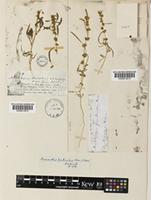
4 Images see all

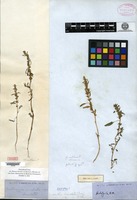
Type of Amblogyna urceolata (Bentham) A. Gray var. obcordata A. Gray [family AMARANTHACEAE]
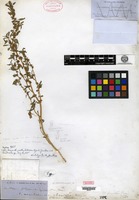
Type of Amaranthus urceolatus Benth. [family AMARANTHACEAE]
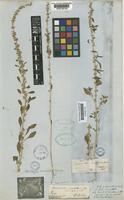
Amaranthus fimbriatus S.Watson [family AMARANTHACEAE]
Previous
Next

Name

Identification
Amaranthus urceolatus Benth. [family AMARANTHACEAE ] (stored under name); Amblogyna urceolata Moq. [family AMARANTHACEAE ]
Related name
  • Amaranthus fimbriatus
  • Sarratia berlandieri
  • Amblogyna urceolata
  • Amaranthus urceolatus
Common name
  • Trans-Pecos amaranth, Flora of North America Vol. 4

Flora

Entry for Amaranthus obcordatus (A. Gray) Standley [family AMARANTHACEAE]
Herbarium
Flora of North America (FNA)
Collection
Flora of North America
Resource Type
Reference Sources
Entry From
Flora of North America, Vol 4,
Names
Amaranthus obcordatus (A. Gray) Standley [family AMARANTHACEAE], in N. L. Britton et al., N. Amer. Fl., 21: 107. 1917
Amblogyna urceolata (Bentham) A. Gray var. obcordata A. Gray [family ], Proc. Am er. Acad. Arts, 5: 168. 1861 (as Amblyogyne)
Treatment Author(s)
Sergei L. Mosyakin
Kenneth R. Robertson
Information
Plants glabrous. Stems erect or ascending, branched, 0.1–0.5 m. Leaves: petiole 1/2 as long as blade; blade oblong-lanceolate to lanceolate-linear, 1–3 × 0.2–1 cm, base cuneate to narrowly cuneate, margins entire, plane or sometimes undulate, apex rounded or obtuse-truncate, mucronate. Inflorescences mostly axillary, but at apex flowers also condensed in terminal spikes or spicate panicles, usually leafy proximally or nearly leafless distally. Bracts broadly ovate, 1 mm or shorter, 1/2 or less length of tepals, apex acute. Pistillate flowers: tepals 5, spreading at maturity, spatulate, clawed, subequal, 2 mm, margins fimbriate, apex rounded or shallowly emarginate; stigmas 3. Staminate flowers: tepals (3–)5; stamens 3. Utricles narrowly oblong, 1–1.4 mm, shorter than tepals, indehiscent. Seeds dark reddish brown to nearly black, lenticular or broadly lenticular, 0.6–0.8 mm diam., smooth.
Phenology
jun-aug (summer), sep-nov (fall)
Altitude range
1000–1200 m;
Distribution
n Mexico (Sinaloa).n Mexico (Sonora).USA Ariz.USA Tex.
Discussion
Amaranthus obcordatus has been reported only from southern Arizona (T. H. Kearney and R. H. Peebles 1960), trans-Pecos Texas in Brewster and Pecos counties, and adjacent regions of Mexico (C. F. Reed 1969b). It was also tentatively reported for New Mexico, but no localities were cited (W. C. Martin and C. R. Hutchins 1980). The proper taxonomic position of A. obcordatus and its relationships to other species remain problematic and are in need of further study.

Related Materials

  • Terms and Conditions
  • Privacy Policy
  • Cookie Policy
  • Cookie Settings
  • Accessibility
  • Help
  • Contact Us
  • Facebook
  • Twitter
ITHAKA

JSTOR is part of ITHAKA, a not-for-profit organization helping the academic community use digital technologies to preserve the scholarly record and to advance research and teaching in sustainable ways.

©2000-2026 ITHAKA. All Rights Reserved. JSTOR®, the JSTOR logo, JPASS®, Aluka®, and ITHAKA® are registered trademarks of ITHAKA.

╳