JSTOR Global Plants Home
  • Home
  • Browse
  • About
  • Access
  • Account
    • Saved Items
    • Profile
  • Log in

Global Plants

Skip to Main Content
  • JSTOR Global Plants Home
  • Global Plants

    • Browse
    • About
    • Access
    • Account
      • Saved Items
      • Profile
Log in
  • Browse
  • About
  • Access
  • Account
    • Saved Items
    • Profile
Advanced Search

Compilation
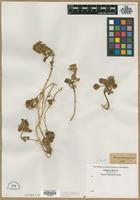
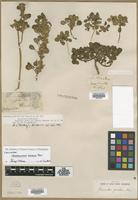
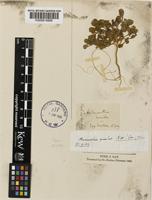
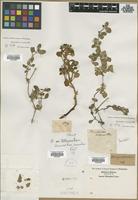
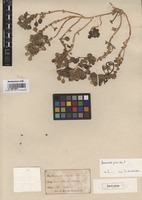
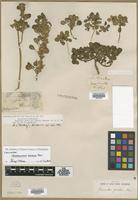
Amaranthus pumilus

6 Images see all

Filed as Amaranthus sp. [family AMARANTHACEAE]
Filed as Amaranthus pumilus Raf. [family AMARANTHACEAE]
Amaranthus pumilus Nutt. [family AMARANTHACEAE]
Filed as Achyranthes sp. [family AMARANTHACEAE]
Isotype of Amaranthus pumilus Raf. [family AMARANTHACEAE]
Lectotype of Amaranthus pumilus Raf. [family AMARANTHACEAE]
Previous
Next

Name

Identification
Amaranthus pumilus Nutt. [family AMARANTHACEAE ] (stored under name);
Related name
  • Amaranthus pumilus
  • Achyranthes sp.
  • Amaranthus sp.
Common name
  • Seabeach amaranth, Flora of North America Vol. 4
  • coast amaranth, Flora of North America Vol. 4

Flora

Entry for Amaranthus pumilus Rafinesque [family AMARANTHACEAE]
Herbarium
Flora of North America (FNA)
Collection
Flora of North America
Resource Type
Reference Sources
Entry From
Flora of North America, Vol 4,
Names
Amaranthus pumilus Rafinesque [family AMARANTHACEAE], Med. Repos., hexade, 2, 5: 360. 1808
Treatment Author(s)
Sergei L. Mosyakin
Kenneth R. Robertson
Information
Plants annual, glabrous. Stems prostrate to ascending (often forming mats), red, much-branched, 0.1–0.4(–0.5) m, fleshy. Leaves clustered near tips of branches; petiole 5–10 mm; blade orbiculate, broadly ovate or obovate, 1–1.5 cm × 1–1.5 cm, fleshy, base broadly cuneate to tapering, margin entire, plane or slightly undulate, apex broadly rounded to obtuse, mucronate. Inflorescences dense axillary glomerules, green. Bracts of pistillate flowers ovate or elliptic, 1.2–2 mm, 1/2 as long as tepals. Pistillate flowers: tepals 5, linear to narrowly oblanceolate, slightly unequal, 2.5–4 mm, margins entire, apex obtuse; style branches erect; stigmas 3. Staminate flowers intermixed with pistillate; tepals 5; stamens 5. Utricles ovoid, 4–6 mm, exceeding tepals, fleshy, smooth or slightly rugose, longitudinally wrinkled on drying, indehiscent. Seeds dark reddish brown, lenticular, 2.5 mm diam., glossy.
Conservation Status
of conservation concern;
Phenology
jun-aug (summer), sep-nov (fall)
Altitude range
0–10 m;
Distribution
USA Conn.USA Del.USA Md.USA Mass.USA N.J.USA N.Y.USA N.C.USA Pa.USA R.I.USA S.C.USA Va.
Discussion
Amaranthus pumilus is a globally and federally threatened species (Global Heritage Status Rank G2; National Heritage Status Rank N2) originally restricted to dunes and barrier island beaches along the Atlantic Ocean from southern Massachusetts to South Carolina. It has been eliminated from two-thirds of its former range, being last reported from Massachusetts in 1849, from Rhode Island in 1856, from New Jersey in 1913, and from Virginia in 1972 (S. Ramsey et al. 2000). As of fall 2003, extant populations are known only from Long Island, New York, Delaware, Maryland, North Carolina, and South Carolia. Many threats exist, including construction of sea walls and dune fencing, development, heavy recreational use, and off-road vehicle traffic. It is difficult to afford protection because of the dynamic nature of the habitat and the fugitive nature of the biology of the species. “Fugitive” refers to the fact that the species does not necessarily occur throughout its potential range at any given time (S. E. Clemants 1992).
Amaranthus pumilus is in the Center for Plant Conservation’s National Collection of Endangered Plants.

Related Materials

  • Terms and Conditions
  • Privacy Policy
  • Cookie Policy
  • Cookie Settings
  • Accessibility
  • Help
  • Contact Us
  • Facebook
  • Twitter
ITHAKA

JSTOR is part of ITHAKA, a not-for-profit organization helping the academic community use digital technologies to preserve the scholarly record and to advance research and teaching in sustainable ways.

©2000-2026 ITHAKA. All Rights Reserved. JSTOR®, the JSTOR logo, JPASS®, Aluka®, and ITHAKA® are registered trademarks of ITHAKA.

╳