JSTOR Global Plants Home
  • Home
  • Browse
  • About
  • Access
  • Account
    • Saved Items
    • Profile
  • Log in

Global Plants

Skip to Main Content
  • JSTOR Global Plants Home
  • Global Plants

    • Browse
    • About
    • Access
    • Account
      • Saved Items
      • Profile
Log in
  • Browse
  • About
  • Access
  • Account
    • Saved Items
    • Profile
Advanced Search

Compilation
Amaranthus powellii

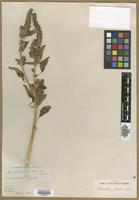
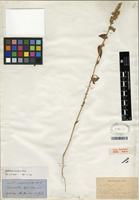
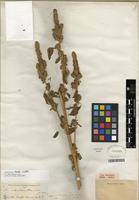
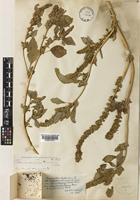
15 Images see all

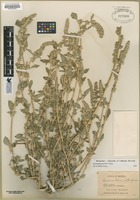
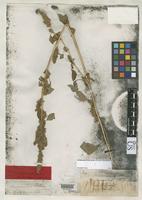
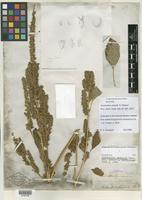
Filed as Amaranthus powellii S. Wats. [family AMARANTHACEAE]
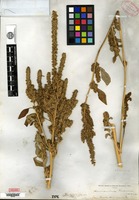
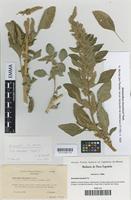
Amaranthus powellii S. Watson [family AMARANTHACEAE]
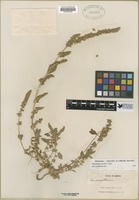
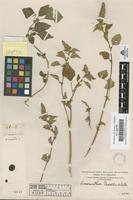
Amaranthus palmeri S.Watson [family AMARANTHACEAE]
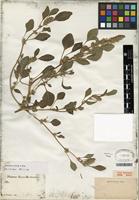
Type of Amaranthus powellii S. Watson [family AMARANTHACEAE]
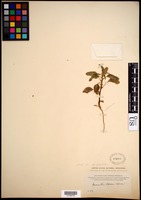
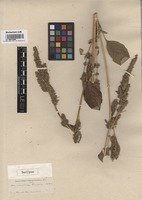
Amaranthus powellii S.Watson [family AMARANTHACEAE]
Isotype of Amaranthus powellii S. Watson [family AMARANTHACEAE]
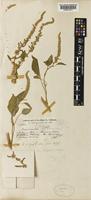
Isotype of Amaranthus powellii Watson, S. 1875 [family AMARANTHACEAE]
Type of Amaranthus powellii S. Watson [family AMARANTHACEAE]
Filed as Amaranthus powellii S. Watson [family AMARANTHACEAE]
Type of Amaranthus powellii S. Watson [family AMARANTHACEAE]
Type? of Amaranthus powellii S.Watson [family AMARANTHACEAE]
Type of Amaranthus bouchonii Tell. [family AMARANTHACEAE]
Isotype of Amaranthus powellii S. Watson [family AMARANTHACEAE]
Previous
Next

Name

Identification
Amaranthus bouchonii Tell. [family AMARANTHACEAE ] Verified by Tellung, Amaranthus powellii S. Watson [family AMARANTHACEAE ] (stored under name); Verified by P. Gil Borrell, 1997
Related name
  • Amaranthus bracteosus
  • Amaranthus hybridus
  • Amaranthus viridis
  • Amaranthus powellii
  • Amaranthus bouchonii
  • Amaranthus palmeri
  • Amaranthus obovatus
Common name
  • Powell’s amaranth, Flora of North America Vol. 4
  • Powell’s smooth amaranth, Flora of North America Vol. 4
  • green amaranth, Flora of North America Vol. 4

Flora

Entry for Amaranthus powellii S. Watson [family AMARANTHACEAE]
Herbarium
Flora of North America (FNA)
Collection
Flora of North America
Resource Type
Reference Sources
Entry From
Flora of North America, Vol 4,
Names
Amaranthus powellii S. Watson [family AMARANTHACEAE], Proc. Amer. Acad. Arts, 10: 347. 1875
Amaranthus bracteosus Uline & W. L. Bray [family AMARANTHACEAE]
Amaranthus retroflexus Linnaeus var. powellii (S. Watson) B. Boivin [family AMARANTHACEAE]
Past names
Amarantus
Treatment Author(s)
Sergei L. Mosyakin
Kenneth R. Robertson
Information
Plants glabrous or moderately pubescent toward inflorescences, becoming glabrescent at maturity. Stems usually erect, green or sometimes reddish purple, branched, mainly in inflores-cences, to nearly simple, 0.3–1.5(–2) m, stiff. Leaves: petiole mostly equaling or longer than blade; blade rhombic-ovate to broadly lanceolate, 4–8 × 2–3 cm, occasionally larger in robust plants, base cuneate to broadly cuneate, margins entire, apex cuneate to obtuse or indistinctly emarginate, with mucro. Inflorescences mostly terminal, usually with spikes at distal axils, erect and rigid, green to silvery green, occasionally tinged red, leafless at least distally. Bracts lanceolate to linear-subulate, 4–7 mm, 2–3 times as long as tepals, rigid. Pistillate flowers: tepals usually 3–5, not clawed, unequal; outer tepals narrowly ovate-elliptic or elliptic, 1.5–3.5 mm, apex aristate; style branches spreading, shorter than body of fruit; stigmas 3. Staminate flowers clustered at tips of inflorescence branches; tepals 3–5; stamens 3–5. Utricles subglobose or compressed-ovoid, 2–3 mm, equaling or shorter than tepals, smooth or lid slightly rugose or minutely verrucose, dehiscence regularly circumscissile. Seeds black, subglobose to lenticular, 1–1.4 mm diam., smooth, shiny.
Phenology
jun-aug (summer), sep-nov (fall)
Altitude range
0–2500 m;
Distribution
Mexicointroduced or naturalized in South AmericaEurasiaAustralia.USA Ariz.USA Ark.USA Calif.USA Colo.USA Conn.USA Fla.USA IdahoUSA Ill.USA Ind.USA Kans.USA Ky.USA La.USA MaineUSA Mass.USA Mich.USA Minn.USA Miss.USA Mo.USA Mont.USA Nev.USA N.H.USA N.J.USA N.Mex.USA N.Y.USA N.C.USA OhioUSA Okla.USA Oreg.USA Pa.USA R.I.USA S.C.USA S.Dak.USA Tenn.USA Tex.USA UtahUSA Vt.USA Va.USA Wash.USA W.Va.USA Wis.USA Wyo.Canada Alta.Canada B.C.Canada Ont.Canada P.E.I.Canada Que.Canada Sask.
Discussion
Amaranthus powellii is originally native to southwestern United States and adjacent regions of Mexico; now, it is widely naturalized almost everywhere in temperate regions of North America. The distribution of A. powellii is probably underestimated both in North America and the Old World, and literature references are somewhat confusing, because A. powellii has been commonly confused with A. hybridus.
Forms of Amaranthus powellii with indehiscent or occasionally irregularly dehiscent utricles were described from Europe (southwestern France, the Gironde estuary) as A. bouchonii Thellung. Similar forms occasionally occur in North America. According to J. M. Tucker and J. D. Sauer (1958) and J. D. Sauer (1967b, 1972b), they are mostly “mutant or aberrant forms” of A. powellii, or hybrids of A. powellii and/or A. hybridus with other species. Recent comparative studies of morphology and isozymes of A. bouchonii (P. Wilkin 1992) indicated that that taxon, whatever its origin was, now differs from its presumably parental species and probably deserves recognition, at least as a separate subspecies. It seems that in North America, the situation with indehiscent-fruited forms is much more complicated than in Europe, and multiple entities are involved, including deviate forms of A. powellii and also partly sterile hybrids of dioecious taxa with species belonging to the A. hybridus group. The formal recognition of A. bouchonii in North American material would be premature.
The names Amaranthus hybridus, A. chlorostachys Willdenow, and A. hybridus subsp. chlorostachys (Willdenow) Hejný were occasionally misapplied to A. powellii in North America and Europe.

Related Materials

  • Terms and Conditions
  • Privacy Policy
  • Cookie Policy
  • Cookie Settings
  • Accessibility
  • Help
  • Contact Us
  • Facebook
  • Twitter
ITHAKA

JSTOR is part of ITHAKA, a not-for-profit organization helping the academic community use digital technologies to preserve the scholarly record and to advance research and teaching in sustainable ways.

©2000-2026 ITHAKA. All Rights Reserved. JSTOR®, the JSTOR logo, JPASS®, Aluka®, and ITHAKA® are registered trademarks of ITHAKA.

╳