JSTOR Global Plants Home
  • Home
  • Browse
  • About
  • Access
  • Account
    • Saved Items
    • Profile
  • Log in

Global Plants

Skip to Main Content
  • JSTOR Global Plants Home
  • Global Plants

    • Browse
    • About
    • Access
    • Account
      • Saved Items
      • Profile
Log in
  • Browse
  • About
  • Access
  • Account
    • Saved Items
    • Profile
Advanced Search

Compilation
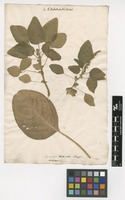
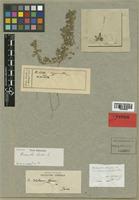
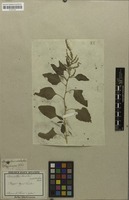
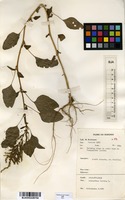
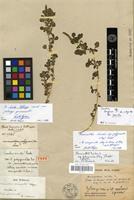
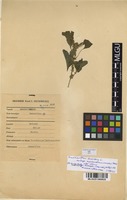
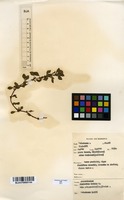
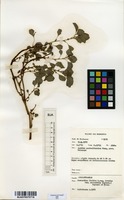
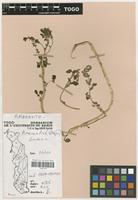
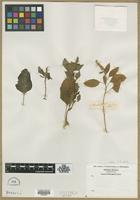
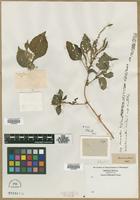
Amaranthus lividus

11 Images see all

Filed as Amaranthus lividus L. [family AMARANTHACEAE]
Type of Euxolus viridis (L.) Moq. var. polygonoides Moq. [family AMARANTHACEAE]
Type of Euxolus viridis DC. var. polygonoides Moq. [family AMARANTHACEAE]
Filed as Amaranthus lividus L. subsp. ascendens (Loisel.) Thell [family AMARANTHACEAE]
Filed as Amaranthus lividus L. subsp. polygoncides (Moq.) Probct. [family AMARANTHACEAE]
Filed as Amaranthus lividus L. subsp. lividus [family AMARANTHACEAE]
Filed as Amaranthus lividus L. [family AMARANTHACEAE]
Type? of Amaranthus polystachyus Willd. [family AMARANTHACEAE]
Filed as Amaranthus lividus L. [family AMARANTHACEAE]
Filed as Amaranthus sp. [family AMARANTHACEAE]
Previous
Next

Name

Identification
Amaranthus lividus L. [family AMARANTHACEAE ] (stored under name); Verified by Data not digitized, Euxolus viridis (L.) Moq. [family AMARANTHACEAE ] Verified by Data not digitized,
Related name
  • Euxolus viridis
  • Amaranthus lividus
  • Amaranthus sp.
Common name
  • efai (Rattray) (GHANA, AKAN-ASANTE), Burkill, H.M. 1985. The useful plants of west tropical Africa, Vol. 1
  • pélé uluzedigpoie (FB) (GUINEA, LOMA), Burkill, H.M. 1985. The useful plants of west tropical Africa, Vol. 1
  • livid amaranth, Flora of North America Vol. 4
  • wild amaranth, green amaranth., Burkill, H.M. 1985. The useful plants of west tropical Africa, Vol. 1
  • (‘Ibugo’) ìnìnè ḿmē (NWT) (NIGERIA, IGBO), Burkill, H.M. 1985. The useful plants of west tropical Africa, Vol. 1
  • fondulo (FB) (GUINEA, KISSI), Burkill, H.M. 1985. The useful plants of west tropical Africa, Vol. 1
  • Purple amaranth, Flora of North America Vol. 4
  • ìnyàη˚ (RFGA) (NIGERIA, EFIK), Burkill, H.M. 1985. The useful plants of west tropical Africa, Vol. 1
  • bredo femea (EPdS) (GUINEA-BISSAU, CRIOULO), Burkill, H.M. 1985. The useful plants of west tropical Africa, Vol. 1
  • mbum bu digèn = female spinach (JGA) (SENEGAL, WOLOF), Burkill, H.M. 1985. The useful plants of west tropical Africa, Vol. 1
  • boromonema (FB) (GUINEA, MANDING-MANINKA), Burkill, H.M. 1985. The useful plants of west tropical Africa, Vol. 1

Flora

Entry for Amaranthus blitum Linnaeus [family AMARANTHACEAE]
Herbarium
Flora of North America (FNA)
Collection
Flora of North America
Resource Type
Reference Sources
Entry From
Flora of North America, Vol 4,
Names
Amaranthus blitum Linnaeus [family AMARANTHACEAE], Sp. Pl., 2: 990. 1753
Amaranthus ascendens Loiseleur [family AMARANTHACEAE]
Amaranthus lividus Linnaeus [family AMARANTHACEAE]
Treatment Author(s)
Sergei L. Mosyakin
Kenneth R. Robertson
Information
Plants annual, glabrous. Stems ascending to prostrate, sometimes erect, simple or branched, sometimes radiating from base and forming mats, 0.1–0.6 m. Leaves: petiole usually equaling to 2 times as long as blade; blade ovate or obovate, 1–6 × 0.5–4 cm, base tapering or cuneate, margins entire, plane, apex distinctly emarginate to almost bilobate, mucronate. Inflorescences slender terminal spikes or panicles and also axillary clusters, in some forms only axillary clusters are present; spikes erect or sometimes reflexed, green, leafless at least distally. Bracts of pistillate flowers lanceolate, inconspicuous, 0.5 mm, shorter than tepals. Pistillate flowers: tepals 3, elliptic or spatulate, not clawed, equal or subequal, 0.8–1.5 mm, margins entire, apex broadly acute; style branches erect; stigmas 3. Staminate flowers clustered at tips of spikes; tepals 3; stamens 3. Utricles compressed, subglobose to obovate, 1.2–2.5(–3) mm, exceeding tepals, smooth or faintly rugose, indehiscent. Seeds black or dark reddish brown, subglobose or broadly lenticular, (0.8–)1–1.8 mm diam., smooth, shiny, filling fruit almost completely.
Phenology
jun-aug (summer), sep-nov (fall)
Altitude range
0–1000 m;
Distribution
Central AmericaSouth AmericaEurasiaAfrica.USA Ala.USA Calif.USA Fla.USA Ga.USA La.USA Md.USA Mass.USA Miss.USA N.H.USA N.J.USA N.Y.USA N.C.USA OhioUSA Pa.USA S.C.USA Tex.USA UtahUSA Va.Canada Ont.Canada Que.
Discussion
The name Amaranthus lividus has been widely used for A. blitum, in addition to other Linnaean names (see F. Fillias et al. 1980; J. P. M. Brenan and C. C. Townsend 1980; R. K. Brummitt 1984). Amaranthus blitum is of tropical origin and not common in temperate regions. It has been cultivated in Europe as a minor leaf-vegetable crop, but now it is declining and its range is becoming progressively smaller. In many temperate countries (in particular in Europe), A. blitum persists mostly as an uncommon and sporadic weed in greenhouses, ornamental gardens, and flower beds.
In Europe, it may be possible to distinguish two or three subspecies within Amaranthus blitum. The occurrence and distribution of infraspecific taxa of the A. blitum complex is insufficiently known in North America and requires additional floristic and taxonomic studies, although it appears that the most common is subsp. polygonoides (Moquin-Tandon) Cattetero. Some literature records of A. blitum from southern regions of North America are misidentifications of A. viridis, and vice versa; because of that the distributions of these two species in the flora area require critical reassessment.
Native/Introduced
introduced;

Related Materials

  • Terms and Conditions
  • Privacy Policy
  • Cookie Policy
  • Cookie Settings
  • Accessibility
  • Help
  • Contact Us
  • Facebook
  • Twitter
ITHAKA

JSTOR is part of ITHAKA, a not-for-profit organization helping the academic community use digital technologies to preserve the scholarly record and to advance research and teaching in sustainable ways.

©2000-2026 ITHAKA. All Rights Reserved. JSTOR®, the JSTOR logo, JPASS®, Aluka®, and ITHAKA® are registered trademarks of ITHAKA.

╳