JSTOR Global Plants Home
  • Home
  • Browse
  • About
  • Access
  • Account
    • Saved Items
    • Profile
  • Log in

Global Plants

Skip to Main Content
  • JSTOR Global Plants Home
  • Global Plants

    • Browse
    • About
    • Access
    • Account
      • Saved Items
      • Profile
Log in
  • Browse
  • About
  • Access
  • Account
    • Saved Items
    • Profile
Advanced Search

Compilation
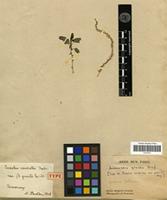
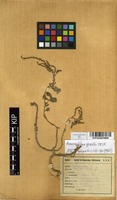
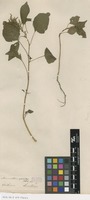
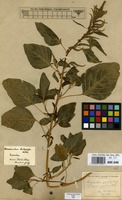
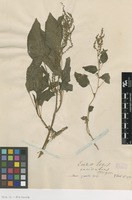
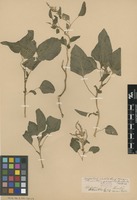
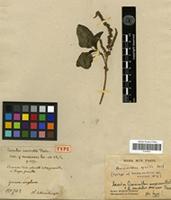
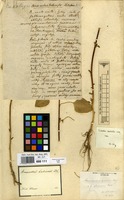
Amaranthus gracilis

16 Images see all

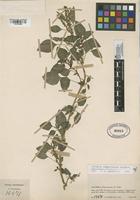
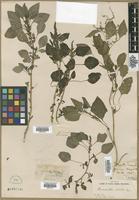
Filed as Amaranthus gracilis Desf. [family AMARANTHACEAE]
Type of Euxolus caudatus Moq. var. gracilis Moq. [family AMARANTHACEAE]
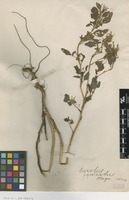
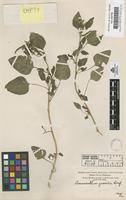
Filed as Amaranthus viridis L. [family AMARANTHACEAE]
Type of Amaranthus gracilis Desf. [family AMARANTHACEAE]
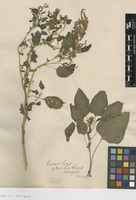
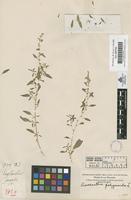
Filed as Amaranthus viridis L. [family AMARANTHACEAE]
Type of Amaranthus bahiensis Mart. [family AMARANTHACEAE]
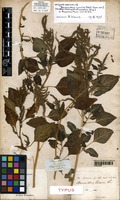
Filed as Amaranthus viridis L. [family AMARANTHACEAE]
Syntype of Euxolus caudatus Moq. var. maximus [family AMARANTHACEAE]
Type of Amaranthus bahiensis Mart. [family AMARANTHACEAE]
Filed as Phreanthus racemulosus Nutt. [family AMARANTHACEAE]
Filed as Amaranthus gracilis Desf. [family AMARANTHACEAE]
Filed as Amaranthus polygonoides L. [family AMARANTHACEAE]
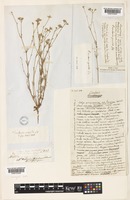
Polycarpaea synandra F.Muell. var. gracilis Benth. [family CARYOPHYLLACEAE]
Previous
Next

Name

Identification
Amaranthus viridis L. [family AMARANTHACEAE ] (stored under name); Verified by Agudelo H.,C. A., 1993 Amaranthus gracilis Desf. [family AMARANTHACEAE ] Verified by Not On Sheet,
Related name
  • Phreanthus racemulosus
  • Amaranthus viridis
  • Amaranthus gracilis
  • Euxolus caudatus
  • Amaranthus blitum
Common name
  • Slender amaranth, Flora of North America Vol. 4
  • tropical green amaranth, Flora of North America Vol. 4
  • green amaranth, Flora of North America Vol. 4

Flora

Entry for Amaranthus viridis Linnaeus [family AMARANTHACEAE]
Herbarium
Flora of North America (FNA)
Collection
Flora of North America
Resource Type
Reference Sources
Entry From
Flora of North America, Vol 4,
Names
Amaranthus viridis Linnaeus [family AMARANTHACEAE], Sp. Pl. ed., 2, 2: 1405. 1763
Amaranthus gracilis Desfonta ines ex Poiret [family AMARANTHACEAE]
Treatment Author(s)
Sergei L. Mosyakin
Kenneth R. Robertson
Information
Plants annual, sometimes short-lived perennial in tropics and subtropics, glabrous. Stems erect, simple or with lateral branches (especially distally), 0.2–1 m. Leaves: petiole 1/2–11/2 as long as blade; blade rhombic-ovate or ovate, 1–7 × 0.5–5 cm, base rounded, cuneate, or attenuate, margins entire, plane, apex obtuse, rounded, or emarginate, mucronate. Inflorescences slender spikes aggregated into elongate terminal panicles, also from distal axils, green, leafless at least distally. Bracts of pistillate flowers ovate to lanceolate, 1 mm, shorter than tepals. Pistillate flowers: tepals 3, narrowly elliptic, obovate-elliptic or spatulate, not clawed, ± equal, 1.2–1.7 mm, apex rounded or nearly acute, mucronate or not; style branches erect; stigmas 3. Staminate flowers inconspicuous, mostly at tips of inflorescences; tepals 3; stamens 3. Utricles ovoid to compressed-ovoid, 1–1.6 mm, equaling or slightly exceeding tepals, prominently or faintly rugose, indehiscent. Seeds black or dark brown, subglobose to thick-lenticular, 1 mm diam., minutely punctulate, rather dull.
Phenology
jun-aug (summer), sep-nov (fall)
Altitude range
0–1000 m;
Distribution
native to South Americaintroduced in tropical and subtropical regions worldwide.USA Ala.USA Ariz.USA Ark.USA Fla.USA Ga.USA La.USA Mass.USA Mich.USA Miss.USA N.Mex.USA N.Y.USA N.C.USA Okla.USA Pa.USA S.C.USA Tenn.USA Tex.USA Va.
Native/Introduced
introduced;

Related Materials

  • Terms and Conditions
  • Privacy Policy
  • Cookie Policy
  • Cookie Settings
  • Accessibility
  • Help
  • Contact Us
  • Facebook
  • Twitter
ITHAKA

JSTOR is part of ITHAKA, a not-for-profit organization helping the academic community use digital technologies to preserve the scholarly record and to advance research and teaching in sustainable ways.

©2000-2026 ITHAKA. All Rights Reserved. JSTOR®, the JSTOR logo, JPASS®, Aluka®, and ITHAKA® are registered trademarks of ITHAKA.

╳