JSTOR Global Plants Home
  • Home
  • Browse
  • About
  • Access
  • Account
    • Saved Items
    • Profile
  • Log in

Global Plants

Skip to Main Content
  • JSTOR Global Plants Home
  • Global Plants

    • Browse
    • About
    • Access
    • Account
      • Saved Items
      • Profile
Log in
  • Browse
  • About
  • Access
  • Account
    • Saved Items
    • Profile
Advanced Search

Compilation
Amaranthus dinteri

9 Images see all

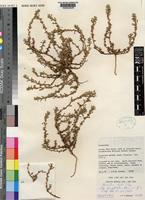
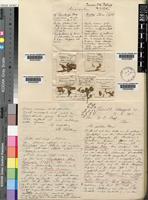
Holotype of Amaranthus dinteri Schinz subsp. brevipetiolatus J.P.M.Brenan [family AMARANTHACEAE]
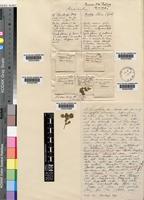
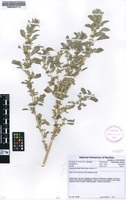
Amaranthus dinteri Schinz [family AMARANTHACEAE]
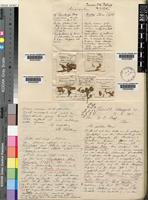
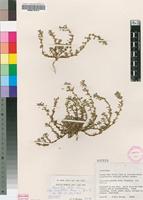
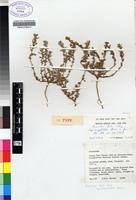
Isotype of Amaranthus dinteri Schinz subsp. brevipetiolatus Brenan [family AMARANTHACEAE]
Amaranthus dinteri Schinz [family AMARANTHACEAE]
Filed as Amaranthus dinteri Schinz var. a [family AMARANTHACEAE]
Amaranthus dinteri Schinz [family AMARANTHACEAE]
Isotype of Amaranthus dinteri Schinz subsp. brevipetiolatus Brenan [family AMARANTHACEAE]
Previous
Next

Name

Identification
Amaranthus dinteri Schinz [family AMARANTHACEAE ] (stored under name); Amaranthus unrecorded unrecorded [family AMARANTHACEAE ]
Related name
  • Amaranthus unrecorded
  • Amaranthus dinteri
  • Amaranthus graecizans
  • Amaranthus thunbergii

Flora

Entry for Amaranthus dinteri Schinz [family AMARANTHACEAE]
Herbarium
Royal Botanic Gardens, Kew (K)
Collection
Flora Zambesiaca
Resource Type
Reference Sources
Entry From
FZ, Vol 9, Part 1, page 28, (1988) Author: C. C. Townsend
Names
Amaranthus dinteri Schinz [family AMARANTHACEAE], in Mém. Herb. Boiss. 20: 15 (1900); in Engl. & Prantl Pflanzenfam. ed. 2, 16 C: 39 (1934).—Podlech & Meeuse in Merxm. Prodr. Fl. SW. Afr. 33: 7 (1966).—Brenan in Journ. S. Afr. Bot. 47: 470 (1981). TAB. 11 fig. B. Type from Namibia.
Information
Annual herb, decumbent or ascending with numerous stems from the base (the stems rather sparingly branched below), or erect and branched, chiefly in the lower half, glabrous or sometimes puberulous when young, mainly about the nodes; stem and branches more or less sulcate and angled, almost smooth to considerably papillose-scabrid. Main leaves of stem and branches glabrous, c. 10–45 × 3–13 (18) mm. including the slender petiole, which varies from slightly shorter to considerably longer than the broadly obovate or less commonly elliptic lamina, rounded-obtuse to slightly emarginate, shortly and feebly mucronate, with or without a purplish black blotch. Flowers green, in dense axillary clusters 4–8 mm. in diam., extending almost to the base of the plant, clusters becoming more approximate above but the superior leaves only gradually and never considerably reduced; male and female flowers intermixed, the males more numerous above. Bracts lanceolate, 1–1.5 mm. long, pale membranous, the arista somewhat shorter than the lamina; bracteoles c. 1.25–3 mm. long, lanceolate-ovate to lanceolate, green along the midrib above, usually more shortly aristate than the bracts, outwardly-curving, shorter than the perianth. Male flowers with 3 elliptic, shortly aristate tepals, c. 1.5–2 mm. long, pale-membranous with a greenish or brownish midrib. Female flowers with 3 tepals, tepals ovate to oblong, (1.5) 2–3 mm. long, frequently broadly greenish above with branched or anastomosing nervation towards the usually more or less outwardly curved apices, acute to somewhat obtuse, shortly but distinctly aristate. Stigmas 3, c. 0.5–0.75 mm. long, somewhat expanded below. Fruit ovoid to shortly obpyriform, shorter than or sometimes subequalling the perianth, circumcissile, strongly rugose, dark when ripe. Seeds compressed, lenticular, 1–1.5 mm. across, finely reticulate over the entire surface, less shining than in many species of the genus.
Distribution
Botswana SW Tshane Pan, 24.ii.1960. Wild 5126 (K; SRGH).Botswana N Mumpswe Pan, 40 km. NNW. of mouth of Nata R., 896 m., 21.iv.1957, Drummond & Seagrief 5112 (K; SRGH).

Related Materials

  • Terms and Conditions
  • Privacy Policy
  • Cookie Policy
  • Cookie Settings
  • Accessibility
  • Help
  • Contact Us
  • Facebook
  • Twitter
ITHAKA

JSTOR is part of ITHAKA, a not-for-profit organization helping the academic community use digital technologies to preserve the scholarly record and to advance research and teaching in sustainable ways.

©2000-2026 ITHAKA. All Rights Reserved. JSTOR®, the JSTOR logo, JPASS®, Aluka®, and ITHAKA® are registered trademarks of ITHAKA.

╳