JSTOR Global Plants Home
  • Home
  • Browse
  • About
  • Access
  • Account
    • Saved Items
    • Profile
  • Log in

Global Plants

Skip to Main Content
  • JSTOR Global Plants Home
  • Global Plants

    • Browse
    • About
    • Access
    • Account
      • Saved Items
      • Profile
Log in
  • Browse
  • About
  • Access
  • Account
    • Saved Items
    • Profile
Advanced Search

Compilation
Amaranthus crassipes

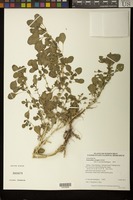
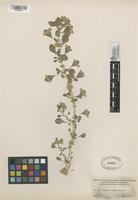
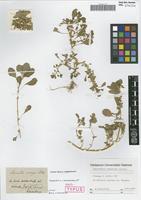
3 Images see all

Filed as Amaranthus crassipes Schltdl. [family AMARANTHACEAE]
Holotype of Amaranthus crassipes Schltdl. [family AMARANTHACEAE]
Previous
Next

Name

Identification
Amaranthus crassipes Schltdl. [family AMARANTHACEAE ] (stored under name); Verified by Not On Sheet,
Related name
  • Amaranthus crassipes
Common name
  • spreading amaranth, Flora of North America Vol. 4
  • tropical spreading amaranth, Flora of North America Vol. 4
  • Clubfoot amaranth, Flora of North America Vol. 4

Flora

Entry for Amaranthus crassipes Schlechtendal [family AMARANTHACEAE]
Herbarium
Flora of North America (FNA)
Collection
Flora of North America
Resource Type
Reference Sources
Entry From
Flora of North America, Vol 4,
Names
Amaranthus crassipes Schlechtendal [family AMARANTHACEAE], Linnaea, 6: 757. 1831
Amaranthus crassipes var. warnockii (I. M. Joh nston) Henrickson [family AMARANTHACEAE]
Amaranthus warnockii I. M. Johnston [family AMARANTHACEAE]
Treatment Author(s)
Sergei L. Mosyakin
Kenneth R. Robertson
Information
Plants annual, glabrous. Stems prostrate or weakly ascending, erect when young, branched mostly from base, 0.1–0.6 m. Leaves: petiole nearly 1/2 as long as blade; blade broadly elliptic, obovate, orbiculate, or oblanceolate, (0.5–)1–3(–4.5) × 0.3–2(–2.5) cm, base cuneate, margins entire, plane to undulate, apex broadly rounded or emarginate. Inflorescences axillary clusters borne from base to apex, axes much thickened, appearing inflated, becoming indurate at maturity (only in A. scleropoides and A. crassipes). Bracts of pistillate flowers keeled (only A. scleropoides and A. crassipes have keeled bracts), deltate, 0.5–0.9 mm. Pistillate flowers: tepals (4–)5, narrowly spatulate, clawed, with small expanded blade, equal or subequal, 2–3 mm, apex rounded and apiculate; claws becoming indurate and scarious at maturity; style branches spreading; stigmas usually 2(–3), almost sessile. Staminate flowers intermixed with pistillate; tepals 5, membranaceous; stamens 3(–5). Utricles obovoid to compressed-obovoid, 1.4–2 mm, shorter than tepals, prominently muricate (especially in distal 1/2), indehiscent. Seeds dark brownish or reddish black to black, compressed-ovoid to broadly lenticular, 1–1.4 mm diam., shiny.
Phenology
jun-aug (summer), sep-nov (fall)
Altitude range
0–1300 m;
Distribution
ne MexicoWest Indiesn South Americaoccasionally introduced in other regions.USA Ala.USA Ariz.USA Fla.USA La.USA N.Mex.USA S.C.USA Tex.
Discussion
Two varieties have been distinguished by J. Henrickson (1999) within Amaranthus crassipes: var. crassipes with leaf blades nearly orbiculate to ovate (obovate) and conspicuous veins on the green to yellow-green abaxial leaf surface; and var. warnockii (I. M. Johnston) Henrickson (= A. warnockii I. M. Johnston) with narrower oblanceolate grayish leaves with less distinct venation on the abaxial leaf surfaces. In Henrickson’s treatment, var. crassipes occurs mostly in the coastal areas (and is also reported for Arizona), while var. warnockii is reported from inland southwestern Texas and the Chihuahuan Desert region (Mexico: Coahuila, Chihuahua). We have not seen material of the new varieties and cannot evaluate their validity.

Related Materials

  • Terms and Conditions
  • Privacy Policy
  • Cookie Policy
  • Cookie Settings
  • Accessibility
  • Help
  • Contact Us
  • Facebook
  • Twitter
ITHAKA

JSTOR is part of ITHAKA, a not-for-profit organization helping the academic community use digital technologies to preserve the scholarly record and to advance research and teaching in sustainable ways.

©2000-2026 ITHAKA. All Rights Reserved. JSTOR®, the JSTOR logo, JPASS®, Aluka®, and ITHAKA® are registered trademarks of ITHAKA.

╳