JSTOR Global Plants Home
  • Home
  • Browse
  • About
  • Access
  • Account
    • Saved Items
    • Profile
  • Log in

Global Plants

Skip to Main Content
  • JSTOR Global Plants Home
  • Global Plants

    • Browse
    • About
    • Access
    • Account
      • Saved Items
      • Profile
Log in
  • Browse
  • About
  • Access
  • Account
    • Saved Items
    • Profile
Advanced Search

Compilation
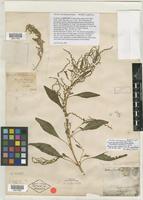
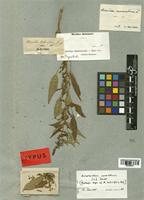
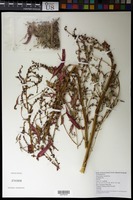
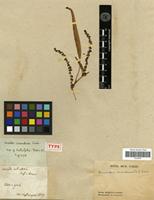
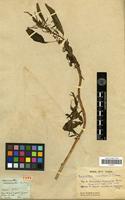
Amaranthus cannabinus

5 Images see all

Filed as Amaranthus cannabinus (L.) J. D. Sauer [family AMARANTHACEAE]
Acnida salicifolia Raf. [family AMARANTHACEAE]
Amaranthus cannabinus (L.) E.G. F. Sauer [family AMARANTHACEAE]
Type of Acnida cannabina L. var. salicifolia Moq. [family AMARANTHACEAE]
Type of Amaranthus macrocaulos Poiret [family AMARANTHACEAE]
Previous
Next

Name

Identification
Amaranthus cannabinus (L.) J. D. Sauer [family AMARANTHACEAE ] (stored under name); Verified by Data not digitized, Acnida salicifolia Raf. [family AMARANTHACEAE ] Verified by Data not digitized,
Related name
  • Acnida salicifolia
  • Acnida cannabina
  • Amaranthus macrocaulos
  • Amaranthus cannabinus
Common name
  • water-hemp pigweed, Flora of North America Vol. 4
  • tidal-marsh water-hemp, Flora of North America Vol. 4
  • Salt-marsh water-hemp, Flora of North America Vol. 4

Flora

Entry for Amaranthus cannabinus (Linnaeus) J. D. Sauer [family AMARANTHACEAE]
Herbarium
Flora of North America (FNA)
Collection
Flora of North America
Resource Type
Reference Sources
Entry From
Flora of North America, Vol 4,
Names
Amaranthus cannabinus (Linnaeus) J. D. Sauer [family AMARANTHACEAE], Madroño, 13: 11. 1955
Acnida cannabina Linnaeus [family AMARANTHACEAE], Sp. Pl., 2: 1027. 1753
Treatment Author(s)
Sergei L. Mosyakin
Kenneth R. Robertson
Information
Stems erect, branched, stout, usually 1–3 m. Leaves: petiole 1/2 length of blade; blade lanceolate or narrowly lanceolate to linear, to 20 × 4 cm, base narrowly cuneate, margins entire, plane to slightly undulate, apex acute to acuminate. Inflorescences mostly terminal, narrow spikes or thyrses, usually interrupted, linear. Bracts: of pistillate flowers 1.5 mm; of staminate flowers with midribs not prominent, scarcely excurrent, shorter than 1 mm. Pistillate flowers: tepals absent or 1–2 and rudimentary; style branches ± erect; stigmas 3–5. Staminate flowers: tepals 5, without prominent midribs, equal, 2.5–3 mm, apex obtuse to indistinctly mucronulate in outer tepals; stamens 3–5. Utricles often black, with 3(–5) longitudinal ridges corresponding to 3–5 style branches, ovoid or obovoid, 2.5–4 mm (exceeding tepals, when present), somewhat fleshy, smooth (slightly rugose, especially in herbarium specimens). Seeds reddish brown to dark brown, 2–3 mm diam., shiny.
Phenology
jun-aug (summer), sep-nov (fall)
Altitude range
0–50 m;
Distribution
USA Ala.USA Conn.USA Del.USA D.C.USA Fla.USA Ga.USA MaineUSA Md.USA Mass.USA N.H.USA N.J.USA N.Y.USA N.C.USA Pa.USA R.I.USA S.C.USA Vt.USA Va.
Discussion
Reports of Amaranthus cannabinus from southern Florida and the Gulf Coastal Plain are the result of misidentifications of A. australis. According to J. D. Sauer (1955), plants of A. cannabinus from northern coastal Atlantic Florida are atypical and probably represent hybrid populations transitional toward A. australis.

Related Materials

  • Terms and Conditions
  • Privacy Policy
  • Cookie Policy
  • Cookie Settings
  • Accessibility
  • Help
  • Contact Us
  • Facebook
  • Twitter
ITHAKA

JSTOR is part of ITHAKA, a not-for-profit organization helping the academic community use digital technologies to preserve the scholarly record and to advance research and teaching in sustainable ways.

©2000-2026 ITHAKA. All Rights Reserved. JSTOR®, the JSTOR logo, JPASS®, Aluka®, and ITHAKA® are registered trademarks of ITHAKA.

╳