JSTOR Global Plants Home
  • Home
  • Browse
  • About
  • Access
  • Account
    • Saved Items
    • Profile
  • Log in

Global Plants

Skip to Main Content
  • JSTOR Global Plants Home
  • Global Plants

    • Browse
    • About
    • Access
    • Account
      • Saved Items
      • Profile
Log in
  • Browse
  • About
  • Access
  • Account
    • Saved Items
    • Profile
Advanced Search

Compilation
Amaranthus berlandieri

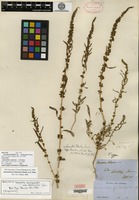
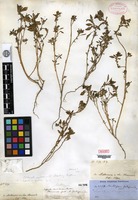
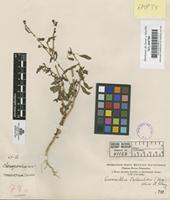
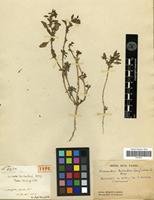
12 Images see all

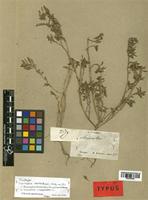
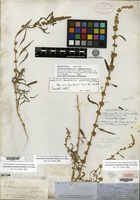
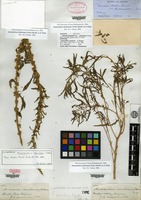
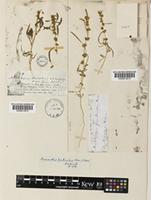
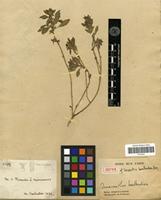
Sarratia berlandieri Moq. [family AMARANTHACEAE]
Amaranthus fimbriatus S.Watson [family AMARANTHACEAE]
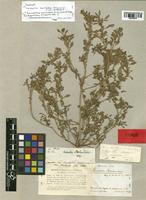
Syntype of Amaranthus venulosus S. Watson [family AMARANTHACEAE]
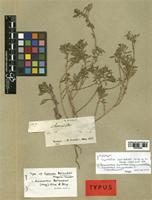
Isotype of Sarratia berlandieri Moquin-Tandon [family AMARANTHACEAE]
Lectotype of Sarratia berlandieri Moquin-Tandon var. fimbriata Torrey [family AMARANTHACEAE]
Syntype of Amaranthus venulosus S. Watson [family AMARANTHACEAE]
Filed as Amaranthus berlandieri (Moq.) Uline & Bray [family AMARANTHACEAE]
Holotype of Sarratia berlandieri Moq. [family AMARANTHACEAE]
Isotype of Sarratia berlandieri Moq. [family AMARANTHACEAE]
Sarratia berlandieri Moq. [family AMARANTHACEAE]
Syntype of Amblogyna torreyi A. Gray [family AMARANTHACEAE]
Previous
Next

Name

Identification
Amaranthus berlandieri (Moq.) Uline & W. L. Bray [family AMARANTHACEAE ] (stored under name); Verified by Data not digitized, Sarratia berlandieri Moq. [family AMARANTHACEAE ] Verified by Data not digitized,
Related name
  • Amaranthus berlandieri
  • Sarratia berlandieri
  • Chenopodium mucronatum
Common name
  • tropical amaranth, Flora of North America Vol. 4
  • Smartweed amaranth, Flora of North America Vol. 4

Flora

Entry for Amaranthus polygonoides Linnaeus [family AMARANTHACEAE]
Herbarium
Flora of North America (FNA)
Collection
Flora of North America
Resource Type
Reference Sources
Entry From
Flora of North America, Vol 4,
Names
Amaranthus polygonoides Linnaeus [family AMARANTHACEAE], Pl. Jamaic. Pug., 27. 1759
Amaranthus berlandieri (Moquin-Tandon) Uline & W. L. Bray [family AMARANTHACEAE]
Treatment Author(s)
Sergei L. Mosyakin
Kenneth R. Robertson
Information
Plants annual, glabrescent proximally, pubescent distally, becoming glabrous at maturity. Stems erect-ascending to pro-strate, branched mostly at base and in proximal 1/2, 0.1–0.5 m. Leaves: petiole ± equaling blade; blade ovate, obovate-rhombic to narrowly ovate, sometimes lanceolate, 1.5–3(–4) × 0.5–1.5(–2) cm, base cuneate, margins entire to undulate-erose, apex rounded, obtuse, or emarginate, mucronate. Inflorescences axillary, congested clusters. Bracts of pistillate flowers lanceolate or linear, 1–1.5 mm, 1/2 as long as tepals. Pistillate flowers: tepals 5, connate in proximal 1/3 (entirely distinct in all other species), with 3 prominent veins abaxially, spatulate or somewhat clawed, equal or subequal, 2–3 mm, apex rounded or retuse, mucronate; style branches somewhat spreading; stigmas 3. Staminate flowers intermixed with pistillate; tepals (4–)5; stamens 2–3. Utricles cylindric or narrowly turbinate, 2–2.5 mm, ± equaling tepals, smooth proximally or roughened toward tips, indehiscent or tardily dehiscent. Seeds dark reddish brown to black, lenticular, 0.8–1 mm diam., shiny.
Phenology
jun-aug (summer), sep-nov (fall)
Altitude range
0–500 m;
Distribution
MexicoWest Indiesn South Americararely introduced in Europe and some other regions.USA Fla.USA S.C.USA Tex.
Discussion
Amaranthus berlandieri often has been recognized as a separate species related to A. polygonoides. J. Henrickson (1999) clarified the confusion that existed in earlier descriptions of these two taxa and showed that the main characters used for their separation (dehiscent versus indehiscent utricles, leaf shape, etc.) are inconsistent and cannot be applied for segregation of two independent species. The subspecies rank may be more appropriate for A. berlandieri, as was suggested by A. Thellung (1914–1919). The relationships between these taxa of the A. polygoniodes aggregate require additional study; in the present treatment we follow the solution proposed by Henrickson.

Related Materials

  • Terms and Conditions
  • Privacy Policy
  • Cookie Policy
  • Cookie Settings
  • Accessibility
  • Help
  • Contact Us
  • Facebook
  • Twitter
ITHAKA

JSTOR is part of ITHAKA, a not-for-profit organization helping the academic community use digital technologies to preserve the scholarly record and to advance research and teaching in sustainable ways.

©2000-2026 ITHAKA. All Rights Reserved. JSTOR®, the JSTOR logo, JPASS®, Aluka®, and ITHAKA® are registered trademarks of ITHAKA.

╳