JSTOR Global Plants Home
  • Home
  • Browse
  • About
  • Access
  • Account
    • Saved Items
    • Profile
  • Log in

Global Plants

Skip to Main Content
  • JSTOR Global Plants Home
  • Global Plants

    • Browse
    • About
    • Access
    • Account
      • Saved Items
      • Profile
Log in
  • Browse
  • About
  • Access
  • Account
    • Saved Items
    • Profile
Advanced Search

Compilation
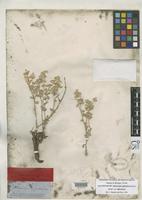
Alternanthera suffruticosa

13 Images see all

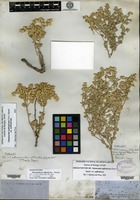
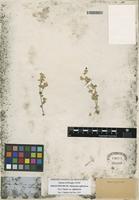
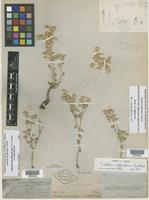
Isosyntype of Alternanthera suffruticosa Torrey [family AMARANTHACEAE]
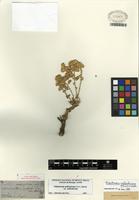
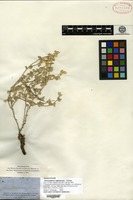
Type of Tidestromia suffruticosa (Torr.) Standl. [family AMARANTHACEAE]
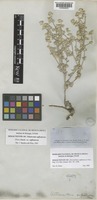
Filed as Alternanthera suffruticosa Torr. [family AMARANTHACEAE]
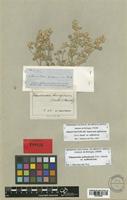
Tidestromia suffruticosa (Torr.) Standl. [family AMARANTHACEAE]
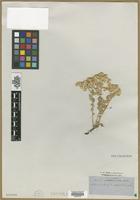
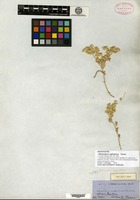
Isolectotype of Alternanthera suffruticosa Torr. [family AMARANTHACEAE]
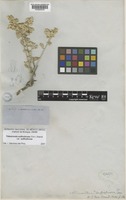
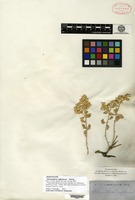
Isosyntype of Alternanthera suffruticosa Torrey [family AMARANTHACEAE]
Tidestromia suffruticosa (Torr.) Standl. [family AMARANTHACEAE]
Alternanthera suffruticosa Torr. [family AMARANTHACEAE]
Isolectotype of Alternanthera suffruticosa Torr. [family AMARANTHACEAE]
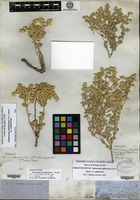
Isosyntype of Alternanthera suffruticosa Torrey [family AMARANTHACEAE]
Isosyntype of Alternanthera suffruticosa Torrey, J. 1859 [family AMARANTHACEAE]
Previous
Next

Name

Identification
Tidestromia suffruticosa (Torr.) Standl. [family AMARANTHACEAE ] (stored under name); Verified by Data not digitized, Alternanthera suffruticosa Torr. [family AMARANTHACEAE ] Verified by Data not digitized,
Related name
  • Tidestromia suffruticosa
  • Alternanthera suffruticosa

Flora

Entry for Tidestromia suffruticosa (Torrey) Standley [family AMARANTHACEAE]
Herbarium
Flora of North America (FNA)
Collection
Flora of North America
Resource Type
Reference Sources
Entry From
Flora of North America, Vol 4,
Names
Tidestromia suffruticosa (Torrey) Standley [family AMARANTHACEAE], J. Wash. Acad. Sci., 6: 70. 1916
Alternanthera suffruticosa Torrey [family AMARANTHACEAE], in W. H. Emory, Rep. U.S. Mex. Bound., 2(1): 181. 1859
Cladothrix suffruticosa (Tor rey) Bentham & Hooker f. ex S. Watson [family AMARANTHACEAE]
Treatment Author(s)
Ivonne Sánchez del Pino
Steven E. Clemants
Information
Subshrubs, perennial, gray-green, grayish, or sometimes reddish, to 60 cm, canescent, pruinose, or densely lanuginose to glabrate; trichomes completely or partially candelabriform. Stems ascending or decumbent, suffrutescent or suffruticulose, buds commonly present, rarely absent, on stem bases, lanate or densely lanate. Leaves: petiole to 2.5 cm; blade lanceolate, ovate, ovate-oblong, very widely ovate, circular, or reniform, 0.6–4.5 × 0.4–2.7 cm, chartaceous, base cordate, cuneate, lightly attenuate, or oblique. Inflorescences 1–3(–4)-flowered; involucral leaf petiole to 0.9 cm, blade lanceolate, ovate, very widely ovate, circular, or reniform, 0.2–2.7 × 0.2–2.1 cm, chartaceous, base cuneate, cordate, attenuate, or oblique, apex acute or obtuse; involucre on secondary branches formed by connation of involucral leaf petioles, which becomes indurate and adnate with stem or with leaf petiole and stem; bracts widely ovate or widely depressed-ovate, 0.8–1.6 × 0.8–1.6 mm, apex acute or obtuse, crenate, lanuginose distally or glabrous; bracteoles 0.9–1.5 × 0.6–1.4 mm, apex acute or obtuse, lanuginose or glabrous. Flowers 1.7–3 mm; tepals yellowish or yellowish brown, 1.7–2.7 × 0.6–1.3 mm, densely lanuginose to glabrous; staminal cup 0.4–0.9 mm; filaments 0.5–1 mm; anthers 0.5–0.9 mm; pseudostaminodes absent or triangular lobes, 0.1–0.3 mm; ovary 0.3–0.7 × 0.5–0.9 mm; style to 0.1 mm; stigmas 0.2–0.5 mm. Utricles 1–1.8 × 0.8–1.6 mm. Seeds brown-red, 0.9–1.5 × 0.8–1.4 mm.
Distribution
North AmericaMexico.
Discussion
Tidestromia suffruticosa is easily recognized by its perennial, subshrub habit. It varies in density and color of indumentum, number and size of interstaminal appendages, and color and indumentum of tepals.
I. M. Johnston (1943) recognized two varieties of Tidestromia: var. suffruticosa and var. coahuilana. The former has weakly woody stems, hairy flowers, and short-petiolate involucral leaves; var. coahuilana has rigidly woody stems, glabrous flowers, and distinctly petiolate involucral leaves, although he noted that these differences were not always strongly developed. We have found that these characters vary widely within T. suffruticosa and that var. coahuilana is not worthy of recognition.
Tidestromia gemmata was described by I. M. Johnston (1943) as having coarse, very strong taproots, conspicuous large cottony buds (gemmae) borne near the surface of the soil, slightly more woody reddish stems, and thicker more strongly veined leaves. C. F. Reed (1970) further distinguished the species by the lack of pseudostaminodes and prostrate habit. We found that buds on the apex of the caudex are present in all perennial species of Tidestromia but can be absent on many well-collected specimens. Interstaminal appendages vary in number from zero to five. Furthermore, T. gemmata is not prostrate but is ascending or decumbent and there are no taxonomically useful differences with T. suffruticosa in the thickness of the taproot, stem characters, or leaf venation. We treat T. gemmata and T. suffruticosa as conspecific.
Tidestromia suffruticosa includes the distinctive features of T. oblongifolia used by P. C. Standley (1917b) and D. S. Correll and M. C. Johnston (1970). The only taxonomically important character is leaf shape; other characters given by those authors are not taxonomically important. In addition, however, characters of the involucres and distribution serve to distinguish T. oblongifolia as a variety of T. suffruticosa.

Related Materials

  • Terms and Conditions
  • Privacy Policy
  • Cookie Policy
  • Cookie Settings
  • Accessibility
  • Help
  • Contact Us
  • Facebook
  • Twitter
ITHAKA

JSTOR is part of ITHAKA, a not-for-profit organization helping the academic community use digital technologies to preserve the scholarly record and to advance research and teaching in sustainable ways.

©2000-2026 ITHAKA. All Rights Reserved. JSTOR®, the JSTOR logo, JPASS®, Aluka®, and ITHAKA® are registered trademarks of ITHAKA.

╳