JSTOR Global Plants Home
  • Home
  • Browse
  • About
  • Access
  • Account
    • Saved Items
    • Profile
  • Log in

Global Plants

Skip to Main Content
  • JSTOR Global Plants Home
  • Global Plants

    • Browse
    • About
    • Access
    • Account
      • Saved Items
      • Profile
Log in
  • Browse
  • About
  • Access
  • Account
    • Saved Items
    • Profile
Advanced Search

Compilation
Alternanthera lanuginosa

8 Images see all

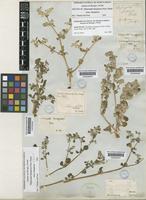
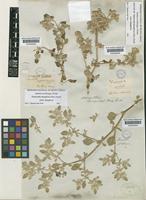
Tidestromia lanuginosa (Nutt.) Standl. [family AMARANTHACEAE]
Tidestromia lanuginosa (Nutt.) Standl. subsp. lanuginosa [family AMARANTHACEAE]
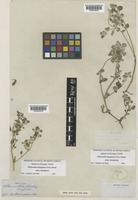
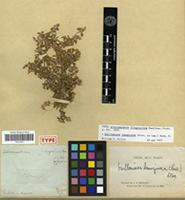
Syntype of Alternanthera lanuginosa Moq. [family AMARANTHACEAE]
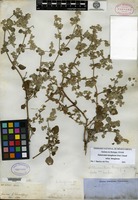
Tidestromia lanuginosa (Nutt.) Standl. [family AMARANTHACEAE]
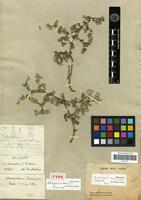
Type of Alternanthera filaginoides Desv. [family AMARANTHACEAE]
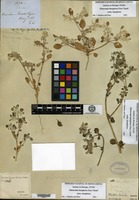
Tidestromia lanuginosa (Nutt.) Standl. [family AMARANTHACEAE]
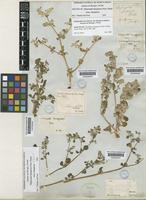
Isosyntype of Alternanthera lanuginosa Moquin-Tandon [family AMARANTHACEAE]
Previous
Next

Name

Identification
Tidestromia lanuginosa (Nutt.) Standl. [family AMARANTHACEAE ] (stored under name); Alternanthera lanuginosa (Nutt.) Moq. [family AMARANTHACEAE ] Cladothrix lanuginosa (Nutt.) Nutt. ex S.Watson [family AMARANTHACEAE ]
Related name
  • Alternanthera lanuginosa
  • Cladothrix lanuginosa
  • Tidestromia lanuginosa
  • Lagonychia prostrata

Flora

Entry for Tidestromia lanuginosa (Nuttall) Standley [family AMARANTHACEAE]
Herbarium
Flora of North America (FNA)
Collection
Flora of North America
Resource Type
Reference Sources
Entry From
Flora of North America, Vol 4,
Names
Tidestromia lanuginosa (Nuttall) Standley [family AMARANTHACEAE], J. Wash. Acad. Sci., 6: 70. 1916
Achyranthes lanuginosa Nuttall [family AMARANTHACEAE], Trans. Amer. Philos. Soc., n. s., 5: 166. 1835
Alternanthera lanuginosa (Nuttall) Moquin-Tandon [family AMARANTHACEAE]
Cladothrix lanuginosa (Nuttall) Nuttall ex S. Watson [family AMARANTHACEAE]
Tidestromia lanuginosa (Nuttall) Standley subsp. eliassoniana Sánchez del Pino & Flores Olvera [family AMARANTHACEAE]
Treatment Author(s)
Ivonne Sánchez del Pino
Steven E. Clemants
Information
Herbs, annual, yellowish green to gray-green or rarely reddish, to 50 cm, canescent, lanuginose, or glabrous; trichomes completely candelabriform. Stems ascending, decumbent, or prostrate, herbaceous, buds absent on stem bases. Leaves: petiole to 2.5 cm; blade gray-green, widely obovate, ovate-trullate, circular, or lanceolate, 0.8–3.2 × 0.9–3 cm, chartaceous to fleshy, base attenuate or oblique. Inflorescences 1–3-flowered; involucral leaf petiole to 0.6 cm, blade ovate, obovate, lanceolate, or transversely elliptic, 0.3–4 × 0.2–3.1 cm, chartaceous to fleshy, base attenuate or oblique, apex acute to obtuse; involucres on secondary branches formed by connation of involucral leaf petioles, which become indurate and adnate with stems or with leaf petiole and stems; bracts widely ovate, 1–1.6 × 0.8–1 mm, apex obtuse, distinctly lanuginose; bracteoles 1–1.5 × 0.6–0.8 mm, apex obtuse, distinctly lanuginose distally. Flowers 1.5–3 mm; tepals yellowish, 1.1–3 × 0.7–1.2 mm, glabrous or lanuginose; staminal cup 0.5–1 mm; filaments 0.5–1.4 mm; anthers 0.7–1.1 mm; pseudostaminodes absent or short-triangular lobes, 0.2 mm; ovary 0.3–0.8 × 0.5–0.7 mm; style to 0.1 mm; stigmas 0.1–0.3 mm. Utricles 1.3–1.6 × 1–1.3 mm. Seeds brown-red, 1.1–1.4 × 0.7–1.2 mm.
Phenology
dec-feb (winter), mar-may (spring), jun-aug (summer), sep-nov (fall)
Altitude range
0–2100 m;
Distribution
Mexico (Baja California)Mexico (Chihuahua)Mexico (Coahuila)Mexico (Durango)Mexico (Nuevo León)Mexico (San Luis Potosí)Mexico (Sinaloa)Mexico (Sonora)Mexico (Tamaulipas)Mexico (Zacatecas)West Indies (Dominican Republic).USA Ariz.USA Calif.USA Colo.USA Ill.USA Kans.USA La.USA Mo.USA N.Mex.USA Okla.USA Tex.USA Utah
Discussion
Tidestromia lanuginosa shows wide variation; two subspecies can be recognized primarily on the basis of pollen and trichome features (I. Sánchez del Pino and H. Flores Olvera 2002). The trichomes are typically candelabriform with more or less regular branches. In some parts of the plants, the terminal cells of the trichomes have a much greater number of irregular and enlarged branches. The distribution of secondary branches has taxonomic importance if infrataxa are recognized: subsp. lanuginosa has trichomes with the terminal cell projections irregular only; subsp. eliassoniana has trichomes with the terminal cell projections either irregular or spreading (I. Sánchez del Pino and H. Flores Olvera 2002). Subspecies lanuginosa flowers over a longer season than subsp. eliassoniana, and it occurs from central United States to northern Mexico and the West Indies, whereas subsp. eliassoniana occurs from southwestern United States to northwestern Mexico.

Related Materials

  • Terms and Conditions
  • Privacy Policy
  • Cookie Policy
  • Cookie Settings
  • Accessibility
  • Help
  • Contact Us
  • Facebook
  • Twitter
ITHAKA

JSTOR is part of ITHAKA, a not-for-profit organization helping the academic community use digital technologies to preserve the scholarly record and to advance research and teaching in sustainable ways.

©2000-2026 ITHAKA. All Rights Reserved. JSTOR®, the JSTOR logo, JPASS®, Aluka®, and ITHAKA® are registered trademarks of ITHAKA.

╳