JSTOR Global Plants Home
  • Home
  • Browse
  • About
  • Access
  • Account
    • Saved Items
    • Profile
  • Log in

Global Plants

Skip to Main Content
  • JSTOR Global Plants Home
  • Global Plants

    • Browse
    • About
    • Access
    • Account
      • Saved Items
      • Profile
Log in
  • Browse
  • About
  • Access
  • Account
    • Saved Items
    • Profile
Advanced Search

Compilation
Aloe vryheidensis

5 Images see all

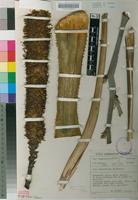
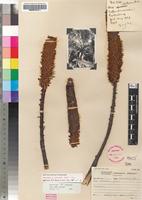
Holotype of Aloe dolomitica Groenew. [family ASPHODELACEAE]
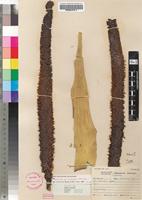
Filed as Aloe vryheidensis Groenew. [family ASPHODELACEAE]
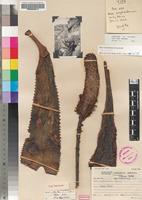
Holotype of Aloe vryheidensis Groenew. [family ASPHODELACEAE]
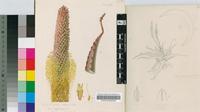
Aloe vryheidensis Groenew.
Holotype of Aloe dolomitica Groenew. [family ASPHODELACEAE]
Previous
Next

Name

Identification
Aloe vryheidensis Groenew. [family ASPHODELACEAE ]
Related name
  • Aloe vryheidensis

Flora

Entry for Aloe vryheidensis [family ALOACEAE]
Herbarium
South African National Biodiversity Institute, Compton Herbarium, Cape Town (SAM)
Collection
Flora of Southern Africa
Resource Type
Reference Sources
Entry From
Flora of South Africa, (2003) Author: Dr J.P. Roux
Names
Aloe vryheidensis [family ALOACEAE]
Common names
A. dolomitica Groenew.: 178 (1938b); Reynolds: 111 (1940b); Reynolds: 434 (1950); Jeppe: 108 (1969); Bomman & D.S.Hardy: 239 (1972); Palmer & Pitman: 379 (1972). Type: Mpumalanga, Strydpoort Mts, F.Z. van der Merwe 235 (PRE!).
Information
Plants almost stemless to arborescent, 1-2 m tall; stems simple. Leaves 20-50, ascending to arcuate-incurved, flat, 400-800 x 80-130 mm, dark green to glaucous green. Inflorescences 2-3(-5) per rosette, 0.6-1.5 m tall, over 50 mm in diameter; bracts ovate-acute, 8-15 x 5-10 mm, 3-5-nerved. Flowers sessile, rose or brown­ish honey-yellow to greenish yellow, 8-20 mm long. Anthers exserted 6-15 mm. Ovary ± 5-6 x 3 mm, orange; style exserted 7-17 mm. Fruit not seen. Flowering time July to August.
Habitat
In this species the peduncle is more or less oblique, while the raceme is erect. There is thus a distinct angle at the base of the raceme. The leaves are flat to D-shaped in section and the flowers are pinkish brown. Plants may be stem­less or caulescent. In A. spicata (no. 100), the only species with which A. vryheidensis is like­ly to be confused, the leaves are channelled, the raceme is narrower and the flowers are greenish yellow.
Use
99. Aloe vryheidensis Groenew. in Tyd-skrif vir Wetenskap en Kuns 15: 129 (1937c); Reynolds: 111 (1940b); R.A.Dyer: t. 805 (1941); Reynolds: 428 (1950); Jeppe: 107 (1969); Bornman & D.S.Hardy: 233 (1972); B.-E. van Wyk & G.F.Sm.: 70 (1996). Type: KwaZulu-Natal, Heine near Vryheid, F.Z. van der Merwe 266 (PRE!).
Range
Aloe vryheidensis is found in the Northern Province, Mpumalanga and KwaZulu-Natal, where it usually occurs on alkaline soils derived from shales or dolomite. The entire range of this species falls within the summer-rainfall region, but rainfall amounts and temperatures vary con­siderably. Map 70.

Related Materials

  • Terms and Conditions
  • Privacy Policy
  • Cookie Policy
  • Cookie Settings
  • Accessibility
  • Help
  • Contact Us
  • Facebook
  • Twitter
ITHAKA

JSTOR is part of ITHAKA, a not-for-profit organization helping the academic community use digital technologies to preserve the scholarly record and to advance research and teaching in sustainable ways.

©2000-2026 ITHAKA. All Rights Reserved. JSTOR®, the JSTOR logo, JPASS®, Aluka®, and ITHAKA® are registered trademarks of ITHAKA.

╳