JSTOR Global Plants Home
  • Home
  • Browse
  • About
  • Access
  • Account
    • Saved Items
    • Profile
  • Log in

Global Plants

Skip to Main Content
  • JSTOR Global Plants Home
  • Global Plants

    • Browse
    • About
    • Access
    • Account
      • Saved Items
      • Profile
Log in
  • Browse
  • About
  • Access
  • Account
    • Saved Items
    • Profile
Advanced Search

Compilation
Aloe transvaalensis

5 Images see all

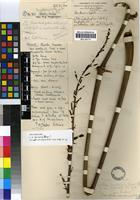
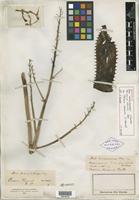
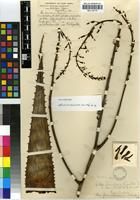
Type of Aloe laxissima Reynolds [family ASPHODELACEAE]
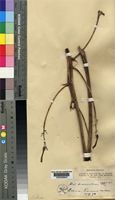
Type of Aloe transvaalensis Kuntze [family ALOACEAE]
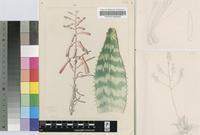
Aloe transvaalensis Kuntze
Holotype of Aloe transvaalensis Kuntze [family ALOEACEAE]
Type of Aloe laxissima Reynolds [family ASPHODELACEAE]
Previous
Next

Name

Identification
Aloe transvaalensis Kuntze [family ASPHODELACEAE ]
Related name
  • Aloe transvaalensis

Flora

Entry for Aloe zebrina Baker [family ALOACEAE]
Herbarium
Royal Botanic Gardens, Kew (K)
Collection
Flora Zambesiaca
Resource Type
Reference Sources
Entry From
FZ, Vol 12, Part 3, page 48, (2001) Author: S. Kativu
Names
Aloe platyphylla Baker [family ALOACEAE], in Trans. Linn. Soc. London, Bot. 1: 264 (1878); in J. Linn. Soc., Bot. 18: 167 (1880); in F.T.A. 7: 463 (1898). —Rendle in Hiern, Cat. Afr. Pl. Welw. 2: 45 (1899). Type from Angola.
Aloe constricta Baker [family ALOACEAE], in J. Linn. Soc., Bot. 18: 168 (1880); in F.T.A. 7: 464 (1898). —Berger in Engler, Pflanzenr. IV, fam. No. 38, III, II (Heft 33): 206 (1908). —Reynolds, Aloes Trop. Africa & Madagascar: 523 (1966). Type: Mozambique, Sena, fl. & fr. 8.iv.1860, Kirk s.n. (K, holotype).
Aloe lugardiana Baker [family ALOACEAE], in Bull. Misc. Inform., Kew 1901: 135 (1901). Type: Botswana, Sibetuane’s Drift, Boteti (Botletle) R., fl. 30.vi.1897, Mrs Lugard 2 (K, holotype).
Aloe baumii Engl. & Gilg [family ALOACEAE], in Warburg, Kunene-Samb.-Exped. Baum: 191 (1903). Type from Angola.
Aloe bamangwatensis Schonland [family ALOACEAE], in Rec. Albany Mus. 1: 122 (1904). Type: Botswana, west of Palapye Road Station, fl. iii.1904, Schonland 1656 (GRA, holotype).
Aloe transvaalensis [family ALOACEAE], sensu Reynolds ref. loc. Botswana, Aloes S. Africa: 273 (1950). —sensu Barnes & Turton, List Fl. Pl. Botswana at Nat. Mus., Sebele & Univ. Botswana: 46 (1986). —sensu Hargreaves, Succulents Botswana: 18 (1990).
Aloe grandidentata [family ALOACEAE], sensu Reynolds ref. loc. Botswana, Aloes S. Africa: 287 (1950). —sensu Barnes & Turton, List Fl. Pl. Botswana at Nat. Mus., Sebele & Univ. Botswana: 46 (1986). —sensu Hargreaves, Succulents Botswana: 18 (1990).
Aloe greatheadii [family ALOACEAE], sensu Fanshawe, Check List Woody Pl. Zambia Showing Distrib.: 5 (1973).
Aloe zebrina Baker [family ALOACEAE], in Trans. Linn. Soc. London, Bot. 1: 264 (1878); in J. Linn. Soc., Bot. 18: 167 (1880); in F.T.A. 7: 461 (1898). —Rendle in Hiern, Cat. Afr. Pl. Welw. 2: 45 (1899). —Berger in Engler, Pflanzenr. IV, fam. No. 38, III, II (Heft 33): 207 (1908). —Reynolds, Aloes S. Africa: 281 (1950); Aloes Trop. Africa & Madagascar: 89 (1966). —Sölch et al. in Merxmüller, Prodr. Fl. SW. Afrika, fam. 147: 19 (1970). —West, Aloes Rhodesia: 49, pl. 10d, pl. 11a, b & c (1974); Aloes Zimbabwe, rev. Kimberley: 56 (1992). —Court, Succ. Fl. South. Africa: 157 (1981). —Barnes & Turton, List Fl. Pl. Botswana at Nat. Mus., Sebele & Univ. Botswana: 46 (1986). —Hargreaves, Succulents Botswana: 18 (1990). —B-E. van Wyk & G.F. Smith, Guide Aloes S. Africa: 232 (1996). —Glen & Hardy in Fl. South. Africa 5, 1 (1): 63 (2000). Type from Angola.
Aloe parvibracteata [family ALOACEAE], sensu West, Aloes Rhodesia: 52, pl. 11d (1974); Aloes Zimbabwe, rev. Kimberley: 60 (1992) non Schönland.
Information
Perennial herb, solitary or suckering to form groups of plants of varying size, acaulescent. Leaves in a compact rosette, spreading; lamina 15–35 cm long, 6–7 cm wide toward the base, lanceolate, usually dried and twisted at the apex, dull dark green, with transverse bands of conspicuous whitish oblong spots on the upper surface, and conspicuously or more usually obscurely spotted on the lower surface; margin with stout pungent red-brown teeth 4–7 mm long, 1–1.5 cm apart; sap drying purple. Inflorescence erect, 0.75–2 m high; peduncle 4–12-branched, with the lowermost branches often rebranched; branches sub-erect, subtended by scarious or sometimes leafy bracts 1–4 cm long. Racemes 30–40 × 6 cm, cylindric, laxly flowered; bracts 6–15 mm long, linear-lanceolate, scarious; pedicels 6–12 mm long, elongating to 15–20 mm in fruit. Perianth dull-red to pinkish-red or coral-coloured with segment margins paler to ± halfway, 25–35 mm long, c. 8 mm in diameter across the ovary, abruptly constricted just above, then widening and becoming slightly decurved, cylindric-trigonous; outer segments free for one-quarter to one-third with tips spreading slightly. Stamens and stigma slightly exserted. Capsule 25–30 × 14 mm, oblong-ovoid, yellowish-grey. Seeds c. 3.5 × 6.5 mm, blackish-brown with pale brown wings.
Habitat
Grassland and open Brachystegia and mopane woodland
Altitude range
200–1600 m.
1600
200
Distribution
Botswana N Boro R., fl. 23.iii.1979, P.A. Smith 2740 (GAB; K; SRGH).Zambia B between New Sesheke and Katima Mulilo Ferry, fl. & fr. 8.viii.1947, J.P.M. Brenan 7651 (BR; K).Malawi S Namatuna Forest Reserve, fl. 9.iii.1990, Chanza & Kaunda 76 (MAL).Mozambique MS Manica (Vila de Manica), fl. viii.1956, Leach 403 (K; LISC; SRGH).Zimbabwe N 8 km north of Mt. Darwin, fl. 16.iii.1961, Leach 10750 (SRGH).Malawi N 11 km from Rumphi on Livingstonia Road, fl. 17.vi.1958, Reynolds 8633 (K; PRE; SRGH).Mozambique T between Chicoa and Mágoè, fl. 14.ii.1970, Torre & Correia 17986 (COI; EA; LISC; WAG).Botswana SW Kakia Pan, fl. 26.ii.1960, Wild 5170 (K; SRGH).Botswana SE 13 km north of Lobatsi, fl. 5.ii.1961, Leach 10718 (BR; K; LISC; SRGH).Zambia N c. 16 km southwest of Mpika, fl. 16.vii.1930, Hutchinson & Gillett 3781 (K).Zambia W between Mwinilunga and Matonchi Farm, fl. 26.i.1938, Milne-Redhead 4366 (K).Zambia C 101 km north of Kanona, fl. & fr. 5.vii.1960, Richards 12824 (B; BR; K).Zambia S between Livingstone and Victoria Falls, cult. South Africa, Bryanston, fl. 15.iv.1959, Reynolds 8987 (K; PRE).Zimbabwe W 6.5 km northwest of Bembesi R. on Bulawayo/Falls road, fl. 12.ii.1961, Leach 10720 (K; SRGH).Zimbabwe C Marondera, Digglefold, fl. 16.ii.1950, Corby 649 (SRGH).Zimbabwe E 2 km north of Nhadza R., near Hot Springs, fl. iii.1956, Leach 329 (BR; K; LISC; SRGH).Zimbabwe S 8 km east of Mberengwa (Belingwe), fl. 24.ii.1961, Leach 10725 (K; LISC; SRGH).
Distribution (external)
Angola
northern Namibia
possibly South Africa (North West Prov.)
Notes
A laxly flowered form of A. lateritia Engl. from southeast Tanzania (see Carter in F.T.E.A., Aloaceae: 17 (1994)) is probably also this species.Aloe zebrina, as accepted here, is a very variable species flowering mainly from February to May, but also June to August. Spotting on the upper leaf surface is always conspicuous, but varies in intensity on the lower surface. The racemes are mostly laxly flowered, but vary in length and flower density, in flower-colour from dull pink to coral-red, and in the length of the pedicels, bracts and perianths. This is a broad view of the species, but it is possible that an in-depth study, preferably in the field, could establish the existence of several taxa distinct from the one described originally from the coastal regions of Angola. The identification of some material from Zimbabwe as A. parvibracteata should be treated with caution before a continuous distribution of this species from Zimbabwe into southern Mozambique has been reliably demonstrated. Furthermore, the identification of some collections from Southeast Botswana as A. transvaalensis was originally based on a report in Reynolds, Aloes S. Africa: 273 (1950), and taken up by subsequent workers; and the apparently clavate perianth of what has been identified as A. grandidentata from Botswana, is not a reliable taxonomic character. All such material can be matched in specimens from other populations within the range of A. zebrina.

Related Materials

  • Terms and Conditions
  • Privacy Policy
  • Cookie Policy
  • Cookie Settings
  • Accessibility
  • Help
  • Contact Us
  • Facebook
  • Twitter
ITHAKA

JSTOR is part of ITHAKA, a not-for-profit organization helping the academic community use digital technologies to preserve the scholarly record and to advance research and teaching in sustainable ways.

©2000-2026 ITHAKA. All Rights Reserved. JSTOR®, the JSTOR logo, JPASS®, Aluka®, and ITHAKA® are registered trademarks of ITHAKA.

╳