JSTOR Global Plants Home
  • Home
  • Browse
  • About
  • Access
  • Account
    • Saved Items
    • Profile
  • Log in

Global Plants

Skip to Main Content
  • JSTOR Global Plants Home
  • Global Plants

    • Browse
    • About
    • Access
    • Account
      • Saved Items
      • Profile
Log in
  • Browse
  • About
  • Access
  • Account
    • Saved Items
    • Profile
Advanced Search

Compilation
Aloe melsetterensis

3 Images see all

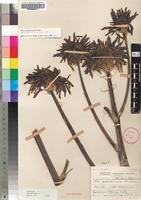
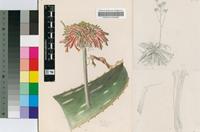
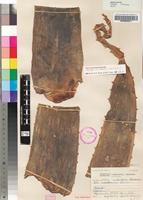
Type of Aloe melsetterensis Christian [family ASPHODELACEAE]
Aloe melsetterensis Christian
Type of Aloe melsetterensis Christian [family ASPHODELACEAE]
Previous
Next

Name

Identification
Aloe melsetterensis Christian [family ASPHODELACEAE ]
Related name
  • Aloe melsetterensis

Flora

Entry for Aloe swynnertonii Rendle [family ALOACEAE]
Herbarium
Royal Botanic Gardens, Kew (K)
Collection
Flora Zambesiaca
Resource Type
Reference Sources
Entry From
FZ, Vol 12, Part 3, page 48, (2001) Author: S. Kativu
Names
Aloe swynnertonii Rendle [family ALOACEAE], in J. Linn. Soc., Bot. 40: 215 (1911). —Goodier & Phipps in Kirkia 1: 51 (1961). —Reynolds, Aloes Trop. Africa & Madagascar: 84 (1966) excl. locs. in Malawi and Mozambique. —West, Aloes Rhodesia: 45, pl. 7c & d, pl. 8a & b (1974); Aloes Zimbabwe, rev. Kimberley: 53 (1992).. —Court, Succ. Fl. South. Africa: 125 (1981). —Glen & Hardy in Fl. South. Africa 5, 1 (1): 44 (2000) excl. locs. in Malawi. Type: Zimbabwe, hills near Chipetzana R., fl. 19.iv.1907, Swynnerton 722 (BM, holotype; K).
Aloe chimanimaniensis Christian [family ALOACEAE], in Fl. Pl. S. Africa 16: pl. 639 (1936). Type: Zimbabwe, Chimanimani Mts., fl. vi.1936, Christian 277 in NH 21201 (PRE, holotype).
Aloe melsetterensis Christian [family ALOACEAE], in Fl. Pl. S. Africa 18: pl. 697 (1938). Type: Zimbabwe, 1.5 km east of Melsetter (Chimanimani) fl. vii.1937, Christian 275 in Nat. Herb. 23026 (PRE, holotype).
Information
Perennial herb, solitary, or suckering to form small groups of plants, acaulescent. Leaves in a compact rosette, spreading; lamina 35–75 cm long or more, 7–10 cm wide toward the base, lanceolate-attenuate, often with a withered apical portion, fleshy, darkish green, with oblong whitish spots on the upper surface, distinctly lineate and lightly spotted to unspotted on the lower surface; margin with pungent reddish-brown teeth 3–4 mm long and 10–25 mm apart. Inflorescence erect, to 1–2 m high, occasionally more; peduncle usually up to 12-branched with the lowest branches often rebranching; branches curving upwards, subtended by scarious bracts to 4 cm long, with the upper racemes more or less on a level with the terminal one, and usually with 1–2 sterile bracts below each raceme. Racemes 3–6 × 6–9 cm, capitate, densely flowered, but often with 1–3 pedicels arising separately 1–3 cm below the compact head; bracts 8–20 × 3 mm, lanceolate-acuminate; pedicels 20–35 mm long, elongating to 30–40 mm in fruit. Perianth orange-red to pinkish-red, 25–35 mm long, c. 8 mm in diameter across the ovary, constricted just above then gradually widening and slightly curved, cylindric-trigonous; outer segments free for c. one-third with tips scarcely spreading. Stamens and stigma slightly exserted. Capsule c. 24 × 12 mm, oblong-ovoid, dark yellowish-grey. Seeds c. 3 × 4.5 mm, black, with buff, speckled wings.
Habitat
Montane grassland, often in the shelter of bushes
Range
Known only from the Zimbabwe/Mozambique border mountains and their eastern outliers
Altitude range
(340)800–1800 m.
1800
800
Distribution
Zimbabwe E Mutasa Distr., Honde Valley, fl. 24.vi.1971, Plowes 3470 (K; SRGH); Chimanimani Mts., plateau west of Mountain Hut, fl. 3.vi.1961, Leach 11141 (K; SRGH).Mozambique MS Gorongosa, fl. 6.v.1964, Torre & Paiva 12258 (LISC).
Notes
Wild 5723 from Zimbabwe, between the Rusitu and Haroni Rivers (c. 350 m), and Müller 2111 from an adjacent locality in Mozambique, (30 km west of Machire, 450 m) differ somewhat from typical A. swynnertonii. Both occur in Brachystegia woodland at lower altitudes, and appear to represent particularly small plants, possibly suckering, with short narrow leaves to 30 × 3 cm, 1–3-branched inflorescences, small racemes to 2.5 × 6 cm with pedicels c. 2 cm long and perianths c. 25 mm long. These differences may be due to a drier woodland habitat at lower altitudes, or they may be characteristics of a distinct species.The disjunct population from near Lake Funduzi in northern Transvaal, identified as A. chimanimaniensis in the original description and by Reynolds, Aloes S. Africa: 220 (1950), is unlikely to be this species. With shorter bracts, pedicels and perianths, differences noted by Christian, it is more likely to be an extreme form of a species from the Zoutpansberg area. This also applies to plants identified as A. swynnertonii by B-E. van Wyk & G.F. Smith, Guide Aloes S. Africa: 224 (1996).

Related Materials

  • Terms and Conditions
  • Privacy Policy
  • Cookie Policy
  • Cookie Settings
  • Accessibility
  • Help
  • Contact Us
  • Facebook
  • Twitter
ITHAKA

JSTOR is part of ITHAKA, a not-for-profit organization helping the academic community use digital technologies to preserve the scholarly record and to advance research and teaching in sustainable ways.

©2000-2026 ITHAKA. All Rights Reserved. JSTOR®, the JSTOR logo, JPASS®, Aluka®, and ITHAKA® are registered trademarks of ITHAKA.

╳