JSTOR Global Plants Home
  • Home
  • Browse
  • About
  • Access
  • Account
    • Saved Items
    • Profile
  • Log in

Global Plants

Skip to Main Content
  • JSTOR Global Plants Home
  • Global Plants

    • Browse
    • About
    • Access
    • Account
      • Saved Items
      • Profile
Log in
  • Browse
  • About
  • Access
  • Account
    • Saved Items
    • Profile
Advanced Search

Compilation
Aloe lusitanica

2 Images see all

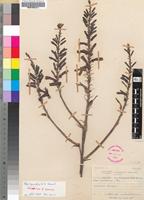
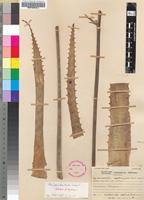
Lectotype of Aloe lusitanica Groenew. [family ASPHODELACEAE]
Previous
Next

Name

Identification
Aloe lusitanica Groenew. [family ASPHODELACEAE ] Verified by Not on sheet, Aloe parvibracteata Schönland [family ASPHODELACEAE ] (stored under name); Verified by Pretoria Herb.,
Related name
  • Aloe parvibracteata
  • Aloe lusitanica

Flora

Entry for Aloe komatiensis Reynolds [family ALOACEAE]
Herbarium
Royal Botanic Gardens, Kew (K)
Collection
Flora Zambesiaca
Resource Type
Reference Sources
Entry From
FZ, Vol 12, Part 3, page 48, (2001) Author: S. Kativu
Names
Aloe komatiensis Reynolds [family ALOACEAE], in J. S. African Bot. 2: 120 (1936); Aloes S. Africa: 254 (1950). —Court, Succ. Fl. South. Africa: 123 (1981). Type from South Africa (Komatipoort).
Aloe lusitanica Groenew. [family ALOACEAE], in Tydskr. Wetensk. Kuns 16: 15 (1937). Type: Mozambique, Maputo (Lourenço Marques), fl. iii.1937, Groenewald 79 (BLFU, holotype).
Information
Perennial herb, solitary or suckering to form small groups of plants, acaulescent or with a short thick stem to 20 cm long. Leaves spreading-erect, rosulate; lamina 30–45 cm long, 5–10 cm wide toward the base, lanceolate-attenuate, fleshy, light green, obscurely lineate on both surfaces, with faint whitish spots on the upper surface, usually without spots on the lower surface; margin with pungent, deltoid, pale brown-tipped teeth 2–4 mm long, 10–15 mm apart; sap pale purplish. Inflorescence erect, 1.2–2 m high; peduncle stout, with up to 8-branches, the lower branches rebranching; branches ascending, subtended by lanceolate, often leafy bracts to 5 cm long. Racemes 20–40 × 7 cm, cylindric, ± laxly flowered; bracts 8–15 × 3 mm, lanceolate-acuminate; pedicels 5–8 mm long, distinctly shorter than the bracts. Perianth pale brick-red, 27–30 mm long, c. 8 mm in diameter across the ovary, constricted just above then widening and becoming slightly decurved, cylindric-trigonous; outer segments free for less than one-third, with pale margins above, and with spreading tips. Stamens and stigma slightly exserted. Capsule c. 33 × 14 mm, oblong-ovoid, yellowish-grey. Seeds c. 3.5 × 7.5 mm, black with grey, sparsely spotted wings.
Habitat
Coastal grassland and bushveld with scattered trees and shrubs
Altitude range
0–100(225) m.
100
0
Distribution
Mozambique M south of Marracuene (Vila Luíza), fl. 13.iii.1938, Reynolds 2807 (K; PRE); Inhaca Isl., Ponta Vermelha, fl. 21.iii.1960, Balsinhas 140 (COI; K; LISC).
Distribution (external)
South Africa (Mpumalanga, Komatipoort)
Notes
Considered by B-E. van Wyk & G.F. Smith (Guide Aloes S. Africa: 212 (1996)) to be synonymous with A. parvibracteata, but it can be distinguished by its flower pedicels distinctly shorter than the bracts, compared with pedicels as long as or longer than the bracts in A. parvibracteata. Glen & Hardy (Fl. South. Africa 5, 1 (1): 64 (2000) consider this species to be synonymous with A. zebrina.

Related Materials

  • Terms and Conditions
  • Privacy Policy
  • Cookie Policy
  • Cookie Settings
  • Accessibility
  • Help
  • Contact Us
  • Facebook
  • Twitter
ITHAKA

JSTOR is part of ITHAKA, a not-for-profit organization helping the academic community use digital technologies to preserve the scholarly record and to advance research and teaching in sustainable ways.

©2000-2026 ITHAKA. All Rights Reserved. JSTOR®, the JSTOR logo, JPASS®, Aluka®, and ITHAKA® are registered trademarks of ITHAKA.

╳