JSTOR Global Plants Home
  • Home
  • Browse
  • About
  • Access
  • Account
    • Saved Items
    • Profile
  • Log in

Global Plants

Skip to Main Content
  • JSTOR Global Plants Home
  • Global Plants

    • Browse
    • About
    • Access
    • Account
      • Saved Items
      • Profile
Log in
  • Browse
  • About
  • Access
  • Account
    • Saved Items
    • Profile
Advanced Search

Compilation
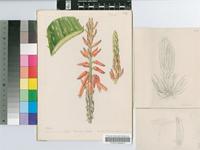
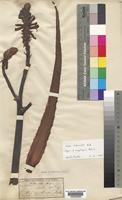
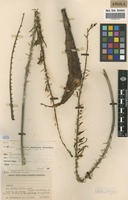
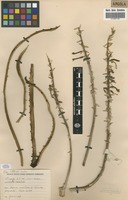
Aloe littoralis

11 Images see all

Aloe littoralis Baker
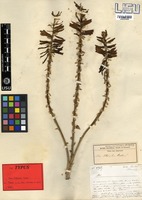
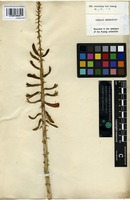
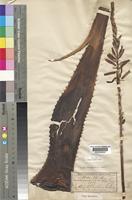
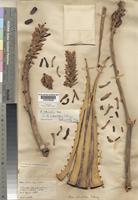
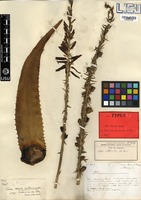
Syntype of Aloe angolensis Baker [family ALOACEAE]
Filed as Aloe littoralis Baker [family LILIACEAE]
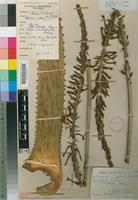
Isotype of Aloe littoralis Baker [family ALOACEAE]
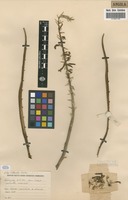
Type? of Aloe littoralis Baker [family LILIACEAE]
Type of Aloe littoralis Baker [family ALOACEAE]
Holotype of Aloe schinzii Baker [family ALOACEAE]
Isotype of Aloe littoralis Baker [family ALOACEAE]
Filed as Aloe littoralis Baker [family ASPHODELACEAE]
Filed as Aloe littoralis Baker [family LILIACEAE]
Previous
Next

Name

Identification
Aloe littoralis Baker [family ASPHODELACEAE ]
Related name
  • Aloe littoralis

Flora

Entry for Aloe littoralis [family ALOACEAE]
Herbarium
South African National Biodiversity Institute, Compton Herbarium, Cape Town (SAM)
Collection
Flora of Southern Africa
Resource Type
Reference Sources
Entry From
Flora of South Africa, (2003) Author: Dr J.P. Roux
Names
Aloe littoralis [family ALOACEAE]
Common names
A. rubrolutea Schinz: 39 (1896); Baker: 460 (1898a); A.Berger: 221 (1908); A.Berger (1909); Van der Merwe: t. 802 (1941); Reynolds: 327 (1950). Syntypes: Namibia, Rehoboth, Fleck 497a (Z); Namibia, IKuisib, Fleck 472 (Z); Botswana, Olifantskloof, Fleck 263 (Z). A. schinzii Baker: 459 (1898a). Type: Botswana, Olifantskloof, Schinz 42 (K).
Information
Trees; stems solitary, 2-4 m tall. Leaves 30^4-0, arcuate-erect to slightly reflexed, 300-650 x 65-130 mm, shallowly channelled, grey­ish green to yellowish green, sometimes tinged reddish, usually unspotted, rarely with white spots, without prickles. Inflorescence of coni­cal, sublax racemes; many-branched, 1.0-1.5 m tall; bracts lanceolate-acuminate, 9-18 x 4-8 mm, 5-many-nerved. Flowers red or pink, rarely yellow, 23-34 mm long, cylindric-trigo-nous; outer segments connate in lower half, inner segments free but adnate to outer in lower half; pedicels 6-12 mm long. Anthers exserted 1-5 mm. Ovary 5.0-8.0 x 2.5-4.0 mm, olive-green; style exserted 2-10 mm. Fruit 18-28 x 10-15 mm, grey. Seeds ± 9.0 x 4.0 x 1.5 mm, charcoal-grey, with broad, pale grey, dark-spot­ted wing. Flowering time July to February, varying according to locality.
Use
114. Aloe littoralis Baker in Transactions of the Linnean Society of London 1: 263 (1878b); Baker: 467 (1898a); A.Berger: 223 (1908); Reynolds: 81 (1960); Reynolds: 317 (1966); Jeppe: 46 (1969); Soldi, Roessler & Merxm.: 17 (1970); Bornman & D.S.Hardy: 175 (1972); Palmer & Pitman: 371 (1972); West: 84 (1974); Jankowitz: 8 (1975); B.-E. van Wyk & G.F.Sm.: 56 (1996). Type: Angola, near Luanda, Welwitsch 3727 (BM, holo.!; K!, LISU; PRE, photo.!).
Range
This species is found in Namibia, Botswana and the Northern Province; also in Angola, Zambia and Zimbabwe. It usually grows on rocky outcrops in mixed open woodland and grassland. It may also occur on calcrete or sand. Its preferred habitat is characterised by summer rain and very dry, warm to cool win­ters. Map 81. Aloe littoralis is easily distinguished from all other tall-stemmed aloes in the western part of our region (and, in fact, most members of sec­tion Pachydendron) by its much-branched inflorescence with numerous laxly flowered erect racemes. This character suite can be used in the field at almost any time of the year, as it can be seen on dead inflorescences which per­sist for many months before disintegrating. The flowers of this species vary in colour from crim­son to dirty yellow.

Related Materials

  • Terms and Conditions
  • Privacy Policy
  • Cookie Policy
  • Cookie Settings
  • Accessibility
  • Help
  • Contact Us
  • Facebook
  • Twitter
ITHAKA

JSTOR is part of ITHAKA, a not-for-profit organization helping the academic community use digital technologies to preserve the scholarly record and to advance research and teaching in sustainable ways.

©2000-2026 ITHAKA. All Rights Reserved. JSTOR®, the JSTOR logo, JPASS®, Aluka®, and ITHAKA® are registered trademarks of ITHAKA.

╳