JSTOR Global Plants Home
  • Home
  • Browse
  • About
  • Access
  • Account
    • Saved Items
    • Profile
  • Log in

Global Plants

Skip to Main Content
  • JSTOR Global Plants Home
  • Global Plants

    • Browse
    • About
    • Access
    • Account
      • Saved Items
      • Profile
Log in
  • Browse
  • About
  • Access
  • Account
    • Saved Items
    • Profile
Advanced Search

Compilation
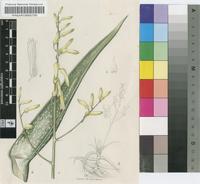
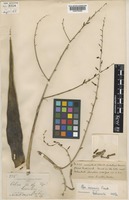
Aloe inermis

2 Images see all

Aloe inermis Forssk.
Type of Aloe luntii Baker [family ALOACEAE]
Previous
Next

Name

Identification
Aloe inermis Forssk. [family ASPHODELACEAE ]
Related name
  • Aloe inermis

Flora

Entry for ALOE luntii Bak. [family ALOACEAE]
Herbarium
Royal Botanic Gardens, Kew (K)
Collection
Flora Somalia
Resource Type
Reference Sources
Entry From
Flora Somalia, Vol 4, (1995) Author: by J. Lavranos [updated by M. Thulin 2008]
Names
ALOE luntii Bak. [family ALOACEAE], (1894).
ALOE inermis [family ALOACEAE], sensu auctt., non Forssk.
Information
Plants suckering and forming small groups; stems to 30 cm long, obliquely ascending. Leaves 12–16, lanceolate, 20–25 x 5–7 cm, horizontally spreading or recurved, grey or brownish-green with a waxy coating, smooth; margins entire, with rounded, cartilaginous edge. Inflorescences with up to 15 spreading branches, to 40 cm high; racemes elongate, oblique, to 15 cm long, lax; bracts 3–4 x 2–3 mm; pedicels 4–6 mm long. Flowers dull red or pink with conspicuous waxy bloom, subsecund; perianth 24–28 mm long, 7 mm across the ovary, outer tepals free for 7 mm. Anthers exserted 2–3 mm. Style exserted 3–4 mm. Ovary brownish, 5 x 2 mm.
Range
N2
Altitude range
c. 900 m.
Distribution
SOMALIA Bally 10879; Lavranos, Carter & al. 24602.
Distribution (external)
Yemen (Hadhramaut)
Oman (Dhofar)

Related Materials

  • Terms and Conditions
  • Privacy Policy
  • Cookie Policy
  • Cookie Settings
  • Accessibility
  • Help
  • Contact Us
  • Facebook
  • Twitter
ITHAKA

JSTOR is part of ITHAKA, a not-for-profit organization helping the academic community use digital technologies to preserve the scholarly record and to advance research and teaching in sustainable ways.

©2000-2026 ITHAKA. All Rights Reserved. JSTOR®, the JSTOR logo, JPASS®, Aluka®, and ITHAKA® are registered trademarks of ITHAKA.

╳