JSTOR Global Plants Home
  • Home
  • Browse
  • About
  • Access
  • Account
    • Saved Items
    • Profile
  • Log in

Global Plants

Skip to Main Content
  • JSTOR Global Plants Home
  • Global Plants

    • Browse
    • About
    • Access
    • Account
      • Saved Items
      • Profile
Log in
  • Browse
  • About
  • Access
  • Account
    • Saved Items
    • Profile
Advanced Search

Compilation
Aloe cryptopoda

16 Images see all

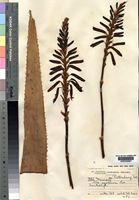
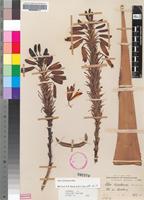
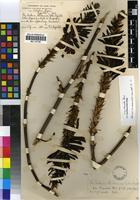
Type of Aloe pienaarii Pole-Evans [family ALOACEAE]
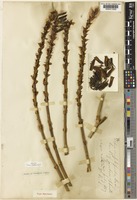
Aloe cryptopoda Baker
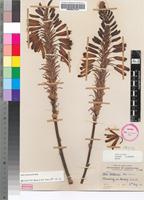
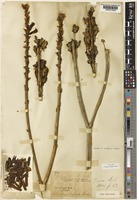
Type of Aloe wickensii Pole-Evans var. lutea Reynolds [family ASPHODELACEAE]
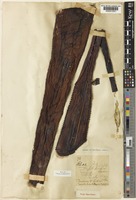
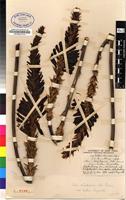
Lectotype of Aloe wickensii Pole-Evans var. wickensii [family ASPHODELACEAE]
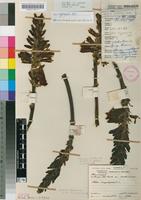
Aloe cryptopoda Baker
Filed as Aloe cryptopoda Baker [family ASPHODELACEAE]
Lectotype of Aloe wickensii Pole-Evans var. wickensii [family ASPHODELACEAE]
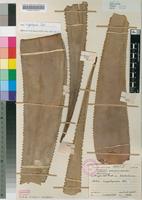
Type of Aloe cryptopoda Baker [family ALOACEAE]
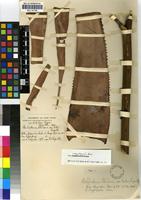
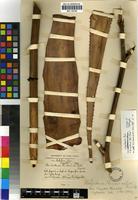
Paratype of Aloe cryptopoda Baker [family ASPHODELACEAE]
Type of Aloe wickensii Pole-Evans var. lutea Reynolds [family ASPHODELACEAE]
Type of Aloe cryptopoda Baker [family ALOACEAE]
Filed as Aloe cryptopoda Baker [family ASPHODELACEAE]
Type of Aloe cryptopoda Baker [family ALOACEAE]
Aloe cryptopoda Baker
Isotype of Aloe wickensii Pole-Evans var. lutea Reynolds [family ASPHODELACEAE]
Previous
Next

Name

Identification
Aloe wickensii Pole-Evans [family ASPHODELACEAE ] Verified by Not on sheet, Aloe cryptopoda Baker [family ASPHODELACEAE ] (stored under name); Verified by Not on sheet,
Related name
  • Aloe cryptopoda
  • Aloe pienaarii
  • Aloe wickensii

Flora

Entry for Aloe cryptopoda [family ALOACEAE]
Herbarium
South African National Biodiversity Institute, Compton Herbarium, Cape Town (SAM)
Collection
Flora of Southern Africa
Resource Type
Reference Sources
Entry From
Flora of South Africa, (2003) Author: Dr J.P. Roux
Names
Aloe cryptopoda [family ALOACEAE]
Common names
A. pienaarii Pole Evans: 27 (1915); Pole Evans: t. 17 (1921b). Type: Northern Province, Smits Drift, Pienaar s.n. (PRE!). A. wickensii Pole Evans: 29 (1915); Pole Evans: t. 41 (1922b); Reynolds: 146 (1937b) pro parte; Reynolds: 334 (1950); Jeppe: 62 (1969); Bornman & D.S.Hardy: 181 (1972). Lectotype: hort., Curator Pretoria 122 (PRE!). A. wickensii Pole Evans var. lutea Reynolds: 145 (1937b); Reynolds: 335 (1950); Jeppe: 62 (1969); Bornman & D.S.Hardy: 181 (1972). Type: Mpumalanga, Burgersfort, Reynolds 1949 (PRE, holo.!; BOL!, UPS!).
Information
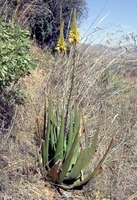
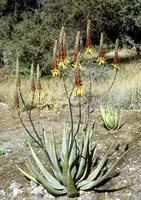
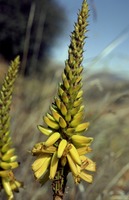
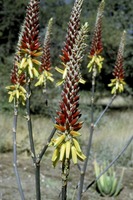
Plants usually stemless, 500-800 mm tall excluding inflorescence, not suckering. Leaves 40-50, erect to arcuate-erect, 400-900 x 40-150 mm, deep green to glaucous green. Inflores­cence 5-8-branched, 1.25-1.75 m tall; racemes subdense; sterile bracts few; bracts broadly ovate-acuminate, 13-20 x 8-12 mm, many-nerved. Flowers red, yellow, or red in bud and yellow at flowering, 25^-5 mm long; all seg­ments free; pedicels 8-20 mm long. Anthers exserted 1^1 mm. Ovary 6.0-9.0 x 2.5^1.0 mm, green; style exserted 3-5 mm. Fruit 20-23 x 11-13 mm, buff-grey. Seeds grey, ±5x4x1 mm, wing moderately narrow, translucent. Flowering time June to August in most popula­tions, but February to March in some. Figure 13.
Habitat
The leaves of plants of this species turn brownish when under drought stress, while those of A. lutescens (no. 78) turn yellowish. A. cryptopoda is not stoloniferous, as A. lutescens is. The inflorescence of A. cryptopoda is more broadly conical than that of A. lutescens, and the flowers are slightly clavate, not cylindric.
Use
77. Aloe cryptopoda Baker in Journal of Botany, British and Foreign 22: 52 (1884) Baker: 467 (1898a); A.Berger: 233 (1908) Christian: 117 (1940a); Reynolds: 331 (1950) Reynolds: 31 (1954); Reynolds: 181 (1966) Jeppe: 60 (1969); Bornman & D.S.Hardy: 179 (1972); West: 65 (1974); Compton: 99 (1976); B.-E. van Wyk & G.F.Sm.: 132 (1996). Type: Mozambique, Mutarara, Kirk 96 (K, holo.; PRE!, photo.).
Range
Aloe cryptopoda is found in Botswana, the Northern Province, North-West, Gauteng, Mpumalanga and Swaziland; also in Malawi, Mozam­bique and Zimbabwe. It occurs in open savanna woodland, in areas of summer rain and light to no frost. It is widespread and does not seem to be soil-specific. Seedlings of populations flow­ering from February to March have leaves cov­ered with hard, brown tubercles which disappear with age, and which are not found in seedlings of winter-flowering populations. Map 53.

Related Materials

  • Terms and Conditions
  • Privacy Policy
  • Cookie Policy
  • Cookie Settings
  • Accessibility
  • Help
  • Contact Us
  • Facebook
  • Twitter
ITHAKA

JSTOR is part of ITHAKA, a not-for-profit organization helping the academic community use digital technologies to preserve the scholarly record and to advance research and teaching in sustainable ways.

©2000-2026 ITHAKA. All Rights Reserved. JSTOR®, the JSTOR logo, JPASS®, Aluka®, and ITHAKA® are registered trademarks of ITHAKA.

╳