JSTOR Global Plants Home
  • Home
  • Browse
  • About
  • Access
  • Account
    • Saved Items
    • Profile
  • Log in

Global Plants

Skip to Main Content
  • JSTOR Global Plants Home
  • Global Plants

    • Browse
    • About
    • Access
    • Account
      • Saved Items
      • Profile
Log in
  • Browse
  • About
  • Access
  • Account
    • Saved Items
    • Profile
Advanced Search

Compilation
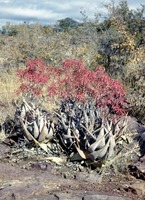
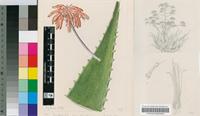
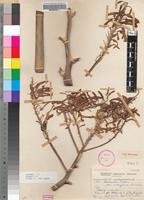
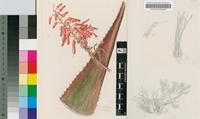
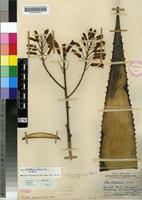
Aloe chabaudii

16 Images see all

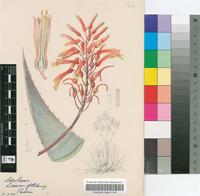
Aloe chabaudii Schönland
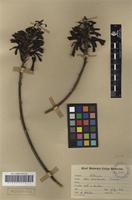
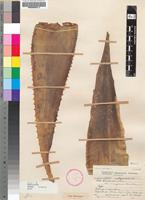
Isotype of Aloe chabaudii Schonland var. mlanjeana Christian [family ALOACEAE]
Aloe chabaudii Schönland var. chabaudii
Filed as Aloe chabaudii Schönland [family ASPHODELACEAE]
Aloe chabaudii Schönland
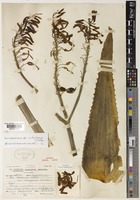
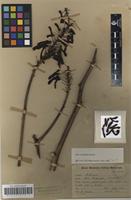
Holotype of Aloe chabaudii Schönland var. mlanjeana Christian [family ASPHODELACEAE]
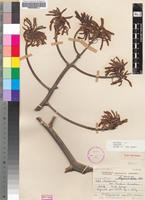
Type of Aloe chabaudii Schönland var. verekeri Christian [family ASPHODELACEAE]
Aloe chabaudii Schönland var. verekeri Christian
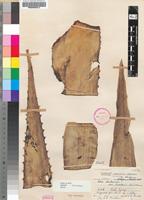
Holotype of Aloe chabaudii Schönland var. mlanjeana Christian [family ASPHODELACEAE]
Aloe chabaudii Schönland var. mlanjeana Christian
Filed as Aloe chabaudii Schönland var. chabaudii [family ASPHODELACEAE]
Previous
Next

Name

Identification
Aloe chabaudii Schönland [family ASPHODELACEAE ]
Related name
  • Aloe chabaudii

Flora

Entry for Aloe chabaudii [family ALOACEAE]
Herbarium
South African National Biodiversity Institute, Compton Herbarium, Cape Town (SAM)
Collection
Flora of Southern Africa
Resource Type
Reference Sources
Entry From
Flora of South Africa, (2003) Author: Dr J.P. Roux
Names
Aloe chabaudii [family ALOACEAE]
Common names
A. chabaudii Schonland var. verekeri Christian: t. 699 (1938b); Reynolds: 342 (1950); Reynolds: 107 (1966); West: 62 (1974). Type: Zimbabwe, Sabi Gorge, Vereker PRE23027 (PRE!).
Information
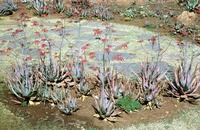
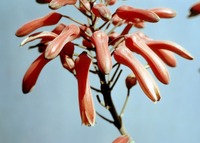
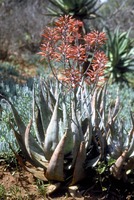
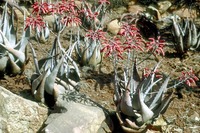
Plants stemless or short-stemmed, 300-500 mm tall excluding inflorescence, forming large dense groups. Leaves ± 20 per rosette, bicon­vex, 300-500 x 60-110 mm, grey-green to glaucous green, upper surface sometimes with few spots. Inflorescence a panicle 0.6-1.0 m tall; racemes capitate to cylindric, lax to sub-dense; bracts deltoid, 3.0-5.0 x 1.5-3.0 mm, 3-5-nerved. Flowers scarlet to brick-red, 18-40 mm long; outer segments free for 4-8 mm, inner segments free but dorsally adnate to outer; pedicels 19-25 mm long. Anthers exserted 1-2 mm. Ovary 6.0-7.0 x 2.0-2.5 mm, brownish green; style exserted 2-A mm. Fruit ±21 x 12 mm. Flowering time June to July. Figure 14.
Habitat
The leaves of this species are sometimes spotted, but the flowers lack the inflated flower base which is characteristic of section 9, Pictae. Instead, the flower tube is trigonously indented near the base. The nearest relatives of A. cha­baudii are probably A. milne-redheadii and A. mzimbana, both of which occur in northern Zambia and Malawi. A. chabaudii is at once distinguished from A. suffulta (no. 79) by its stoloniferous habit, usually unspotted or only obscurely spotted, spreading to incurved leaves and relatively short (up to 1 m tall) nonclimbing inflorescence.
Use
80. Aloe chabaudii Schonland in The Gar­deners' Chronicle 3, 38: 102 (1905c); A.Berger: 244 (1908); Pole Evans: t. 164 (1925a); Reynolds: 339 (1950); Reynolds: 23 (1954); Reynolds: 102 (1966); Jeppe: 6 (1969); Born-man & D.S.Hardy: 185 (1972); West: 53 (1974); B.-E. van Wyk & G.F.Sm.: 128 (1996). Type: Zimbabwe, no precise locality, Schonland s.n. (GRA!).
Range
Found in Botswana, the Northern Province, Mpumalanga, Swaziland and KwaZulu-Natal; also in Democratic Republic of the Congo, Tanzania, Zambia, Malawi, Mozambique and Zimbabwe. A. chabaudii var. mlanjeana is re­stricted to Malawi and therefore not treated here. A. chabaudii usually grows on bare rock on granitic domes, or in shallow soil pockets. It is very variable in climatic requirements, but it is frost-sensitive. Map 56.

Related Materials

  • Terms and Conditions
  • Privacy Policy
  • Cookie Policy
  • Cookie Settings
  • Accessibility
  • Help
  • Contact Us
  • Facebook
  • Twitter
ITHAKA

JSTOR is part of ITHAKA, a not-for-profit organization helping the academic community use digital technologies to preserve the scholarly record and to advance research and teaching in sustainable ways.

©2000-2026 ITHAKA. All Rights Reserved. JSTOR®, the JSTOR logo, JPASS®, Aluka®, and ITHAKA® are registered trademarks of ITHAKA.

╳