JSTOR Global Plants Home
  • Home
  • Browse
  • About
  • Access
  • Account
    • Saved Items
    • Profile
  • Log in

Global Plants

Skip to Main Content
  • JSTOR Global Plants Home
  • Global Plants

    • Browse
    • About
    • Access
    • Account
      • Saved Items
      • Profile
Log in
  • Browse
  • About
  • Access
  • Account
    • Saved Items
    • Profile
Advanced Search

Compilation
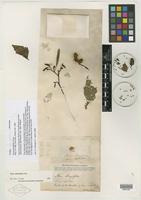
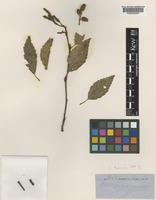
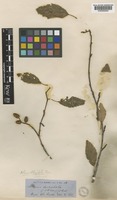
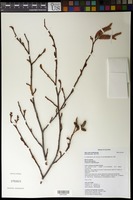
Alnus oblongifolia

11 Images see all

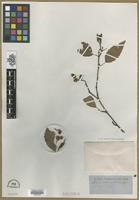
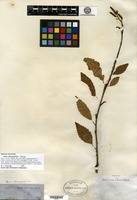
Filed as Alnus oblongifolia Engelm. [family BETULACEAE]
Isotype of Alnus oblongifolia Torrey, J. 1859 [family BETULACEAE]
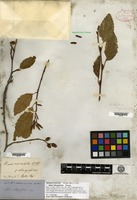
Syntype of Alnus oblongifolia Torr. [family BETULACEAE]
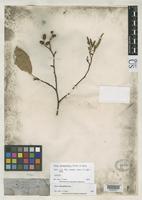
Isolectotype of Alnus oblongifolia Torrey [family BETULACEAE]
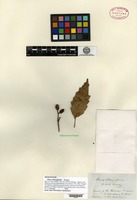
Syntype of Alnus oblongifolia Torr. [family BETULACEAE]
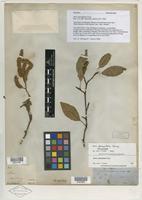
Alnus oblongifolia Torr. [family BETULACEAE]
Alnus oblongifolia Torr. in Emory [family BETULACEAE]
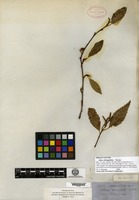
Isolectotype of Alnus oblongifolia Torrey [family BETULACEAE]
Isosyntype of Alnus oblongifolia Torrey [family BETULACEAE]
Previous
Next

Name

Identification
Alnus oblongifolia Torr. [family BETULACEAE ] (stored under name); Verified by J. J. Furlow, 1974
Related name
  • Alnus oblongifolia
Common name
  • New Mexican alder, Flora of North America Vol. 3
  • aliso (Mexico), Flora of North America Vol. 3
  • Arizona alder, Flora of North America Vol. 3

Flora

Entry for Alnus oblongifolia Torrey [family BETULACEAE]
Herbarium
Flora of North America (FNA)
Collection
Flora of North America
Resource Type
Reference Sources
Entry From
Flora of North America, Vol 3,
Names
Alnus oblongifolia Torrey [family BETULACEAE], in W. H. Emory, Rep. U.S. Mex. Bound., 2: 204. 1859
Information
Trees, to 30 m; trunks often several, crowns spreading. Bark dark gray, smooth, becoming blackish and breaking into shallow vertical plates in age; lenticels inconspicuous. Winter buds stipitate, ovoid, 4--8 mm, apex rounded; stalks 1.5--4 mm; scales 2, equal, valvate, sometimes incompletely covering underlying leaves, moderately resin-coated. Leaf blade narrowly ovate or lanceolate to narrowly elliptic, 5--9 × 3--6 cm, leathery, base narrowly to broadly cuneate or narrowly rounded, margins flat, sharply and coarsely doubly serrate, rarely evenly and densely short-serrate, major teeth sharp, acuminate, secondary teeth distinctly larger, apex long to short-acuminate, rarely acute; surfaces abaxially glabrous to sparsely pubescent or infrequently villous, moderately resin-coated. Inflorescences formed season before flowering and exposed during winter; staminate catkins in 1 or more clusters of 3--6, 3.5--10 cm; pistillate catkins in 1 or more clusters of 2--7. Flowering before new growth in spring. Infructescences ovoid, ellipsoid, or nearly cylindric, 1--2.5 × 0.8--1.5 cm; peduncles 5--10 mm. Samaras elliptic to obovate, wings narrower than body, irregular in shape, leathery.
Phenology
Flowering early spring
Altitude range
1000--2300 m
Distribution
Mexico (n Chihuahua and n Sonora).USA Ariz.USA N.Mex.
Discussion
Alnus oblongifolia is closely related to the Mexican and Central American A. acuminata, with which it has sometimes been confused. It is found only in scattered populations in the temperate deciduous forest vegetation zone of high mountains in the arid Southwest.

Related Materials

  • Terms and Conditions
  • Privacy Policy
  • Cookie Policy
  • Cookie Settings
  • Accessibility
  • Help
  • Contact Us
  • Facebook
  • Twitter
ITHAKA

JSTOR is part of ITHAKA, a not-for-profit organization helping the academic community use digital technologies to preserve the scholarly record and to advance research and teaching in sustainable ways.

©2000-2026 ITHAKA. All Rights Reserved. JSTOR®, the JSTOR logo, JPASS®, Aluka®, and ITHAKA® are registered trademarks of ITHAKA.

╳