JSTOR Global Plants Home
  • Home
  • Browse
  • About
  • Access
  • Account
    • Saved Items
    • Profile
  • Log in

Global Plants

Skip to Main Content
  • JSTOR Global Plants Home
  • Global Plants

    • Browse
    • About
    • Access
    • Account
      • Saved Items
      • Profile
Log in
  • Browse
  • About
  • Access
  • Account
    • Saved Items
    • Profile
Advanced Search

Compilation
Allophylus schweinfurthii

8 Images see all

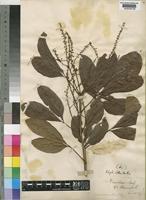
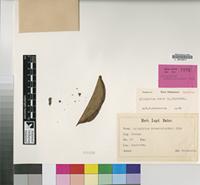
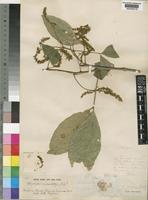
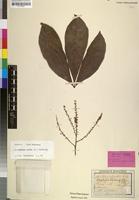
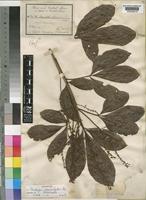
Allophylus africanus P.Beauv. [family SAPINDACEAE]
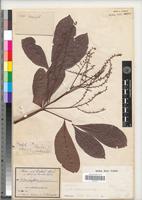
Syntype of Allophylus schweinfurthii Gilg [family SAPINDACEAE]
Lectotype of Allophylus schweinfurthii Gilg [family SAPINDACEAE]
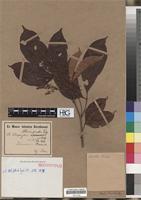
Type? of Allophylus schweinfurthii Gilg [family SAPINDACEAE]
Isosyntype of Allophylus schweinfurthii Gilg [family SAPINDACEAE]
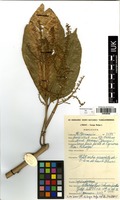
Allophylus dummeri Baker f. [family SAPINDACEAE]
Isosyntype of Allophylus schweinfurthii Gilg [family SAPINDACEAE]
Filed as Allophylus schweinfurthii Gilg [family SAPINDACEAE]
Previous
Next

Name

Identification
Allophylus schweinfurthii Gilg [family SAPINDACEAE ] (stored under name); Verified by Gilg, E., 1898 Allophylus africanus P. Beauv. [family SAPINDACEAE ] Verified by Not on sheet,
Related name
  • Allophylus cobbe
  • Schmidelia africana
  • Allophylus dummeri
  • Allophylus macrobotrys
  • Allophylus ussheri
  • Allophylus schweinfurthii
  • Allophylus africanus

Flora

Entry for ALLOPHYLUS dummeri Baker f. [family SAPINDACEAE]
Herbarium
Royal Botanic Gardens, Kew (K)
Collection
Flora of Tropical East Africa
Resource Type
Reference Sources
Entry From
Flora of Tropical East Africa, page 1, (1998) Author: DAVIES & B. VERDCOURT
Names
ALLOPHYLUS dummeri Baker f. [family SAPINDACEAE], in J.B. 57: 187 (1919); Radlk. in E.P. IV, 165: 551 (1932); I.T.U., ed. 2: 376 (1952); Hamilton, Field Guide Uganda For. Trees: 196 (1981). Type: Uganda, Mengo District, Kivuvu, Dummer 552 (BM!, holo., K!, iso.)
ALLOPHYLUS ussheri Baker f. [family SAPINDACEAE], in J.B. 57: 186 (1919); Radlk. in E.P. IV, 165: 551 (1932). Type: Uganda, Mengo District, Kyagwe [Chagwe], Mabira Forest, Ussher 61 (K!, holo., BM!, iso.)
ALLOPHYLUS schweinfurthii [family SAPINDACEAE], [sensu Hauman in F.C.B. 9: 302 (1960) pro parte, non Gilg]
Information
Shrub or spreading tree 2.5–9 m. tall; branches glabrous, lenticellate; slash red-brown exuding off-white sap. Leaves trifoliolate, drying bright green; petiole 4–14 cm. long; leaflets elliptic, elliptic-oblong or elliptic-obovate, 7.5–25 cm. long, 4–10.5 cm. wide, acuminate at the apex, cuneate at the base, entire or remotely coarsely serrate, thin to slightly thick, glabrous or with indistinct hairy domatia in nerve-axils beneath; lateral nerves in 5–12 pairs, venation fine and closely reticulate, raised on both sides. Inflorescence rather robust, 6–24.5 cm. long, including peduncles 5–8.5 cm. long, with 3–4 main branches; axes with short ferruginous pubescence, cymules 3–6-flowered, mostly densely placed. Flowers cream, white or greenish; calyx sparsely pubescent; outer sepals round, 1 mm. diameter; inner oblate, 2 mm. long and wide; petals spathulate, 2 mm. long, 0.8 mm. wide, ciliate. Fruits orange-yellow to red-brown, globose, ± 6 mm. diameter, with very sparse adpressed hairs or glabrous.
Range
DISTR. U 2, 4
Altitude range
1050–1300 m.
Distribution
UGANDA Bunyoro District Budongo Forest, mahogany (Station III) sample plot, June 1940, Eggeling 3970! & Budongo Forest, 15 May 1941, A.S. Thomas 3893!UGANDA Mengo District Mpanga Forest, 29 Jan. 1952, Kaliebara 43!
Distribution (external)
; Zaire
Angola
Notes
The Uganda material is quite uniform and easily recognised. I am not convinced this is the same as A. gossweileri Baker f. described from Angola and after at first accepting this synonymy (suggested informally on the herbarium covers) have decided to revert to A. dummeri which, however, does also occur in Angola.

Related Materials

  • Terms and Conditions
  • Privacy Policy
  • Cookie Policy
  • Cookie Settings
  • Accessibility
  • Help
  • Contact Us
  • Facebook
  • Twitter
ITHAKA

JSTOR is part of ITHAKA, a not-for-profit organization helping the academic community use digital technologies to preserve the scholarly record and to advance research and teaching in sustainable ways.

©2000-2026 ITHAKA. All Rights Reserved. JSTOR®, the JSTOR logo, JPASS®, Aluka®, and ITHAKA® are registered trademarks of ITHAKA.

╳