JSTOR Global Plants Home
  • Home
  • Browse
  • About
  • Access
  • Account
    • Saved Items
    • Profile
  • Log in

Global Plants

Skip to Main Content
  • JSTOR Global Plants Home
  • Global Plants

    • Browse
    • About
    • Access
    • Account
      • Saved Items
      • Profile
Log in
  • Browse
  • About
  • Access
  • Account
    • Saved Items
    • Profile
Advanced Search

Compilation
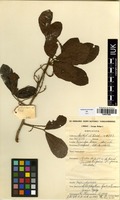
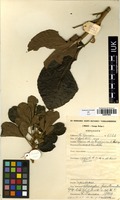
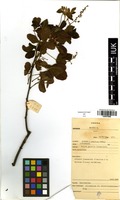
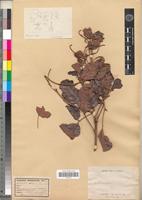
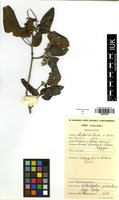
Allophylus fulvotomentosus

5 Images see all

Filed as Allophylus fulvotomentosus Gilg [family SAPINDACEAE]
Type of Allophylus kassneri Baker. f. [family SAPINDACEAE]
Filed as Allophylus fulvotomentosus Gilg [family SAPINDACEAE]
Previous
Next

Name

Identification
Allophylus fulvotomentosus Gilg. [family SAPINDACEAE ] (stored under name); Allophylus kassneri Baker. f. [family SAPINDACEAE ]
Related name
  • Allophylus fulvotomentosus
  • Allophylus kassneri

Flora

Entry for ALLOPHYLUS fulvotomentosus Gilg [family SAPINDACEAE]
Herbarium
Royal Botanic Gardens, Kew (K)
Collection
Flora of Tropical East Africa
Resource Type
Reference Sources
Entry From
Flora of Tropical East Africa, page 1, (1998) Author: DAVIES & B. VERDCOURT
Names
ALLOPHYLUS fulvotomentosus Gilg [family SAPINDACEAE], in E.J. 24: 293 (1897); Z.A.E.: 476 (1912); Baker f. in J.B. 57: 189 (1919); Radlk. in E.P. IV, 165: 542 (1932); T.T.C.L.: 555 (1949); Hauman in F.C.B. 9: 296 (1960). Type: Tanzania, Mwanza District, Kagehi R., Utundua, Stuhlmann 3474 (B†, holo.)
ALLOPHYLUS kassneri Baker f. [family SAPINDACEAE], in J.B. 57: 188 (1919); Radlk. in E.P. IV, 165: 552 (1932). Type: Zaire, Lufonzo, Kassner 2849 (BM!, holo., K!, iso.)
Information
Tree or shrub 1.8–7.5 m. tall, bark black or grey-brown, rough; stems usually densely ferruginous velvety, later ± glabrous. Leaves trifoliolate; petiole 1.5–6 cm. long, mostly ferruginous velvety; leaflets drying darker grey-brown above, pale brown beneath, elliptic to oblong or obovate, 2.5–12 cm. long, 1.5–8 cm. wide, subacute to rounded or ± truncate at the apex, cuneate to rounded at the base, mostly subcoriaceous, often densely ferruginous velvety at first, later hairy only on venation beneath or ± glabrous; venation reticulate and ± prominent above, the nerves ± impressed, very prominent beneath. Inflorescences 3.5–11(–15) cm. long, including 1–5 cm. long peduncle, branched, the axes ferruginous velvety; cymules subsessile, 3–10-flowered, extremely densely placed so that apices of inflorescence-branches are solid with flowers and spadix-like, the rhachis entirely obscured but often more open at base of branches and often altogether laxer in intermediates with A. africanus. Flowers yellow-green, subsessile or pedicels only 0.5 mm. long; inner sepals 1.5 mm. wide; petals spathulate, 1.5 mm. long, 0.8 mm. wide, the scale densely pilose. Filaments 2 mm. long, hairy at base. Fruits pale orange, subglobose-obovoid, 7 mm. long, 6 mm. wide, pubescent, subsessile.
Range
DISTR. T 1, 2, 4, 5, 7
Altitude range
800–1800 m.
Distribution
TANZANIA Ngara District Bushubi, Muganza, Kumyangi, 3 Dec. 1959, Tanner 4597!TANZANIA Mpwapwa District Kiboriani Mt., 5 July 1938, Mr. & Mrs. Hornby 918!TANZANIA Mbeya District Mbosi, 29 Mar. 1932, Clair-Thompson 1075!
Distribution (external)
; Zaire
Burundi
Notes
The usually blunt leaflets, very dense inflorescences and often velvety indumentum give this a recognisable facies but there are intermediates with A. africanus. Newbould & Jefford 2230 (Mpanda District, Mahali Mts., Kalya) has ± glabrous leaflets truncate at the apex; together with several other similar sheets, I refer it here. Hauman gives the pedicel length as 1.5 mm. which is longer than found in the Flora area; he also records it from Uganda but I have seen no material. See also A. rutete on p. 97.

Related Materials

  • Terms and Conditions
  • Privacy Policy
  • Cookie Policy
  • Cookie Settings
  • Accessibility
  • Help
  • Contact Us
  • Facebook
  • Twitter
ITHAKA

JSTOR is part of ITHAKA, a not-for-profit organization helping the academic community use digital technologies to preserve the scholarly record and to advance research and teaching in sustainable ways.

©2000-2026 ITHAKA. All Rights Reserved. JSTOR®, the JSTOR logo, JPASS®, Aluka®, and ITHAKA® are registered trademarks of ITHAKA.

╳