JSTOR Global Plants Home
  • Home
  • Browse
  • About
  • Access
  • Account
    • Saved Items
    • Profile
  • Log in

Global Plants

Skip to Main Content
  • JSTOR Global Plants Home
  • Global Plants

    • Browse
    • About
    • Access
    • Account
      • Saved Items
      • Profile
Log in
  • Browse
  • About
  • Access
  • Account
    • Saved Items
    • Profile
Advanced Search

Compilation
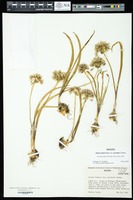
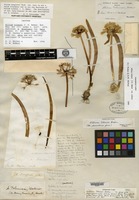
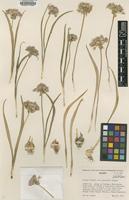
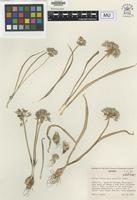
Allium tolmiei

15 Images see all

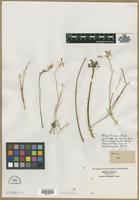
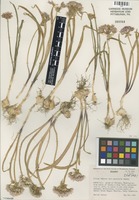
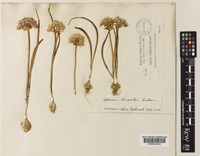
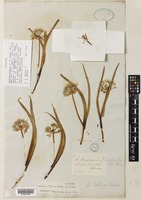
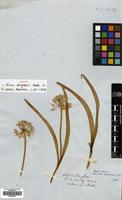
Isotype of Allium tolmiei Baker var. persimile Ownbey [family AMARYLLIDACEAE]
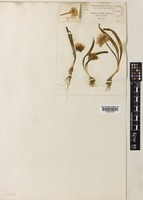
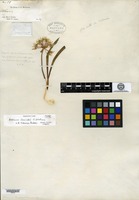
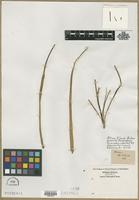
Isotype of Allium tolmiei Baker [family ALLIACEAE]
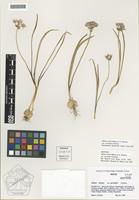
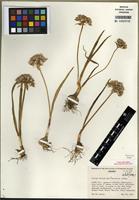
Isotype of Allium tolmei Ownbey var. persimile [family ALLIACEAE]
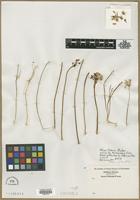
Isotype of Allium tolmiei Baker var. persimile Ownbey [family ALLIACEAE]
Filed as Allium tolmiei Baker [family ALLIACEAE]
Allium tolmiei unrecorded var. tolmiei Ownbey [family ALLIACEAE]
Type of Allium cusickii S. Watson [family ALLIACEAE]
Isotype of Allium tolmiei Baker ex S. Watson var. persimile [family AMARYLLIDACEAE]
Isotype of Allium tolmiei Ownbey var. persimile Ownbey [family LILIACEAE]
Filed as Allium tolmiei Baker [family ALLIACEAE]
Isotype of Allium tolmiei var. persimile Ownbey [family AMARYLLIDACEAE]
Filed as Allium tolmiei Baker [family ALLIACEAE]
Allium tolmiei unrecorded var. tolmiei Ownbey [family ALLIACEAE]
Isotype of Allium tolmiei Baker ex Watson [family ALLIACEAE]
Syntype of Allium douglasii Hook. [family ALLIACEAE]
Previous
Next

Name

Identification
Isotype of Allium tolmei Ownbey [family ALLIACEAE ] Allium tolmiei Baker [family ALLIACEAE ] (stored under name);
Related name
  • Allium tolmiei
  • Allium douglasii
  • Allium sp.
  • Allium tolmei
  • Allium cusickii
  • Allium collinum

Flora

Entry for Allium tolmiei Baker [family ALLIACEAE]
Herbarium
Flora of North America (FNA)
Collection
Flora of North America
Resource Type
Reference Sources
Entry From
Flora of North America, Vol 26,
Names
Allium tolmiei Baker [family ALLIACEAE], Bot. Mag., 32: under plate 6227. 1876
Treatment Author(s)
Dale W. McNeal Jr.
T. D. Jacobsen
Information
Bulbs 1–10+, not clustered on stout primary rhizome, not forming rhizomes, renewal bulbs formed within coats of parent bulb, or borne terminally on rhizomes outside coats of parent bulb, parent bulb disappearing by anthesis except for still-functional roots and shriveled bulb coat, ovoid or oblique, 0.6–2 × 1–2.5 cm; outer coats enclosing 1 or more bulbs, brown, membranous, lacking cellular reticulation or cells arranged in only 2–3 rows distal to roots, ± quadrate, without fibers; inner coats white to pink, cells obscure, quadrate, or not visible. Leaves forming abcission layer at soil surface and deciduous or persistent with scape after seeds mature, also frequently breaking at soil surface after pressing, withering at tip at anthesis, 2, basally sheathing, sheaths not extending much above soil surface; blade solid, flat, ± falcate, 10–40 cm × 1–10 mm, margins entire. Scape deciduous or persistent, solitary, erect, solid, compressed to strongly flattened and winged or not, 5–40 cm × 1–5 mm. Umbel persistent, erect, compact to ± loose, 10–50-flowered, globose to hemispheric, bulbils unknown; spathe bracts persistent, 2–3, 8–17-veined, ovate to lanceolate, ± equal, apex acuminate. Flowers campanulate to ± stellate, 6–12 mm; tepals ± erect, almost white to pink, with prominent, darker midribs, lanceolate, ± equal, becoming rigid, spreading, carinate in fruit, margins entire, apex acute to acuminate, involute at tip; stamens included to ± equaling tepals or exserted; anthers purple to yellow; pollen yellow; ovary crestless or obscurely to prominently crested; processes 3 or 6, central, low, rounded to ± prominent, triangular, margins entire; style linear, ± equaling stamens; stigma capitate, unlobed or obscurely lobed; pedicel 5–25 mm. Seed coat dull; cells smooth.
Distribution
w United States.

Related Materials

  • Terms and Conditions
  • Privacy Policy
  • Cookie Policy
  • Cookie Settings
  • Accessibility
  • Help
  • Contact Us
  • Facebook
  • Twitter
ITHAKA

JSTOR is part of ITHAKA, a not-for-profit organization helping the academic community use digital technologies to preserve the scholarly record and to advance research and teaching in sustainable ways.

©2000-2026 ITHAKA. All Rights Reserved. JSTOR®, the JSTOR logo, JPASS®, Aluka®, and ITHAKA® are registered trademarks of ITHAKA.

╳