JSTOR Global Plants Home
  • Home
  • Browse
  • About
  • Access
  • Account
    • Saved Items
    • Profile
  • Log in

Global Plants

Skip to Main Content
  • JSTOR Global Plants Home
  • Global Plants

    • Browse
    • About
    • Access
    • Account
      • Saved Items
      • Profile
Log in
  • Browse
  • About
  • Access
  • Account
    • Saved Items
    • Profile
Advanced Search

Compilation
Allium amplectens

8 Images see all

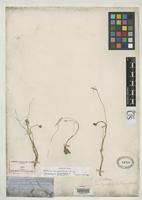
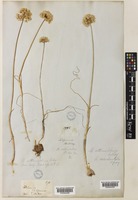
Isotype of Allium amplectens Torrey, J. 1856 [family LILIACEAE]
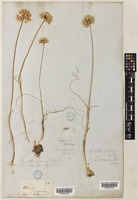
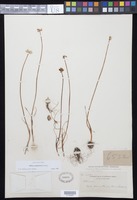
Allium amplectens Torr. [family ALLIACEAE]
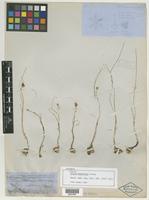
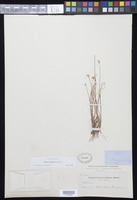
Type? of Allium amplectens Torr. [family LILIACEAE]
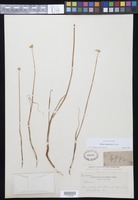
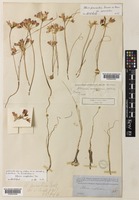
Allium amplectens Torr. [family LILIACEAE]
Allium amplectens Torr. [family ALLIACEAE]
Allium amplectens Torr. [family LILIACEAE]
Allium peninsulare Lemmon ex Greene [family ALLIACEAE]
Previous
Next

Name

Identification
Allium amplectens Torr. [family ALLIACEAE ] (stored under name); Allium attenuatum Kellogg [family ALLIACEAE ] Allium occidentale A.Gray [family ALLIACEAE ] Allium reticulatum Fras. ex G.Don [family ALLIACEAE ]
Related name
  • Allium amplectens
  • Allium occidentale
  • Allium attenuatum
  • Allium serratum
  • Allium reticulatum
  • Allium peninsulare

Flora

Entry for Allium amplectens Torrey [family ALLIACEAE]
Herbarium
Flora of North America (FNA)
Collection
Flora of North America
Resource Type
Reference Sources
Entry From
Flora of North America, Vol 26,
Names
Allium amplectens Torrey [family ALLIACEAE], Pacif. Railr. Rep., 4(5): 148. 1857
Allium acuminatum Hooker var. gracile Alph. Wood [family ALLIACEAE]
Allium attenuifolium Kellogg [family ALLIACEAE]
Allium attenuifolium var. monospermum (Jepson) Jepson [family ALLIACEAE]
Allium monospermum Jepson [family ALLIACEAE]
Allium occidentale A. Gray [family ALLIACEAE]
Allium serratum S. Watson [family ALLIACEAE]
Treatment Author(s)
Dale W. McNeal Jr.
T. D. Jacobsen
Information
Bulbs 1–15+, increase bulbs absent or ± equaling parent bulbs, never appearing as basal cluster, not clustered on stout primary rhizome, ovoid to ± globose, 0.6–1.5 × 0.6–1.3 cm; outer coats enclosing 1 or more bulbs, brown, prominently cellular-reticulate, membranous, cells in ± vertical rows, forming irregular herringbone pattern, transversely elongate, V-shaped, without fibers; inner coats usually dark red, sometimes white to pink, cells obscure, quadrate. Leaves persistent, withering from tip at anthesis, 2–4, basally sheathing, sheaths not extending much above soil surface; blade solid, subterete or ± channeled, 10–36 cm × 0.5–2 mm, margins entire. Scape persistent, solitary, erect, solid, terete, 15–50 cm × 3–5 mm. Umbel shattering after seeds mature, each flower deciduous with its pedicel as a unit, erect, compact, 10–50-flowered, hemispheric, bulbels unknown; spathe bracts persistent, 2–3, 6–13-veined, ovate, ± equal, apex short-acuminate. Flowers stellate, 5–9 mm; tepals spreading at anthesis, white to pink, lanceolate, ± equal, becoming papery and connivent over capsule, margins entire, apex acute; stamens included; anthers yellow or purple; pollen yellow; ovary crested; processes 6, lateral, ± prominent, ± rectangular, margins entire; style linear, equaling stamens; stigma capitate, scarcely thickened, unlobed; pedicel 4–16 mm. Seed coat dull; cells minutely roughened. 2n = 14, 21, 28.
Phenology
apr-may (spring), jun-jul (summer)
Altitude range
0–1800 m;
Distribution
USA Calif.USA Oreg.USA Wash.Canada B.C.
Discussion
All three chromosome races of Allium amplectens are widespread. The triploids are achiasmatic, causing a breakdown in the first meiotic division. This is followed by a normal second division resulting in pollen dyads that are, presumably, nonfunctional; seeds are produced by apomixis. The diploids and tetraploids produce normal pollen, in tetrads, that appears to be functional.

Related Materials

  • Terms and Conditions
  • Privacy Policy
  • Cookie Policy
  • Cookie Settings
  • Accessibility
  • Help
  • Contact Us
  • Facebook
  • Twitter
ITHAKA

JSTOR is part of ITHAKA, a not-for-profit organization helping the academic community use digital technologies to preserve the scholarly record and to advance research and teaching in sustainable ways.

©2000-2026 ITHAKA. All Rights Reserved. JSTOR®, the JSTOR logo, JPASS®, Aluka®, and ITHAKA® are registered trademarks of ITHAKA.

╳