JSTOR Global Plants Home
  • Home
  • Browse
  • About
  • Access
  • Account
    • Saved Items
    • Profile
  • Log in

Global Plants

Skip to Main Content
  • JSTOR Global Plants Home
  • Global Plants

    • Browse
    • About
    • Access
    • Account
      • Saved Items
      • Profile
Log in
  • Browse
  • About
  • Access
  • Account
    • Saved Items
    • Profile
Advanced Search

Compilation
Aleurites fordii

10 Images see all

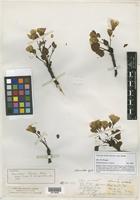
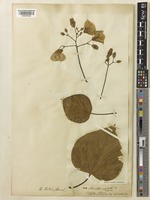
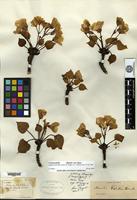
Isotype of Aleurites fordii Hemsl. [family EUPHORBIACEAE]
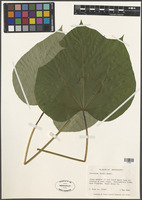
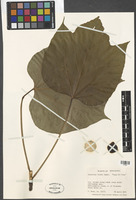
Aleurites fordii Hemsl. [family EUPHORBIACEAE]
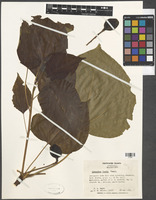
Vernicia fordii (Hemsl.) Airy Shaw [family EUPHORBIACEAE]
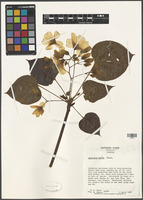
Aleurites fordii Hemsl. [family EUPHORBIACEAE]
Isotype of Aleurites fordii Hemsl. [family EUPHORBIACEAE]
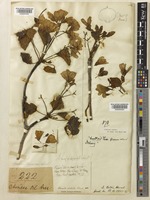
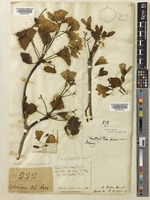
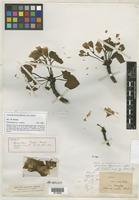
Isosyntype of Aleurites fordii Hemsl. [family EUPHORBIACEAE]
Aleurites fordii Hemsl. [family EUPHORBIACEAE]
Previous
Next

Name

Identification
Aleurites fordii Hemsl. [family EUPHORBIACEAE ] (stored under name); Verified by 100438, 1906 Vernicia fordii (Hemsl.) Airy Shaw [family EUPHORBIACEAE ] Verified by S. Yelton, 2001 Aleurites fordii Hemsl. [family EUPHORBIACEAE ] Verified by Not on Sheet,
Related name
  • Vernicia fordii
  • Aleurites fordii

Flora

Entry for Vernicia fordii Hemsl. Airy Shaw [family EUPHORBIACEAE]
Herbarium
Royal Botanic Gardens, Kew (K)
Collection
Flora Zambesiaca
Resource Type
Reference Sources
Entry From
FZ, Vol 9, Part 4, (1996) Author: A. Radcliffe-Smith
Names
Vernicia fordii Hemsl. Airy Shaw [family EUPHORBIACEAE], in Kew Bull. 20: 394 (1966). —Radcliffe-Smith in F.T.E.A., Euphorb. 1: 179 (1987). Type from China.
Aleurites fordii Hemsl. [family EUPHORBIACEAE], in Hooker’s Icon. Pl. 29, tt. 2801–2 (1906); in Bull. Misc. Inform., Kew 1906: 120 (1906); 1914: 3 (1914). —Pax in Engler, Pflanzenr. [IV, fam. 147, i] 42: 132 (1910). —Brenan, Check-list For. Trees Shrubs Tang. Terr.: 199 (1949).
Information
Very like V. montana, but differing in having an appressed golden-sericeous indumentum, sessile discoid glands at the base of the leaf blade, usually bisexual inflorescences, precocious flowers, larger petals (c. 3 cm long), a sparingly-pubescent ovary and smooth or faintly lineate ± spherical fruits.
Habitat
Originally in plantations as an oil tree, but also as an ornamental, sometimes becoming naturalized
Range
Native of southern China, southern Myanmar (Burma) and northern Vietnam. Widely cultivated in the tropics generally
Altitude range
1060 m.
1060
1060
Distribution
Mozambique M Namaacha, (cultivated), st. 10.i.1948, Torre 7093 (LISC).Malawi S Thyolo (Cholo) Road, 1–4 m beyond Chigumula, fl. 10.ix.1966, Binns 356 (MAL).Zimbabwe E Mutare (Umtali), (cultivated), fl. 15.ix.1964, Loveridge 1099 (FHO; K; LISC; SRGH).
Notes
The Tung Oil Tree.

Related Materials

  • Terms and Conditions
  • Privacy Policy
  • Cookie Policy
  • Cookie Settings
  • Accessibility
  • Help
  • Contact Us
  • Facebook
  • Twitter
ITHAKA

JSTOR is part of ITHAKA, a not-for-profit organization helping the academic community use digital technologies to preserve the scholarly record and to advance research and teaching in sustainable ways.

©2000-2026 ITHAKA. All Rights Reserved. JSTOR®, the JSTOR logo, JPASS®, Aluka®, and ITHAKA® are registered trademarks of ITHAKA.

╳