JSTOR Global Plants Home
  • Home
  • Browse
  • About
  • Access
  • Account
    • Saved Items
    • Profile
  • Log in

Global Plants

Skip to Main Content
  • JSTOR Global Plants Home
  • Global Plants

    • Browse
    • About
    • Access
    • Account
      • Saved Items
      • Profile
Log in
  • Browse
  • About
  • Access
  • Account
    • Saved Items
    • Profile
Advanced Search

Compilation
Alectra aurantiaca

3 Images see all

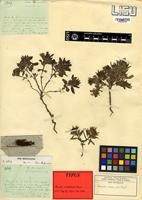
Type of Alectra aurantiaca Hemsl. [family ORONBANCHACEAE]
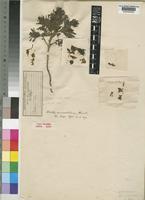
Type of Alectra aurantiaca Hemsl. [family SCROPHULARIACEAE]
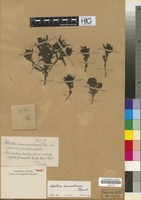
Type? of Alectra omurambensis Dinter ex Melch. [family SCROPHULARIACEAE]
Previous
Next

Name

Identification
Alectra aurantiaca Hemsl. [family SCROPHULARIACEAE ] (stored under name); Alectra unrecorded unrecorded [family SCROPHULARIACEAE ] Bopusia scabra (L.f.) C.Presl [family SCROPHULARIACEAE ] Graderia scabra Benth. [family SCROPHULARIACEAE ] Graderia unrecorded unrecorded [family SCROPHULARIACEAE ]
Related name
  • Alectra unrecorded
  • Bopusia scabra
  • Alectra aurantiaca
  • Graderia scabra
  • Graderia unrecorded

Flora

Entry for ALECTRA aurantiaca Hemsl. [family SCROPHULARIACEAE]
Herbarium
Royal Botanic Gardens, Kew (K)
Collection
Flora of Tropical Africa
Resource Type
Reference Sources
Entry From
Flora of Tropical Africa, Vol IV, Part 2, page 264, (1905) Author: (By W. Botting Hemsley and S. A. Skan).
Names
ALECTRA aurantiaca Hemsl. [family SCROPHULARIACEAE]
Bopusia scabra Hiern [family SCROPHULARIACEAE], in Cat. Afr. Pl. Welw. i. 772, not of Presl.
Information
An annual, parasitic herb, rough with warted or tubercled bristles, interspersed with softer hairs, 2–4 in. high, branching from the base. “Primary stem subterranean, bright orange in colour” branches slender, alternate. Leaves crowded, apparently all alternate, sessile, rather thick, narrow-lanceolate or spathulate, the longest about 1 in. long, obtuse tapering to the base, few-toothed. Flowers shortly pedicellate, yellow, solitary in the axils of the upper leaves or bracts, about 3/4 in. long; bracts similar to the leaves, longer than the flowers, smaller upwards, adnate to the base of the pedicel; bracteoles linear, acute, about 1/4 in. long, thinly clothed, as well as the calyx, with long soft hairs. Calyx thin, about 1/3 in. long, 10-nerved, nearly equally 5-lobed; lobes triangular, scarcely acute, about as long as the tube. Corolla obliquely campanulate, about 3/4 in. long, veined, 5-lobed; lobes rounded. Stamens nearly equal; filaments all bearded, the longer very strongly; anther-cells slightly unequal, apiculate. Ovary glabrous; style longer than the stamens, club-shaped above the middle, strongly recurved.
Distribution
Lower Guinea Mossamedes: in sandy, moist, and bushy places by the River Bero, Welwitsch, 5809!
Notes
This has the characters of Alectra, including yellow flowers, a marcescent, persistent corolla, and a clavate, recurved style. Bopusia scabra, Presl (Graderia scabra, Benth.), also differs in being perennial and woody at the base and in having pink flowers and a deciduous corolla.

Related Materials

  • Terms and Conditions
  • Privacy Policy
  • Cookie Policy
  • Cookie Settings
  • Accessibility
  • Help
  • Contact Us
  • Facebook
  • Twitter
ITHAKA

JSTOR is part of ITHAKA, a not-for-profit organization helping the academic community use digital technologies to preserve the scholarly record and to advance research and teaching in sustainable ways.

©2000-2026 ITHAKA. All Rights Reserved. JSTOR®, the JSTOR logo, JPASS®, Aluka®, and ITHAKA® are registered trademarks of ITHAKA.

╳