JSTOR Global Plants Home
  • Home
  • Browse
  • About
  • Access
  • Account
    • Saved Items
    • Profile
  • Log in

Global Plants

Skip to Main Content
  • JSTOR Global Plants Home
  • Global Plants

    • Browse
    • About
    • Access
    • Account
      • Saved Items
      • Profile
Log in
  • Browse
  • About
  • Access
  • Account
    • Saved Items
    • Profile
Advanced Search

Compilation
Albuca angolensis

7 Images see all

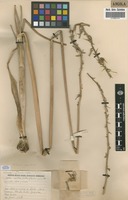
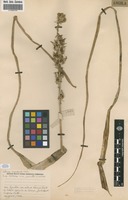
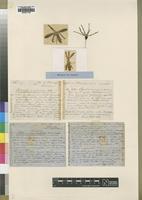
Filed as Albuca angolensis Welw. [family ASPARAGACEAE]
Type of Albuca angolensis Welw. ex Baker [family HYACINTHACEAE]
Filed as Albuca angolensis Welw. [family ASPARAGACEAE]
Type of Albuca angolensis Welw. ex Baker [family HYACINTHACEAE]
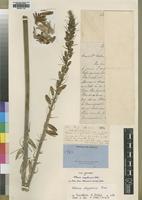
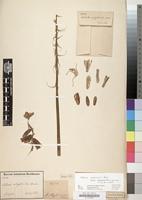
Isotype of Albuca angolensis Baker [family LILIACEAE]
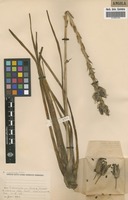
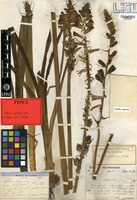
Type of Albuca angolensis Welw. [family ASPARAGACEAE]
Previous
Next

Name

Identification
Isotype of Albuca angolensis Baker [family LILIACEAE ] (stored under name); Verified by Müller-Doblies, U.; Müller-Doblies D.,
Related name
  • Albuca abyssinica
  • Albuca angolensis

Flora

Entry for ALBUCA abyssinica Jacq. [family HYACINTHACEAE]
Herbarium
Royal Botanic Gardens, Kew (K)
Collection
Flora of Tropical East Africa
Resource Type
Reference Sources
Entry From
Flora of Tropical East Africa, page 1, (1996) Author: Brita Stedje, Ph.D.
Names
ALBUCA abyssinica Jacq. [family HYACINTHACEAE], Ic. Pl. Rar. 1(3), t. 64 (1783); Dryand. in K. Vetensk.-Acad. Handl. Stockh. 5: 298 (1784); Murray, Syst. Veg., ed. 14: 326 (1784); Baker in F.T.A. 7: 533 (1898); Knudtzon & Stedje in Nordic Journ. Bot. 6: 785 & Figs. 3i-p, 10c (1986); Blundell, Wild Fl. E. Afr., reprint: 416, t. 407 (1992); U.K.W.F., ed. 2: 319, t. 146 (1994); Thulin, Fl. Somalia 4: 50 (1995). Lectotype: t. 64 in Jacq., Icon. Pl. Rar. 1(3)
ALBUCA angolensis Baker [family HYACINTHACEAE], in Saunders, Refug. Bot. 5, t. 336 (1872) & in F.T.A. 7: 534 (1898); Cribb & Leedal, Mount. Flow. S. Tanz.: 183 (1982). Type: Angola, near Lopollo, Welwitsch 3836 (K, holo.!)
Ornithogalum melleri Baker [family HYACINTHACEAE], in J.L.S. 13: 280 (1873). Type: Malawi, Manganja Hills, near Mt. Sochi, Meller (K, holo.!)
Albuca melleri (Baker) Baker [family HYACINTHACEAE], in F.T.A. 7: 532 (1898)
Albuca wakefieldii Baker [family HYACINTHACEAE], in Bot. Mag. 105, t. 6429 (1879) & in F.T.A. 7: 531 (1898); Polhill in Journ. E. Afr. Nat. Hist. Soc. 24: 4 (1962); Hanid in U.K.W.F.: 692 (1974); Kokwaro, Medicinal Pl. E. Afr., ed. 2: 256 (1993). Type: Kenya, near Mombasa, Wakefield (K, holo.!)
Albuca allenae Baker [family HYACINTHACEAE], in Gard. Chron., ser. 3, 3: 10 (1888) & in F.T.A. 7: 531 (1898). Type: Zanzibar, Stricktland (K, holo.!)
Albuca fischeri Engl. [family HYACINTHACEAE], in Hochgebirgsfl. Trop. Afr.: 165 (1892); Baker in F.T.A. 7: 535 (1898). Type: Tanzania, Masai Highlands, Kwediboma [Wadiboma], Fischer 598 (B, holo., not found)
Albuca purpurascens Engl. [family HYACINTHACEAE], in E.J. 15: 473 (1893). Types: Sudan, Kuraggera, Schweinfurth 2786, Dimidu, Schweinfurth 3796 (B, syn.!), near Seriba Kutschuk-Ali, Schweinfurth 1659, Seriba Ghattas, Schweinfurth 2129, W. of Jur [Dschur], Schweinfurth 1504, 1522 & 1907 (B, syn.)
Albuca tayloriana Rendle [family HYACINTHACEAE], in J.L.S. 30: 424 (1895); Baker in F.T.A. 7: 530 (1898). Type: Tanzania, ?Bagamoyo District, between Uyui and the coast, at Miranakidiri, W.E. Taylor (BM, holo.!)
Albuca fibrillosa De Wild. [family HYACINTHACEAE], in Rev. Zool. Afr. 9, Suppl. Bot. 1: 21 (1921). Type: Zaire, Kivu, Kabara, Bequaert 5372 (BR, holo.!)
Albuca blepharophylla Cufod. [family HYACINTHACEAE], in Miss. Biol. Borana, Racc. Bot.: 320 (1939); Polhill in Journ. E. Afr. Nat. Hist. Soc. 24: 4 (1962); E.P.A.: 1553 (1971). Type: Ethiopia, 10 km. from Moyale on road to Mega, Chiovenda et al. 709 (FT, holo.!)
Albuca capitata Gilli [family HYACINTHACEAE], in Ann. Naturhist. Mus. Wien 69: 52 (1966). Type: Tanzania, Songea, Zerny 628 (W, holo.)
Albuca sp. C [family HYACINTHACEAE], sensu Hanid in U.K.W.F.: 693 (1974)
Information
Plants 10-150 cm. Bulbs up to 8 cm. wide; scales with or without fibrous apex. Leaves lanceolate, up to 5 cm. wide and 100 cm. long, ± ciliate/pubescent. Inflorescence a relatively lax raceme with 5-110 flowers; bracts lanceolate, up to 6 cm. long and 1 cm. wide; pedicels 0.2 to 2 cm. Flowers nodding; perianth-segments 8-35 mm. long, cream to yellow with a green midrib. Filaments clasping the ovary. Ovary 3-7 mm. long; style slender and 1.5-3 times as long as the ovary. Capsule 1-2 cm. long. Seeds 3-7 mm. across.
Range
DISTR. U 1-4; K 1-7; T 1-8; Z; widely distributed in tropical Africa and extending to Arabia
Altitude range
0-2000 m.
Distribution
UGANDA Acholi District Naam, Apr. 1943, Purseglove 1517!;KENYA Northern Frontier Province Darech at the turning 4 km. S. of Banisa [Banissa], 5 May 1978, Gilbert & Thulin 1481!KENYA Nairobi airport, May 1939, Bally 9218!;KENYA Elgon, above Endebess, 30 Apr. 1961, Polhill 399!TANZANIA Musoma/Maswa District Serengeti National Park, 10 Nov. 1972, Kreulen 86!;UGANDA Ankole District Ruizi R., 14 May 1951, Jarrett 52!;UGANDA Teso District Serere, Dec. 1931, Chandler 279!TANZANIA Tanga District Mtotohovu, Dec. 1935, Greenway 4234!;TANZANIA Songea District Matengo Hills, 21 May 1956, Milne-Redhead & Taylor 10270!
Notes
Chromosome number 2n = 18, 36. A. abyssinica is a very variable SPECIES, and although many local populations have a characteristic facies there is little or no constant correlation over wide areas. A form with pubescent leaves has been collected in Tanzania, Kenya and Ethiopia, and referred to A. blepharophylla. As this form is interfertile with A. abyssinica, and as both pubescent and non-pubescent individuals may be found within one population this form can not be maintained as a separate SPECIES. A. abyssinica is used medicinally.

Related Materials

  • Terms and Conditions
  • Privacy Policy
  • Cookie Policy
  • Cookie Settings
  • Accessibility
  • Help
  • Contact Us
  • Facebook
  • Twitter
ITHAKA

JSTOR is part of ITHAKA, a not-for-profit organization helping the academic community use digital technologies to preserve the scholarly record and to advance research and teaching in sustainable ways.

©2000-2026 ITHAKA. All Rights Reserved. JSTOR®, the JSTOR logo, JPASS®, Aluka®, and ITHAKA® are registered trademarks of ITHAKA.

╳