JSTOR Global Plants Home
  • Home
  • Browse
  • About
  • Access
  • Account
    • Saved Items
    • Profile
  • Log in

Global Plants

Skip to Main Content
  • JSTOR Global Plants Home
  • Global Plants

    • Browse
    • About
    • Access
    • Account
      • Saved Items
      • Profile
Log in
  • Browse
  • About
  • Access
  • Account
    • Saved Items
    • Profile
Advanced Search

Compilation
Albizia suluensis

6 Images see all

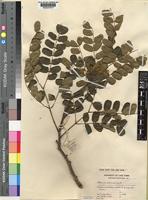
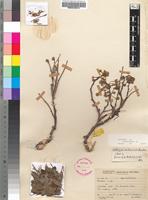
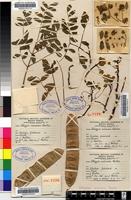
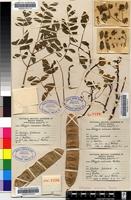
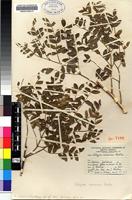
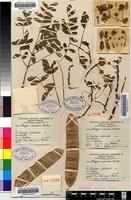
Syntype of Albizia suluensis Gerstner [family FABACEAE]
Albizia suluensis Genst. [family LEGUMINOSAE-MIMOSOIDEAE]
Lectotype of Albizia suluensis Gerstner [family FABACEAE]
Syntype of Albizia suluensis Gerstner [family FABACEAE]
Previous
Next

Name

Identification
Albizia suluensis Genst. [family LEGUMINOSAE-MIMOSOIDEAE ] (stored under name);
Related name
  • Albizia suluensis

Flora

Entry for Albizia suluensis [family FABACEAE]
Herbarium
South African National Biodiversity Institute, Compton Herbarium, Cape Town (SAM)
Collection
Flora of Southern Africa
Resource Type
Reference Sources
Entry From
Flora of South Africa, (2003) Author: Dr J.P. Roux
Names
Albizia suluensis [family FABACEAE]
Information
Tree to 15 m high with a rounded or spreading crown. Bark greyish, smooth or fissured; young branchlets sparingly pube­scent when young but soon becoming glabrous. Leaves glabrous or subglabrous: petiole 2-7 cm long, a small rounded slightly raised gland usually present at or just below the junction of the lowest pinna pair; rhachis (0)2-8 cm long, sulcate above, a small rounded gland usually present at the junction of the top pinna pair, at the junction of each pinna pair or absent from some; pinnae (1)2-4 pairs; rhachillae 5,5-17 cm long, sulcate above, pulvinule sometimes sparsely pubescent; leaflets 4-9 pairs, 18-28 x 8—15 (18) mm, oblique basally, oblong to broadly elliptic or obovate, rounded to truncate apically, mucronate, margins crisped, glabrous to sparsely puberulous on both surfaces, petiolules often sparsely pubescent. Inflore­scences globose; peduncles 1,5-4 cm long, sparingly rusty-pubescent. Flowers whitish, subsessile; bracteoles rapidly deciduous. Calyx 2,5-4 mm long, densely ± rusty-tomentellous. Corolla 4-6 mm long, lobes densely ± rusty-tomentellous, especially apically. Stamens 1-1,6 cm long, united basally for up to 6 mm, tube not or scarcely exserted beyond the corolla. Ovary 2-3 mm long, shortly stipitate, glabrous. Pods light brown, 8-21 X 1,4-2,6 cm, linear-oblong, valves thin, glabrous, not or scarcely venose, slightly umbonate over the seeds, longitudi­nally dehiscent.
Habitat
A very distinct species which is distinguished by the crisped leaflet margins. It appears to be endemic in the Ntonjaneni and Hlabisa districts of Zululand and is nowhere very common.
Use
8. Albizia suluensis Gerstn. in J. S. Afr. Bot. 13 : 62, fig. 6 (1947); Codd in Bothalia 7 : 76 (1958); Von Breitenbach, Indig. Trees S. Afr. 2 : 259 (1965); Ross, Fl. Natal 192 (1973); Palmer & Pitman, Trees S. Afr. 2 : 723 (1973). Type: Natal, Melmoth Distr., 3,2 km west of Dundulu Store, Gerstner 4337 (PRE, lecto.!).
Range
Restricted to the Ntonjaneni and Hlabisa districts of Zululand. Occurs in forest, often on stream banks or near streams.

Related Materials

  • Terms and Conditions
  • Privacy Policy
  • Cookie Policy
  • Cookie Settings
  • Accessibility
  • Help
  • Contact Us
  • Facebook
  • Twitter
ITHAKA

JSTOR is part of ITHAKA, a not-for-profit organization helping the academic community use digital technologies to preserve the scholarly record and to advance research and teaching in sustainable ways.

©2000-2026 ITHAKA. All Rights Reserved. JSTOR®, the JSTOR logo, JPASS®, Aluka®, and ITHAKA® are registered trademarks of ITHAKA.

╳