JSTOR Global Plants Home
  • Home
  • Browse
  • About
  • Access
  • Account
    • Saved Items
    • Profile
  • Log in

Global Plants

Skip to Main Content
  • JSTOR Global Plants Home
  • Global Plants

    • Browse
    • About
    • Access
    • Account
      • Saved Items
      • Profile
Log in
  • Browse
  • About
  • Access
  • Account
    • Saved Items
    • Profile
Advanced Search

Compilation
Albizia rhodesica

4 Images see all

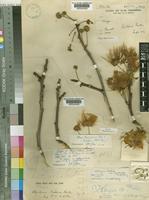
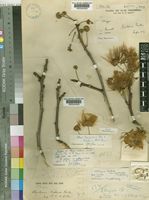
Albizia tanganyicensis Baker.f. [family LEGUMINOSAE-MIMOSOIDEAE]
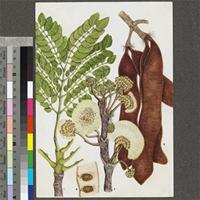
Albizia rhodesica Burtt Davy original illustration from the 'Trees of Central Africa'
Albizia tanganyicensis Baker.f. [family LEGUMINOSAE-MIMOSOIDEAE]
Previous
Next

Name

Identification
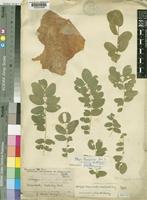
Albizia rhodesica Burtt Davy [family LEGUMINOSAE ]
Related name
  • Albizia rhodesica

Flora

Entry for ALBIZIA tanganyicensis Bak. f. [family LEGUMINOSAE-MIMOSOIDEAE]
Herbarium
Royal Botanic Gardens, Kew (K)
Collection
Flora of Tropical East Africa
Resource Type
Reference Sources
Entry From
Flora of Tropical East Africa, page 1, (1959) Author: J. P. M. Brenan
Names
ALBIZIA tanganyicensis Bak. f. [family LEGUMINOSAE-MIMOSOIDEAE], in J.B. 67: 199 (1929); L.T.A.: 862 (1930); T.T.C.L.: 342 (1949); Consp. Fl. Angol. 2: 293 (1956). Type: Tanganyika, Kondoa District, Simbo Hills, B. D. Burtt 716 (BM, holo., K, iso.!)
ALBIZIA rhodesica Burtt Davy [family LEGUMINOSAE-MIMOSOIDEAE], Man. Fl. Pl. Transv. 2: xviii, 348 (1932); Coates Palgrave, Trees Centr. Afr.: 269–271 (1956). Types: Rhodesia, Victoria Falls, Allen 174, Rogers 5319 (K, syn.!) & Southern Rhodesia, Matopos, Galpin 7082 (PRE, syn.)
Information
Tree (3–)9–20 m. high, deciduous and usually flowering when quite leafless; trunk smooth except at base where burned, with old bark peeling off in brown papery pieces, the young bark creamy-white to ochre-yellow or yellow-green; crown flat or rounded. Young branchlets glabrous to pubescent. Leaves: rhachis clothed like young branchlets, not hooked or clawed at ends; pinnae 3–6 pairs; leaflets (4–)7–13(–17) pairs, ovate-elliptic or ovate-oblong, 11–55 mm. long, 6–29(–32) mm. wide, rounded to subacute at apex, glabrous to ± crisped-pubescent on both sides. Flowers white, usually produced before the young leaves, sessile or to 1 mm. pedicellate; bracteoles spathulate, about 2 mm. long, already fallen when the flowers open. Calyx 4–6 mm. long, sometimes slit unilaterally, densely brown-tomentellous on lobes; tube glabrous to ± pubescent, occasionally with sessile glands. Corolla 7–11 mm. long, ± brown-tomentellous on lobes; tube glabrous to ± pubescent, occasionally with sessile glands. Staminal tube not or scarcely exserted beyond corolla, filaments 1.5–4 cm. long. Pod oblong, 15 –30 cm. long, 2.5–5 cm. wide, glabrous, brown, ± glossy, not or only obscurely venose. Seeds about 10–17 mm. long and 8–12 mm. wide, flattened.
Range
DISTR. T1, 4–6, 8
Altitude range
760–1680 m.
Distribution
TANGANYIKA Shinyanga, Koritschoner 3025!TANGANYIKA Singida plateau and upper rift escarpment, Sept. 1935, B. D. Burtt 5282!;TANGANYIKA Kilosa District Elpon’s Pass, Oct. 1951, Eggeling 6314!
Distribution (external)
; Portuguese East Africa
Northern Rhodesia
Southern Rhodesia
Bechuanaland
Angola
the Transvaal
Notes
VARIATION. The leaflets may be glabrous or nearly so, with calyx and corolla glabrous except on the lobes (e.g. Mpwapwa, Hornby 536, EA!, K!), or the leaflets may be pubescent on both sides, with the corolla-tube rather densely pubescent, and with some pubescence on the calyx-tube (e.g. Tabora District, Sikonge, Lindeman 787, EA!, K!). The type of A. tanganyicensis is about midway between these extremes. Since flowers and foliage are rarely collected together, these correlations of indumentum are based on limited evidence and require further checking. A specimen from Masasi, Gillman 1189 (EA!) has smaller leaflets than usual, up to about 2 × 1 cm.; a similar form occurs at the Victoria Falls in Rhodesia. Hornby 536 (see above) is unusual in showing numerous sessile glands on the calyx and corolla. At present it seems better to treat all these variations as falling within the ordinary range of variability of the species, and not to name them. The remarkable papery peeling bark of A. tanganyicensis seems most distinctive, and the seeds are usually larger than in other any East African Albizia. In the majority of gatherings examined, the flowers in the capitula (other than the central modified ones) have a minute ovary and style only about 1 mm. long in all, and apparently non-functional, the capitula being thus apparently ♂. Eggeling 6314 shows normal hermaphrodite flowers with well-developed ovaries and elongate styles. Observers in the field are asked to find out whether it is that certain trees are ♂ and others hermaphrodite, or whether the ♂ capitula are produced by hermaphrodite trees at a certain season, or whether the sex of the capitula varies with their position on the tree.

Related Materials

  • Terms and Conditions
  • Privacy Policy
  • Cookie Policy
  • Cookie Settings
  • Accessibility
  • Help
  • Contact Us
  • Facebook
  • Twitter
ITHAKA

JSTOR is part of ITHAKA, a not-for-profit organization helping the academic community use digital technologies to preserve the scholarly record and to advance research and teaching in sustainable ways.

©2000-2026 ITHAKA. All Rights Reserved. JSTOR®, the JSTOR logo, JPASS®, Aluka®, and ITHAKA® are registered trademarks of ITHAKA.

╳