JSTOR Global Plants Home
  • Home
  • Browse
  • About
  • Access
  • Account
    • Saved Items
    • Profile
  • Log in

Global Plants

Skip to Main Content
  • JSTOR Global Plants Home
  • Global Plants

    • Browse
    • About
    • Access
    • Account
      • Saved Items
      • Profile
Log in
  • Browse
  • About
  • Access
  • Account
    • Saved Items
    • Profile
Advanced Search

Compilation
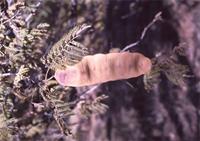
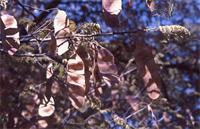
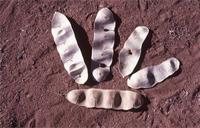
Albizia harveyi

7 Images see all

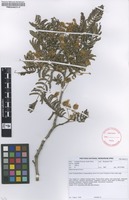
Albizia harveyi E.Fourn.
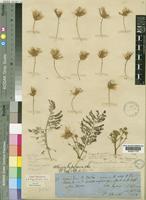
Type of Albizia harveyi Fourn. [family LEGUMINOSAE-MIMOSOIDEAE]
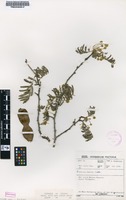
Albizia harveyi E.Fourn.
Filed as Albizia harveyi N.E.Br. [family FABACEAE]
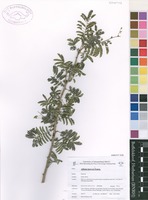
Filed as Albizia harveyi Hochst. ex A.Rich. [family FABACEAE]
Filed as Albizia harveyi E.Fourn. [family MIMOSACEAE]
Previous
Next

Name

Identification
Albizia harveyi E.Fourn. [family FABACEAE ]
Related name
  • Albizia harveyi

Flora

Entry for Albizia harveyi [family FABACEAE]
Herbarium
South African National Biodiversity Institute, Compton Herbarium, Cape Town (SAM)
Collection
Flora of Southern Africa
Resource Type
Reference Sources
Entry From
Flora of South Africa, (2003) Author: Dr J.P. Roux
Names
Albizia harveyi [family FABACEAE]
Common names
A. pallida Harv. in F.C. 2 : 284 (1862) nom. illegit., non A. pallida Fourn. in Ann. Sci. Nat. Ser. IV, 14 : 375 (1860). Type as for A. harveyi. A. hypoleuca Oliv. in F.T.A. 2 : 356 (1871); Benth. in Trans. Linn. Soc. Lond. 30 : 567 (1875). Type as for A. harveyi.
Information
Tree up to 15 m high, crown narrowly rounded or rounded. Bark grey-brown to blackish, rough, fissured; young branchlets with grey to brown or sometimes slightly golden spreading pubescence, a very small prickle-like outgrowth often present beneath each node. Leaves often golden-tomentose when very young, rusty to grey-pubescent when older: petiole 0,8-3 cm long, adaxial gland often prominent and sometimes shortly stalked and up to 1 mm high, often absent; rhachis 2,4-9(15) cm long; pinnae 6-22 pairs; rhachillae 1-3,4 cm long; leaflets (6)12-28 pairs, 2-6 x 0,5-1,5 mm, ± falcate, apex asymmetric, acute, turned towards the apex of the pinna, midrib nearer the distal margin, lateral nerves ± raised and visible beneath, lower surface of leaflet paler than upper, ± appressed-pubescent on both surfaces or the lower only when young, becoming sparingly pubescent to glabrescent with age. Inflorescences globose; peduncles 1,5-4 cm long, ± golden-pubescent when young, becoming greyish when older. Flowers creamy-white, sessile or up to
Habitat
Vegetative specimens of A. harveyi are some­times confused with specimens of A. brevifolia. The differences between the two species are given under A. brevifolia.
Use
3. Albizia harveyi Fourn. in Bull. Soc. Bot. Fr. 12 : 399 (1865); Bak.f., Leg. Trop. Afr. 3 : 865 (1930); Burtt Davy, Fl. Transv. 2 : 348 (1932); Steedman, Trees etc. S. Rhod. 16 (1933); Brenan, Checklist Tang. Terr. 341 (1949); in Mem. N.Y. Bot. Gdn. 8 : 430 (1954); Gomes e Sousa, Dendrol Mocamb. 4 : 46 (1949); Codd, Trees & Shrubs Kruger Nat. Park 56, figs. 49-51 (1951); Gilbert & Boutique in F.C.B. 3 : 173 (1952); O. B. Miller in J.S. Afr. Bot. 18 : 27 (1952); Codd in Bothalia 7 : 71 (1958); Brenan in F.T.E.A. Legum.-Mimos. : 149, fig. 20 (1959); F. White, For. Fl. N. Rhod. 89, fig. 16G (1962); Von Breitenbach, Indig. Trees S. Afr. 2 : 256 (1965); Gomes e Sousa, Dendrol. Mogamb. 1 : 235, t.39 (1966); Compton in J.S. Afr. Bot. Suppl. 6 : 45 (1966); Schreiber in F.S.W.A. 58 : 14 (1967); Brenan in F.Z. 3, 1 : 122, t.22 (1970); Van Wyk, Trees Kruger Nat. Park 1:118 (1972); Palmer & Pitman, Trees S. Afr. 2:713 (1973). Type: Botswana, near Lake Ngami, McCabe (K, holo.!).
Range
Widespread in eastern and southern tropical Africa from southern Kenya in the north to South West Africa, Botswana, the Transvaal and Swaziland. Occurs in woodland and dry bushveld, sometimes near rivers.

Related Materials

  • Terms and Conditions
  • Privacy Policy
  • Cookie Policy
  • Cookie Settings
  • Accessibility
  • Help
  • Contact Us
  • Facebook
  • Twitter
ITHAKA

JSTOR is part of ITHAKA, a not-for-profit organization helping the academic community use digital technologies to preserve the scholarly record and to advance research and teaching in sustainable ways.

©2000-2026 ITHAKA. All Rights Reserved. JSTOR®, the JSTOR logo, JPASS®, Aluka®, and ITHAKA® are registered trademarks of ITHAKA.

╳