JSTOR Global Plants Home
  • Home
  • Browse
  • About
  • Access
  • Account
    • Saved Items
    • Profile
  • Log in

Global Plants

Skip to Main Content
  • JSTOR Global Plants Home
  • Global Plants

    • Browse
    • About
    • Access
    • Account
      • Saved Items
      • Profile
Log in
  • Browse
  • About
  • Access
  • Account
    • Saved Items
    • Profile
Advanced Search

Compilation
Albizia brevifolia

8 Images see all

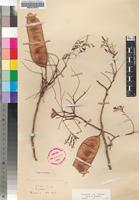
Isotype of Albizia brevifolia Schinz [family LEGUMINOSAE-MIMOSOIDEAE]
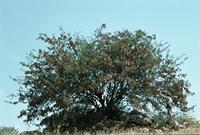
Albizia brevifolia Schinz
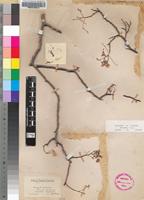
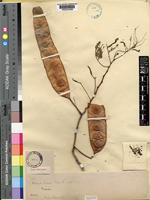
Syntype of Albizia parvifolia Burtt Davy [family FABACEAE]
Filed as Albizia brevifolia Schinz [family MIMOSACEAE]
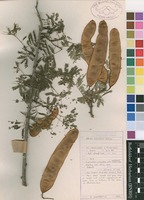
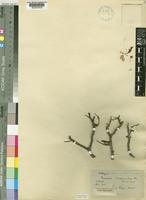
Holotype of Albizia rogersii Burtt Davy [family FABACEAE]
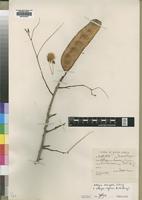
Albizia brevifolia Schinz [family LEGUMINOSAE-MIMOSOIDEAE]
Type of Albizia brevifolia Schinz [family LEGUMINOSAE]
Previous
Next

Name

Identification
Albizia brevifolia Schinz [family FABACEAE ]
Related name
  • Albizia brevifolia

Flora

Entry for Albizia brevifolia [family FABACEAE]
Herbarium
South African National Biodiversity Institute, Compton Herbarium, Cape Town (SAM)
Collection
Flora of Southern Africa
Resource Type
Reference Sources
Entry From
Flora of South Africa, (2003) Author: Dr J.P. Roux
Names
Albizia brevifolia [family FABACEAE]
Common names
A. parvifolia Burtt Davy, Fl. Transv. 2 : xvii, 348 (1932). Syntypes: Transvaal, Soutpansberg district, near Messina, Rogers 19247a (PRE!); Rogers 22118 (K!). A. rogersii Hum Davy, Fl. Transv. 2 : xviii, 348 (1932); Codd, Trees & Shrubs Kruger Nat. Park 56 (1951); O. B. Miller in J. S. Afr. Bot. 18 : 27 (1952); F. White, For. Fl. N. Rhod. 89, fig. 16 I (1962). Type: Transvaal, Soutpansberg district, Messina, Moss & Rogers 66 (PRE nolo!; BM!; K!).
Information
Shrub or tree 3-15 m high, trunk often branching near ground level into several to many ascending branches. Bark grey to grey-black, smooth or shallowly fissured; young branchlets very sparingly to ± densely appres-sed grey-puberulous when young, becoming glabrous with age; occasionally a few lateral shoots abbreviated and spinescent apically. Leaves sparingly to ± densely pubescent or glabrous: petiole 0,8-2,5 cm long, adaxial gland squat, sessile, ±0,25 mm high; rhachis (1)2,5-7(14) cm long; pinnae (3)6-10(15) pairs; rhachillae 1-4,4 (6,5) cm long; leaflets 9-25 pairs, 3-7,5(9) x 0,75-1,75(2) mm, narrowly oblong to linear-oblong, symmetric, obtuse to subacute apically, not falcate, midrib nearly central (except basally), lateral nerves indistinct beneath, glabrous or margins ± appressed-ciliate. Inflorescences globose; peduncles 1,5-3 cm long, sparingly appressed-pubescent. Flowers white to creamy-yellow, on pedicels 1-1,5 mm long; bracteoles rapidly deciduous. Calyx 1-1,5 mm long, glabrous to ± puberulous outside. Corolla 4-5 mm long, tube 2,5-3 mm long, gla
Habitat
Vegetative specimens of A. harveyi Fourn. are sometimes confused with specimens of A. brevifolia but the two species may be distinguished by the shape of the apex of the leaflet which, in A. harveyi, is acute and distinctly falcate, the apex turned towards the pinna-apex, while in A. brevifolia it is obtuse to subacute and almost straight.
Use
1. Albizia brevifolia Schinz in Bull. Herb. Boiss., Str. 2, 2 : 945 (1902); Bak.f., Leg. Trop. Afr. 3 : 864 (1930); Codd in Bothalia 7 : 69 (1958); Von Breitenbach, Indig. Trees S. Afr. 2 : 254 (1965); Schreiber in F.S.W.A. 58 : 14 (1967); Brenan in F.Z. 3, 1 : 125 (1970); Van Wyk, Trees Kruger Nat. Park 1 : 112 (1972); Palmer & Pitman, Trees S. Afr. 2 : 713 (1973). Type: Mozambique, Boruma, on the Nhasinde, Menyharth 994 (Z,holo.!;K!).
Range
Found in South West Africa, Botswana, Rhodesia, Mozambique and the Transvaal. Occurs usually on hot, dry, rocky hillsides, often on granite, quartzite or sandstone formations.

Related Materials

  • Terms and Conditions
  • Privacy Policy
  • Cookie Policy
  • Cookie Settings
  • Accessibility
  • Help
  • Contact Us
  • Facebook
  • Twitter
ITHAKA

JSTOR is part of ITHAKA, a not-for-profit organization helping the academic community use digital technologies to preserve the scholarly record and to advance research and teaching in sustainable ways.

©2000-2026 ITHAKA. All Rights Reserved. JSTOR®, the JSTOR logo, JPASS®, Aluka®, and ITHAKA® are registered trademarks of ITHAKA.

╳