JSTOR Global Plants Home
  • Home
  • Browse
  • About
  • Access
  • Account
    • Saved Items
    • Profile
  • Log in

Global Plants

Skip to Main Content
  • JSTOR Global Plants Home
  • Global Plants

    • Browse
    • About
    • Access
    • Account
      • Saved Items
      • Profile
Log in
  • Browse
  • About
  • Access
  • Account
    • Saved Items
    • Profile
Advanced Search

Compilation
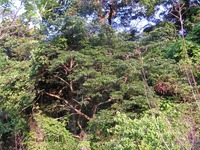
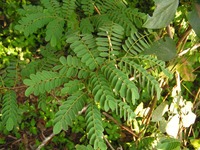
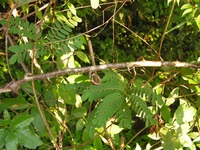
Albizia antunesiana

16 Images see all

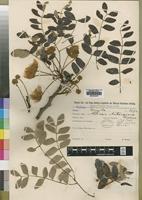
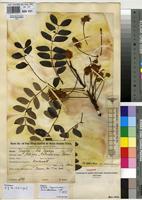
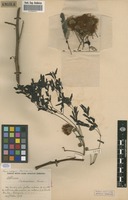
Filed as Albizia antunesiana Harms [family LEGUMINOSAE-MIMOSACEAE]
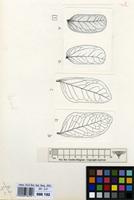
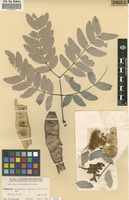
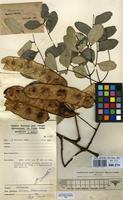
Isotype of Albizia antunesiana Harms [family LEGUMINOSAE-MIM]
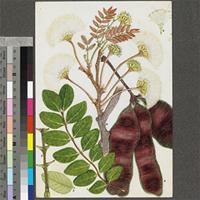
Albizia antunesiana Harms original illustration from the 'Trees of Central Africa'
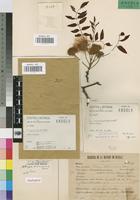
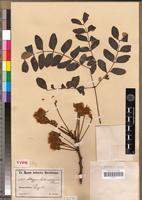
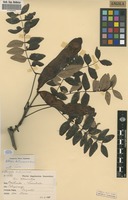
Type of Albizia antunesiana Harms [family LEGUMINOSAE]
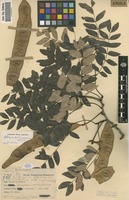
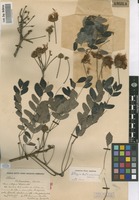
Isotype of Albizia antunesiana Harms [family FABACEAE]
Filed as Albizia antunesiana Harms [family FABACEAE]
Type of Albizia antunesiana Harms [family FABACEAE-MIMOSOIDEAE]
Filed as Albizia antunesiana Harms [family FABACEAE]
Albizia antunesiana
Albizia antunesiana
Albizia antunesiana
Albizia antunesiana
Filed as Albizia antunesiana Harms [family LEGUMINOSAE-MIMOSACEAE]
Filed as Albizia antunesiana Harms [family FABACEAE]
Previous
Next

Name

Identification
Albizia antunesiana Harms [family LEGUMINOSAE ]
Related name
  • Albizia antunesiana

Flora

Entry for Albizia antunesiana [family FABACEAE]
Herbarium
South African National Biodiversity Institute, Compton Herbarium, Cape Town (SAM)
Collection
Flora of Southern Africa
Resource Type
Reference Sources
Entry From
Flora of South Africa, (2003) Author: Dr J.P. Roux
Names
Albizia antunesiana [family FABACEAE]
Information
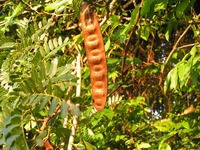
Tree up to 12 m high, branches usually spreading somewhat. Bark grey, rough or sometimes smooth; young branchlets very shortly pubescent, becoming glabrous with age. Leaves: petiole 3-8,5 cm long, adaxial gland usually immediately above or a short distance above the pulvinus, humped or flattened and±discoid and up to 4 X 4 mm; rhachis 0-13 cm long, sparingly pubescent when young but soon becoming glabrous or almost so; pinnae 1-4 pairs; rhachillae 5-16 cm long; leaflets 4-9 pairs, (16)23-50 x 8-28 mm (in our area), oblique, ovate to rhombic-ovate or elliptic-oblong, usually rounded or slightly emarginate apically, papery to sub-coriaceous, glabrous, venose, glaucous, paler beneath. Inflorescences globose; peduncles 3,6-8 cm long, sparingly rusty-pubescent. Flowers creamy-white, sessile or up to 2 mm pedicellate; bracteoles small, rapidly deci­duous and shed before flowering. Calyx (3)3,5-5,5 mm long, rusty-puberulous or -pubescent. Corolla 5,5-11 mm long, densely minutely appressed-pubescent, lobes up to 4 mm long. Stamens 1,5-3 cm long, united basally for up to 5 mm, tube not or scarcely exserted beyond the corolla. Ovary ± 2 mm long, shortly stipitate, glabrous. Pods 11-16 (23) X 2,5-44(4,6) cm, oblong, valves thin, glabrous or with few hairs near the base and margins, transversely venose, umbonate over the seeds, longitudinally dehiscent. Seeds ± 7-9 mm in diameter, flattened.
Habitat
Vegetative specimens of A. antunesiana are easily recognized by the glabrous, discolorous leaflets, but the flowers are often produced when the tree is leafless.
Use
6. Albizia antunesiana Harms in Bot. Jahrb. 30 : 317 (1901); R.E. Fr., Schwed. Rhod.-Kongo-Exped. 1 : 63 (1914); Eyles in Trans. Roy. Soc. S. Afr. 5 : 361 (1916); Bak.f., Leg. Trop. Afr. 3 : 861 (1930); Steedman, Trees etc. S. Rhod. 15 (1933); Brenan, Checklist Tang. Terr. 342 (1949); Pardy in Rhod. Agric. J. 48 : 398 (1951); Gilbert & Boutique in F.C.B. 3 : 189, fig. 10C, D (1952); O. B. Miller in J. S. Afr. Bot. 18 : 27 (1952); Torre in C.F.A. 2 : 291 (1956); Palgrave, Trees Cent. Afr. 261 (1956); Codd in Bothalia 7 : 74 (1958); Brenan in F.T.E.A. Legum.-Mimos. : 148 (1959); F. White, For. Fl. N. Rhod. 90, fig. 16M (1962); Von Breitenbach, Indig. Trees S. Afr. 2 : 260 (1965); Schreiber in F.S.W.A. 58 : 14 (1967); Brenan in F.Z. 3, 1 : 119 (1970); Palmer & Pitman, Trees S. Afr. 2 : 720 (1973); Schreiber in Mitt. Bot. Staatssamml. Munchen 11 : 126 (1973). Syntypes: Tanzania, Mbeya District, Unyika, Iyunga village, Goetze 1372 (B, f; BM!; P!); Angola, Huila, Antunes 330 (B, f).
Range
Found in Tanzania, Zaire, Angola, Zambia, Malawi, South West Africa, Botswana, Rhodesia and Mozambique. Occurs in mixed woodland.

Related Materials

  • Terms and Conditions
  • Privacy Policy
  • Cookie Policy
  • Cookie Settings
  • Accessibility
  • Help
  • Contact Us
  • Facebook
  • Twitter
ITHAKA

JSTOR is part of ITHAKA, a not-for-profit organization helping the academic community use digital technologies to preserve the scholarly record and to advance research and teaching in sustainable ways.

©2000-2026 ITHAKA. All Rights Reserved. JSTOR®, the JSTOR logo, JPASS®, Aluka®, and ITHAKA® are registered trademarks of ITHAKA.

╳