JSTOR Global Plants Home
  • Home
  • Browse
  • About
  • Access
  • Account
    • Saved Items
    • Profile
  • Log in

Global Plants

Skip to Main Content
  • JSTOR Global Plants Home
  • Global Plants

    • Browse
    • About
    • Access
    • Account
      • Saved Items
      • Profile
Log in
  • Browse
  • About
  • Access
  • Account
    • Saved Items
    • Profile
Advanced Search

Compilation
Aira capensis

8 Images see all

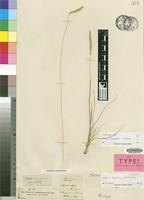
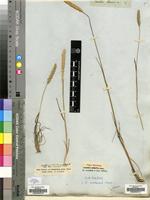
Isotype of Aira capensis Steud. [family GRAMINEAE]
Isotype of Aira capensis Steud. [family POACEAE]
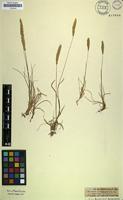
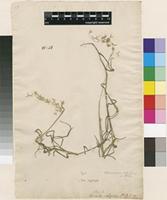
Filed as Ehrharta calycina Sm. [family POACEAE]
Isotype of Koeleria capensis (Steud.) Nees [family POACEAE]
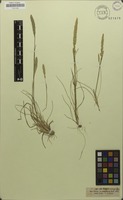
Type of Koeleria capensis Nees [family GRAMINEAE]
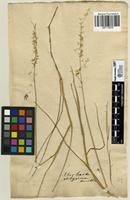
Filed as Aira capensis L.f. [family POACEAE]
Isotype of Aira capensis Steud. [family POACEAE]
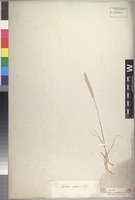
Type? of Ehrharta ovata Nees [family POACEAE]
Previous
Next

Name

Identification
Aira capensis L.f. [family POACEAE ] (stored under name); Verified by Not on sheet, Ehrharta calycina Sm. [family POACEAE ] Verified by Smith, Sir James Edward,
Related name
  • Ehrharta calycina
  • Ehrharta bulbosa
  • Koeleria capensis
  • Ehrharta aristata
  • Aira capensis
  • Trochera striata
  • Ehrharta undulata
  • Ehrharta ovata

Flora

Entry for KŒLERIA cristata Pers. [family ]
Herbarium
Royal Botanic Gardens, Kew (K)
Collection
Flora Capensis
Resource Type
Reference Sources
Entry From
Flora Capensis, Vol 7, page 310, (1900) Author: (By O. STAPF.)
Names
KŒLERIA cristata Pers. [family ], Syn. i. 97;—Flor. Dan. t. 2223; Kunth, Enum. i. 381; Suppl. 315; Reichb. Ic. Fl. Germ. i. t. 93, fig. 1668; A. Rich. Tent. Fl. Abyss. ii. 431; Steud. Syn. Pl. Glum. i. 292; Engl. Hochgebirgsfl. Trop. Afr. 134; Durand & Schinz, Consp. Fl. Afr. v. 892; Hook. f. Fl. Brit. Ind. vii. 308.
KŒLERIA parviflora Bertol. [family ], in Schult. Mant. ii. 344.
KŒLERIA Alopecurus Nees [family ], in Linnæa, vii. 320; Kunth, Enum. i. 384; Steud. l.c. 294.
KŒLERIA capensis Nees [family ], l.c. 321; Kunth, l.c. 382; Steud. l.c. 293; Durand & Schinz, l.c.
Aira cristata Linn. [family POACEAE], Sp. Pl. 63; Engl. Bot. t. 648; Knapp, Gram. Brit. t. 30.
Alopecurus capensis Thunb. [family POACEAE], Prodr. 19; Fl. Cap. ed. Schult. 105.
Dactylis villosa Thunb. [family POACEAE], Prodr. 22; Fl. Cap. ed. Schult. 115.
Aira capensis Steud. [family POACEAE], in Flora, 1829, 469.
Poa cristata Wither. [family POACEAE], Arr. Brit. Pl. 51; Host, Gram. Austr. ii. 54, t. 75.
Airochloa parviflora Nees [family POACEAE], Fl. Afr. Austr. 425.
Airochloa Alopecurus Nees [family POACEAE], l.c. 424.
Information
perennial, densely cæspitose; culms erect, rarely geniculately ascending, 1/2 ft. to more than 1 ft. long, glabrous or villous, pubescent, 1–2-noded, upper internodes very long, exserted; leaves crowded near the base; sheaths rather tight, striate, glabrous or pubescent to villous, the lower more or less persistent; ligule obtuse, minutely ciliolate, rarely more than 1/2 lin. long, usually produced into lateral auricles; blades linear, acute, from 1 in. to 1 ft. long, to 1 lin. broad, flat, soft and even flaccid, or setaceously convolute and flexuous or rigid, glabrous and smooth below, pubescent above, or ciliate, or pubescent to villous all over; panicle cylindric, often interrupted or lobed, 1–4 in. by 2 1/2–6 lin., dense; branches repeatedly and very shortly branched from the base, like the rhachis pubescent to minutely villous; pedicels very short; spikelets 2–2 1/2 lin. long, 2–3-flowered; glumes glabrous or pubescent, the lower narrow, lanceolate, subacute to acute, 1 1/4–1 3/4 lin. long, 1-nerved, the upper much broader, subacute to acutely acuminate, 1 1/2–2 1/4 lin. long, 3-nerved; valves oblong to lanceolate in profile, subobtuse to acuminate, sometimes mucronulate, 1 3/4–2 lin. long, glabrous or pubescent; lodicules 2–3-lobed or toothed; anthers 3/4–1 lin. long; grain up to 1 1/4 lin. long. null
Range
Most temperate regions and in highlands of the tropics.
Distribution
CENTRAL REGION Graaff Reinet Div.; hills near Graaff Reinet, 4500 ft., Bolus, 710! Aliwal North Div.; Witte Bergen, in grassy valleys and in gorges, 6000–7000 ft., Drège.COAST REGION Clanwilliam Div.; Dwars River, Verreaux! between Dwars River and Ezelsbank, and in the Onder Bockeveld, 2500–3000 ft., Drège. Ceder Bergen, Ecklon. Cape Div.; Lion Mountain, Ecklon, 945! Burchell, 119! Table Mountain and Cape Flats, Ecklon; near Constantia Nek, Wolley Dod, 2126! sandhills by Muizenberg Vley, Wolley Dod, 3568! Orange Kloof, Wolley Dod, 2200! Paarl Div.; Paarl Mountains, 2000–3000 ft., Drège! Tulbagh Div.; Great Winter Hoek Mountain, 2000–3000 ft., Drège! Tulbagh Waterfall, Tulbagh Kloof, &c., Ecklon. Stellenbosch Div.; Hottentots Holland, Ecklon. Bredasdorp Div.; sand-dunes near Cape Agulhas, Ecklon. Swellendam Div.; hills between Riet Kuil and Grootvaders Hoek, Zeyher, 4583! near Swellendam, Zeyher, 4594! along the lower part of the Zonder Einde River, 500–2000 ft., Zeyher, 4586! Riversdale Div.; near the Zoetemelks River, Burchell, 6609! 6691! between Great Vals River and Zoetemelks River, Burchell, 6566! Mossel Bay Div.; dry hills on the eastern side of the Gauritz River, Burchell, 6432! Knysna Div.; Plettenberg Bay, in pastures, Bowie, 275! Uitenhage Div.; Zwartkops River, Ecklon; near Uitenhage, Burchell, 4246! Port Elizabeth Div.; grassy hills near Addo, Ecklon. Albany Div.; grassy places near Grahamstown, 2000 ft., MacOwan, 1301! Fort Beaufort Div.; grassy hills near Kat Rivers Poort, 2000–25000 ft., Drège. Stockenstrom Div.; Kat Berg, 3000–4000 ft., Drège! Komgha Div.; near Komgha, Flanagan, 998! Queenstown Div.; Table Mountain, 5500–6000 ft., Drège. Shiloh, Baur, 949!EASTERN REGION Tembuland; Bazeia, 2000–2500 ft., Baur, 315! Gat Berg, 4000 ft., Baur, 1149! Natal, Buchanan, 95! 157!KALAHARI REGION Orange Free State (?); without locality, Cooper, 914 partly!SOUTH AFRICA without precise locality, Thunberg!WESTERN REGION Little Namaqualand; Kamies Bergen, Drège, Hartebeest River, 4000 ft., Drège.
Notes
I have refrained from describing varieties of this extremely variable grass as I find the characters used for this purpose by other authors so unstable, even in specimens from the same locality, and entering into so many more or less distinct combinations as to defy any satisfactory classification.

Related Materials

  • Terms and Conditions
  • Privacy Policy
  • Cookie Policy
  • Cookie Settings
  • Accessibility
  • Help
  • Contact Us
  • Facebook
  • Twitter
ITHAKA

JSTOR is part of ITHAKA, a not-for-profit organization helping the academic community use digital technologies to preserve the scholarly record and to advance research and teaching in sustainable ways.

©2000-2026 ITHAKA. All Rights Reserved. JSTOR®, the JSTOR logo, JPASS®, Aluka®, and ITHAKA® are registered trademarks of ITHAKA.

╳