JSTOR Global Plants Home
  • Home
  • Browse
  • About
  • Access
  • Account
    • Saved Items
    • Profile
  • Log in

Global Plants

Skip to Main Content
  • JSTOR Global Plants Home
  • Global Plants

    • Browse
    • About
    • Access
    • Account
      • Saved Items
      • Profile
Log in
  • Browse
  • About
  • Access
  • Account
    • Saved Items
    • Profile
Advanced Search

Compilation
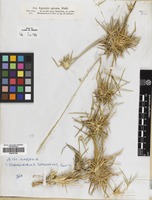
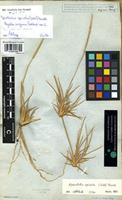
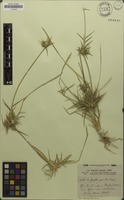
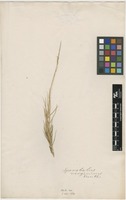
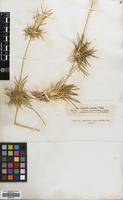
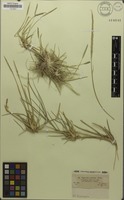
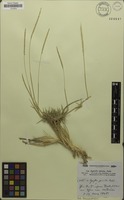
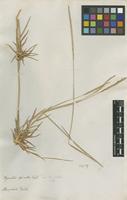
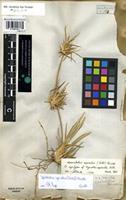
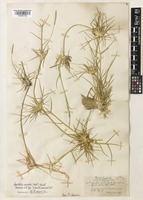
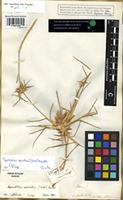
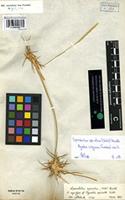
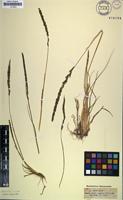
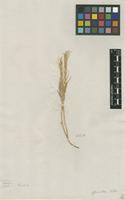
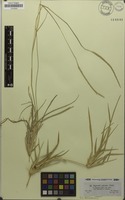
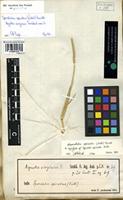
Agrostis spicata

16 Images see all

Filed as Sporobolus spicatus (Vahl) Kunth [family GRAMINEAE]
Syntype of Agrostis spicata Vahl [family GRAMINEAE]
Filed as Agrostis spicata Vahl [family POACEAE]
Sporobolus spicatus (Vahl) Kunth [family POACEAE]
Syntype of Agrostis spicata Vahl [family GRAMINEAE]
Filed as Sporobolus capensis (P.Beauv.) Kunth [family POACEAE]
Filed as Agrostis spicata Vahl [family POACEAE]
Filed as Sporobolus virginicus (L.) Kunth [family POACEAE]
Filed as Sporobolus spicatus (Vahl) Kunth [family GRAMINEAE]
Filed as Agrostis spicata Vahl [family POACEAE]
Syntype of Agrostis spicata Vahl [family GRAMINEAE]
Filed as Agrostis spicata Vahl [family POACEAE]
Syntype of Agrostis spicata Vahl [family GRAMINEAE]
Previous
Next

Name

Identification
Agrostis spicata Vahl [family GRAMINEAE ] Verified by Not on Sheet, Sporobolus spicatus (Vahl) Kunth [family GRAMINEAE ] (stored under name); Verified by S.T. Blake, 1961 Agrostis virginica Forsk. [family GRAMINEAE ] Verified by Not on Sheet,
Related name
  • Agrostis virginica
  • Sporobolus spicatus
  • Sporobolus capensis
  • Sporobolus virginica
  • Agrostis spicata

Flora

Entry for SPOROBOLUS indicus R. Br. [family POACEAE]
Herbarium
Royal Botanic Gardens, Kew (K)
Collection
Flora Capensis
Resource Type
Reference Sources
Entry From
Flora Capensis, Vol 7, page 310, (1900) Author: (By O. STAPF.)
Names
SPOROBOLUS indicus R. Br. [family POACEAE], Prodr. 170;—Kunth, Enum. i. 211; Durand & Schinz, Consp. Fl. Afr. v. 820 (partly); K. Schum. in Engl. Pfl. Ost-Afr. C. 107 (partly).
SPOROBOLUS indicus Engl. var. capensis [family POACEAE], Hochge-birgsfl. Trop. Afr. 127.
SPOROBOLUS capensis Kunth [family POACEAE], Enum. i. 212; Hochst. ex A. Rich. Tent. Fl. Abyss. ii. 395; Durand & Schinz, l.c. 819.
SPOROBOLUS ruppeliana Hochst. ex Steud. [family POACEAE], Syn. Pl. Glum. i. 160.
Panicum caudatum Thunb. [family POACEAE], Prod. 19.
Agrostis spicata Thunb. [family POACEAE], Prod. 19; Fl. Cap. ed. Schult. 106.
Agrostis capensis Willd. [family POACEAE], Sp. Pl. i. 372.
Agrostis africana Poir. [family POACEAE], Encyc. Suppl. i. 254.
Vilfa capensis Beauv. [family POACEAE], Agrost. 16; Trin. Spec. Gram. Ic. t. 56; Agrostid. 72; Nees in Linnæa, vii. 293; Steud. Syn. Pl. Glum. i. 160.
Vilfa ruppeliana Steud. [family POACEAE], l.c.
Vilfa indica Steud. [family POACEAE], Syn. Pl. Glum. i. 162; Baker, Fl. Maurit. 449.
Information
perennial, tufted; culms erect, 2–3 ft. long, glabrous, smooth, usually 2-noded below the middle, sheathed all along or the upper internodes exserted; leaves mostly crowded near the base, often numerous; sheaths glabrous except at the often ciliate margins, smooth, the lowest sometimes compressed, short, broad, pallid, the upper tight; ligule a minutely ciliolate rim; blades linear, long tapering to a fine point, 4 to almost 12 in. by 1–1 1/2 lin., usually convolute, glabrous, smooth; panicle erect, spike-like, slender, often interrupted below; branches solitary, often irregularly crowded, very short and adpressed to the rhachis or the lowest up to 1 in. long, filiform, smooth or scaberulous; lateral pedicels very short; spikelets dark olive-green, crowded, 1 lin. long; glumes unequal, the lower oblong or elliptic, obtuse, often denticulate, about 1/3 the length of the spikelet, nerveless, the upper ovate-oblong, acute or subacute, about 5/8 the length of the spikelet, sometimes 1-nerved; valve lanceolate-oblong, acute or acuminate, 1-nerved; pale scarcely shorter; stamens 3; anthers 1/2 lin. long; grain ellipsoid, truncate, quadrangular, slightly compressed, 1/2 lin. long, brown; pericarp thin. null
Range
Also in German East Africa and Abyssinia, in the Mascarene Islands and St. Helena, and in Australia.
Distribution
COAST REGION Cape Div.; wet rocky places on Table Mountain and Devils Mountain, Ecklon, 941! Drège! Lion Mountain, Drège; Devils Mountain, Ecklon, 942! near Duiker Vallei below Tyger Mountain, and by the vineyards near Classenbosch, Ecklon! by the railway near Rondebosch, Wolley Dod, 3344! Tulbagh Div.; Tulbagh Waterfall, Ecklon. Stellenbosch Div.; Hottentots Holland, Ecklon. Caledon Div.; near Caledon and Genadendal, Ecklon. Robertson Div.; Boschjes Veld, Thom, 1077! Riversdale Div.; hills near the Zoetemelks River, Burchell, seed 777! Port Elizabeth Div.; Port Elizabeth, E.S.C.A. Herb., 196! Uitenhage Div.; Zwartkops River, Ecklon. Albany Div.; near Grahamstown, 2000 ft., MacOwan, 1309! Var. β: Cape Div.; Devils Mountain, Ecklon. Knysna Div.; Plettenbergs Bay, Mund & Maire! near Melville, Burchell, 5472! Uitenhage Div.; Uitenhage, Harvey, 101! Port Elizabeth Div.; near the Leadmine, Burchell, 4486! Bathurst Div.; Kasuga River, MacOwan, 1015! Komgha Div.; near Komgha, Flanagan, 910!EASTERN REGION Natal, Gerrard, 688! Var. β: Tembuland; Bazeia, 2000 ft., Baur, 405! Natal, “all over the colony,” Buchanan, 243! near Durban, Williamson, 2! 101! at the borders of woods near the Umlazi River, Krauss, 7 partly! between the Unzimkulu and Umkomanzi Rivers, Drège!SOUTH AFRICA without precise locality, Thunberg! Mund & Maire! Zeyher, 4497!
Notes
The Indian form of S. indicus is identical with the American S. tenacissimus, Beauv., which Doell maintains as a distinct species. It has smaller spikelets and smaller anthers. S. elongatus, R. Br. (not Durand & Schinz, l.c. 820), which has also often been reduced to S. indicus, and which is indicated by various authors as indigenous in Africa, is a different diandrous species the area of which extends from Australia and New Caledonia to China and Japan.

Related Materials

  • Terms and Conditions
  • Privacy Policy
  • Cookie Policy
  • Cookie Settings
  • Accessibility
  • Help
  • Contact Us
  • Facebook
  • Twitter
ITHAKA

JSTOR is part of ITHAKA, a not-for-profit organization helping the academic community use digital technologies to preserve the scholarly record and to advance research and teaching in sustainable ways.

©2000-2026 ITHAKA. All Rights Reserved. JSTOR®, the JSTOR logo, JPASS®, Aluka®, and ITHAKA® are registered trademarks of ITHAKA.

╳