JSTOR Global Plants Home
  • Home
  • Browse
  • About
  • Access
  • Account
    • Saved Items
    • Profile
  • Log in

Global Plants

Skip to Main Content
  • JSTOR Global Plants Home
  • Global Plants

    • Browse
    • About
    • Access
    • Account
      • Saved Items
      • Profile
Log in
  • Browse
  • About
  • Access
  • Account
    • Saved Items
    • Profile
Advanced Search

Compilation
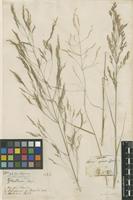
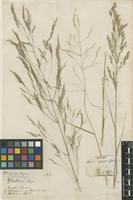
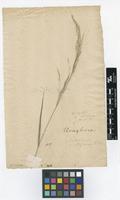
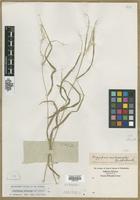
Agrostis miliacea

8 Images see all

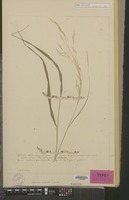
Holotype of Agrostis miliacea L. [family GRAMINEAE]
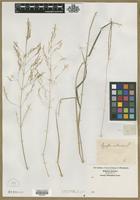
Filed as Agrostis miliacea L. [family POACEAE]
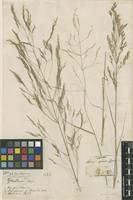
Lectotype of Agrostis miliacea L. [family POACEAE]
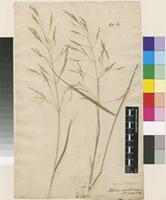
Filed as Agrostis miliacea L. [family POACEAE]
Filed as Piptatherum multiflorum P.Beauv. [family POACEAE]
Filed as Oryzopsis miliacea (L.) Benth. & Hook.f. ex Asch. & Schweinf. [family POACEAE]
Previous
Next

Name

Identification
Agrostis miliacea L. [family POACEAE ] (stored under name); Verified by Not on sheet, Milium arundinaceum Sm. [family POACEAE ] Verified by Smith, Sir James Edward, Piptatherum miliaceum (L.) Coss. [family POACEAE ] Verified by Not on sheet,
Related name
  • Urachne not on sheet
  • Milium arundinaceum
  • Piptatherum multiflorum
  • Piptatherum miliaceum
  • Agrostis miliacea
  • Milium indet.

Flora

Entry for ORYZOPSIS miliacea Richter [family POACEAE]
Herbarium
Royal Botanic Gardens, Kew (K)
Collection
Flora Capensis
Resource Type
Reference Sources
Entry From
Flora Capensis, Vol 7, page 310, (1900) Author: (By O. STAPF.)
Names
ORYZOPSIS miliacea Richter [family POACEAE], Pl. Europ. 33;—Durand & Schinz, Consp. Fl. Afr. v. 812.
Agrostis miliacea Linn. [family POACEAE], Sp. Plant. 61; Host, Gram. Austr. iii. t. 45; Reichb. Ic. Fl. Germ. i. t. 45, fig. 1459.
Milium multiflorum Cav. [family ], Descr. 36.
Milium arundinaceum Sibth. & Smith [family ], Fl. Græc. Prod. i. 45; Fl. Græc. i. t. 66.
Piptatherum multiflorum Beauv. [family POACEAE], Agrost. 18; Kunth, Enum. i. 177.
Piptatherum miliaceum Coss. [family POACEAE], Pl. Crit. fasc. 3, 129.
Urachne parviflora Trin. [family POACEAE], Fund. Agrost. 110; Stip. 10, and in Mém. Acad. Pétersb. sér. 6, v. 10; Steud. Syn. Pl. Glum. i. 121.
Information
perennial, loosely tufted; rhizome short, thick, innovation buds short, extravaginal, covered with silky scales; culms erect, slender or more or less robust, 1 1/2–3 ft. long, smooth, glabrous, 4–5-noded, internodes more or less exserted; sheaths tight or somewhat lax, finely striate, glabrous excepting the lowest bladeless ones (innovation scales), smooth, lower at length dry and scarious; ligules very short, truncate or the uppermost oblong and up to 1 1/2 lin. long; blades linear, long tapering to a setaceous point, up to 1 ft. long, 1 1/2–4 lin. broad, flat and flaccid, or rolling up when dry, more or less glaucous, glabrous or finely hairy on the upper side, smooth beneath, scaberulous above or all over in the upper part; panicle large, oblong to linear, open or contracted, more or less nodding, 1/2 to more than 1 ft. long; axis very slender, terete; branches few to very many in distant semiwhorls, finely filiform to capillary, scaberulous, lower 2–6 in. long, often undivided to 1/2 their length from the base; branchlets few, subracemose, contracted; pedicels very unequal, the lateral usually very short; spikelets oblong-lanceolate, greenish or tinged with purple, 1 1/2–1 3/4 lin. long; glumes acuminate, rather broad when expanded, 3- to sub-5-nerved, side-nerves very short; valve obovate to oblong, 1 lin. long, smooth, glabrous, rigidly membranous, whitish, 3-nerved; awn a very fine and caducous flexuous bristle, 1 1/2–2 lin. long; lodicules 2, oblanceolate; anthers 3/4 lin. long, tips very minutely penicillate; grain obovoid-oblong, over 3/4 lin. long, terete. null
Range
A native of the Mediterranean region, elsewhere introduced.
Distribution
KALAHARI REGION Orange Free State, without precise locality, Buchanan, 18!

Related Materials

  • Terms and Conditions
  • Privacy Policy
  • Cookie Policy
  • Cookie Settings
  • Accessibility
  • Help
  • Contact Us
  • Facebook
  • Twitter
ITHAKA

JSTOR is part of ITHAKA, a not-for-profit organization helping the academic community use digital technologies to preserve the scholarly record and to advance research and teaching in sustainable ways.

©2000-2026 ITHAKA. All Rights Reserved. JSTOR®, the JSTOR logo, JPASS®, Aluka®, and ITHAKA® are registered trademarks of ITHAKA.

╳