JSTOR Global Plants Home
  • Home
  • Browse
  • About
  • Access
  • Account
    • Saved Items
    • Profile
  • Log in

Global Plants

Skip to Main Content
  • JSTOR Global Plants Home
  • Global Plants

    • Browse
    • About
    • Access
    • Account
      • Saved Items
      • Profile
Log in
  • Browse
  • About
  • Access
  • Account
    • Saved Items
    • Profile
Advanced Search

Compilation
Agelanthus uhehensis

3 Images see all

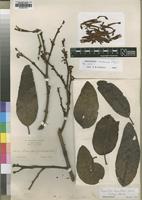
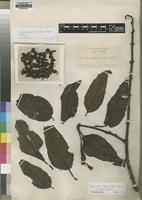
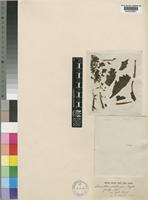
Isotype of Tapinanthus uhehensis (Engl.) Danser [family LORANTHACEAE]
Agelanthus uhehensis (Engl.) Polhill & Wiens [family LORANTHACEAE]
Previous
Next

Name

Identification
Isotype of Tapinanthus uhehensis (Engl.) Danser [family LORANTHACEAE ] Verified by S.Balle, Agelanthus uhehensis (Engl.) Polhill&Wiens [family LORANTHACEAE ] (stored under name); Verified by Polhill,R.M.,
Related name
  • Agelanthus uhehensis
  • Loranthus uhehensis
  • Tapinanthus uhehensis

Flora

Entry for Agelanthus uhehensis (Engl.) Polh. & Wiens [family LORANTHACEAE]
Herbarium
Royal Botanic Gardens, Kew (K)
Collection
Flora of Tropical East Africa
Resource Type
Reference Sources
Entry From
Flora of Tropical East Africa, page 1, (1999) Author: POLHILL & D. WIENS
Names
Agelanthus uhehensis (Engl.) Polh. & Wiens [family LORANTHACEAE], in Lebrun & Stork, Énum. Pl. Fl. Afr. Trop. 2: 165 (1992) & Mistletoes Afr.: 177 (1998). Type: Tanzania, Iringa District, near Dabaga, Goetze 641 (B†, holo., K!, fragment)
Loranthus uhehensis Engl. [family LORANTHACEAE], in E.J. 28: 382 (1900); Sprague in F.T.A. 6(1): 378 (1910); F.D.O.-A. 2: 175 (1932); T.T.C.L.: 288 (1949)
Tapinanthus uhehensis (Engl.) Danser [family LORANTHACEAE], in Verh. K. Akad. Wet., sect. 2, 29(6): 121 (1933)
Information
Stems spreading to 1.5 m. long; branchlets scurfy-tomentellous with small much-branched red-brown hairs. Leaves opposite to alternate; petiole 1–3 cm. long; lamina dull mid-green, thinly coriaceous, linear-lanceolate to narrowly elliptic-oblong, 4–13 cm. long, 0.5–5 cm. wide, acute to obtuse at the apex, cuneate at the base, scurfy-pubescent, soon glabrescent, with 8–10 pairs of spreading lateral nerves. Umbels (or heads) 6–16-flowered; peduncle 5–8 mm. long, scurfy; pedicels 3–5 mm. long, similarly hairy; bract-limb linear to oblong-lanceolate, eventually produced into a slight foliaceous limb, 4–12 mm. long. Receptacle 1.5–2 mm. long, red-brown scurfy; calyx 0.8–1 mm. long, toothed. Corolla 3.5–4.5 cm. long, orange, becoming redder inside, scurfy puberulous with short much-branched red-brown hairs; apex of buds shortly oblong-ellipsoid, 4 mm. long, 2 mm. in diameter, angular; basal swelling ellipsoid, 5–6 mm. long, 3–4 mm. in diameter, narrowed for 3–4 mm. above; lobes erect, 7–9 mm. long, the upper expanded part oblanceolate to linear-elliptic, 3–4 mm. long, 1 mm. wide, hardened inside, slightly keeled outside. Stamens red, inflexed; tooth 0.2 mm. long; anthers 2–3 mm. long. Style red opposite vents, narrowed to a 2–3 mm. long neck; stigma capitate, 0.8 mm. across. Berry red, obovoid-ellipsoid, 8–10 mm. long, 6–7 mm. in diameter, scurfy; seed dark yellow.
Range
DISTR.T 7, 8 (see note) not known elsewhere
Altitude range
1800–2000 m.
Distribution
TANZANIA Iringa District Mufindi, Livalonge Forest Division, 26 Mar. 1985, Congdon 39! & Brooke Bond Tea Estates, Kibao, 5 Jan. 1986, D. & C. Wiens & Congdon 6545! & Kivere Estate, 4 May 1986, R. Polhill, D. Polhill & Congdon 5265!
Notes
Easily confused with species of Phragmanthera, and liable to be overlooked, but the hairs are irregularly much-branched, not with whorls of branches, the anthers are not chambered and the berries are red.Seen by Congdon in Songea District, Kiteza Forest Reserve, but no specimen collected.

Related Materials

  • Terms and Conditions
  • Privacy Policy
  • Cookie Policy
  • Cookie Settings
  • Accessibility
  • Help
  • Contact Us
  • Facebook
  • Twitter
ITHAKA

JSTOR is part of ITHAKA, a not-for-profit organization helping the academic community use digital technologies to preserve the scholarly record and to advance research and teaching in sustainable ways.

©2000-2026 ITHAKA. All Rights Reserved. JSTOR®, the JSTOR logo, JPASS®, Aluka®, and ITHAKA® are registered trademarks of ITHAKA.

╳