JSTOR Global Plants Home
  • Home
  • Browse
  • About
  • Access
  • Account
    • Saved Items
    • Profile
  • Log in

Global Plants

Skip to Main Content
  • JSTOR Global Plants Home
  • Global Plants

    • Browse
    • About
    • Access
    • Account
      • Saved Items
      • Profile
Log in
  • Browse
  • About
  • Access
  • Account
    • Saved Items
    • Profile
Advanced Search

Compilation
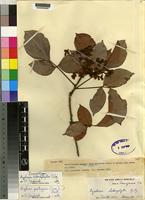
Agelaea heterophylla

5 Images see all

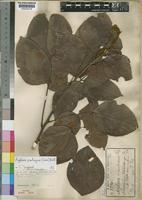
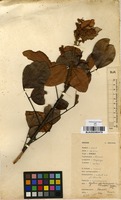
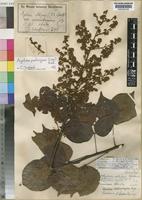
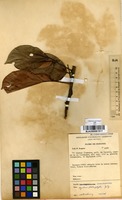
Agelaea heterophylla Gilg [family CONNARACEAE]
Filed as Agelaea heterophylla Gilg [family CONNARACEAE]
Type of Agelaea setulosa G.Schellenb. [family CONNARACEAE]
Filed as Agelaea heterophylla Gilg [family CONNARACEAE]
Isoneotype of Agelaea pentagyna (Lam.) Baill. [family CONNARACEAE]
Previous
Next

Name

Identification
Agelaea heterophylla Gilg [family CONNARACEAE ] (stored under name); Verified by Jonghind C, 1989 Agelaea pentagyna (Lam.) Baill. [family CONNARACEAE ] Verified by Jonghind C, 1989
Related name
  • Agelaea setulosa
  • Agelaea obliqua
  • Agelaea usambarensis
  • Agelaea heterophylla
  • Agelaea pentagyna

Flora

Entry for AGELAEA heterophylla Gilg [family CONNARACEAE]
Herbarium
Royal Botanic Gardens, Kew (K)
Collection
Flora of Tropical East Africa
Resource Type
Reference Sources
Entry From
Flora of Tropical East Africa, page 1, (1956) Author: J. H. Hemsley
Names
AGELAEA heterophylla Gilg [family CONNARACEAE], in N.B.G.B. 1: 66 (1895); Schellenb. in E.P. IV. 127: 75, fig. 11 (1938); T.T.C.L. 167 (1949). Type: Tanganyika, Morogoro, Stuhlmann (B, holo. †)
AGELAEA usambarensis Gilg ex Engl. [family CONNARACEAE], P.O.A. C: 86 (1895), in obs., nomen nudum
AGELAEA obliqua Gilg var. usambarensis [family CONNARACEAE], in P.O.A. C: 192 (1895). Type: Tanganyika, E. Usambara Mts., Nderema, 23 Feb. 1893, Holst 2234 (K, iso.!)
AGELAEA obliqua [family CONNARACEAE], sensu Battiscombe in T.S.K. 85 (1926) and Dale in T.S.K. 113 (1936); T.T.C.L., part 1, 21 (1940), non (Beauv.) Baill.
Information
Shrub, small tree or liane to 30 m. Young branches with dense brown indumentum, consisting of short stiff fascicled hairs projecting slightly above pale-coloured weaker fascicled hairs, persisting as greyish arachnoid covering but old stems becoming subglabrous and purple-brown in colour. Leaf-rhachis 2.5–18 cm. long, indumentum as above. Terminal leaflet obovate to broadly elliptic, 6–18 cm. long, 3.5–14 cm. wide, apex shortly acuminate, base rounded to cuneate, rigidly chartaceous; midrib channelled above with fascicled hairs along length; lower surface of leaflet with scattered fascicled hairs, usually 4-armed, dense on midrib and nerves; lateral nerves to 6 pairs, arcuate ascending (see Fig. 4/1 and 4/2). Inflorescence terminal, to 30 cm. long; rhachis, bracts, bracteoles and pedicels densely pubescent as on young stems. Flowers fragrant. Sepals lanceolate to oblong-lanceolate, ± 5 mm. long, 1–1.5 mm. wide, fringed with reddish glandular hairs. Petals white, elliptic to oblong, to 5.5 mm. long, 2 mm. wide. Stamens 10; long-stamened flowers, 5 episepalous stamens to 5 mm. long, 5 epipetalous to 3 mm. long; short-stamened flowers, 5 episepalous stamens to 3 mm. long, 5 epipetalous to 1.5 mm. long (see note, page 9); filament-tube to 1.5 mm. long; anthers apiculate. Ovary ovoid, ± 1 mm. long, densely pilose; styles of short-stamened flowers to 5 mm. long, long-stamened flowers to 1.5 mm. long, puberulous. Fruit a ± obovoid follicle, to 2 cm. long, 1.4 cm. diam.; pericarp red, with dense velvety pubescence. Seed black, to 1.4 cm. long, 8 mm. diam.; aril white, to 6 mm. long, lobulate and somewhat fleshy.
Range
DISTR. U2, 4; K4, 7; T1–3, 6, 7 southwards to Portuguese East Africa and the Rhodesias
Altitude range
900–2100 m.
Distribution
KENYA E. side of Mt. Kenya, 29 July 1913 (fl. & young fr.), Battiscombe 691!KENYA Teita Hills, Ngerenyi, below Verbi’s House, 7 Feb. 1953 (fr.), Bally 8783!TANGANYIKA Lushoto District Western Usambara Mts., Bumbuli-Mazumbai road, 8 May 1953 (fl.), Drummond & Hemsley 2437!, Kwamshemshi-Sakare road, 4 July 1953 (fr.), Drummond & Hemsley 3153!TANGANYIKA Morogoro District , probably above Morogoro, 21 Nov. 1932 (fr.), Wallace 463!UGANDA Bunyoro District Bugoma Forest, Feb. 1943 (fl.), Purseglove 1247!
Notes
VARIATION. A large range of leaflet-size is to be found in this species. Small bushy saplings which occur in quantity in the shrub-layer of most of the E. Tanganyika upland rain-forests have the largest leaflets whilst the smaller and rigidly chartaceous leaflets usually come from the top of the liane, either from the forest-canopy or on the forest-margins under conditions of higher light intensity. There is also a range of filament connation length, the longest staminal-tube being found in Uganda specimens and a progressive decrease is found southwards through Kenya to Tanganyika.

Related Materials

  • Terms and Conditions
  • Privacy Policy
  • Cookie Policy
  • Cookie Settings
  • Accessibility
  • Help
  • Contact Us
  • Facebook
  • Twitter
ITHAKA

JSTOR is part of ITHAKA, a not-for-profit organization helping the academic community use digital technologies to preserve the scholarly record and to advance research and teaching in sustainable ways.

©2000-2026 ITHAKA. All Rights Reserved. JSTOR®, the JSTOR logo, JPASS®, Aluka®, and ITHAKA® are registered trademarks of ITHAKA.

╳