JSTOR Global Plants Home
  • Home
  • Browse
  • About
  • Access
  • Account
    • Saved Items
    • Profile
  • Log in

Global Plants

Skip to Main Content
  • JSTOR Global Plants Home
  • Global Plants

    • Browse
    • About
    • Access
    • Account
      • Saved Items
      • Profile
Log in
  • Browse
  • About
  • Access
  • Account
    • Saved Items
    • Profile
Advanced Search

Compilation
Agathisanthemum quadricostatum

4 Images see all

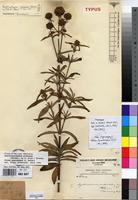
Isotype of Agathisanthemum quadricostatum Bremek. var. quadricostatum [family RUBIACEAE]
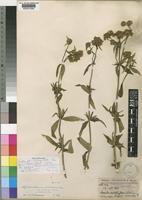
Type of Agathisanthemum quadricostatum Bremek. var. pubescens Bremek. [family RUBIACEAE]
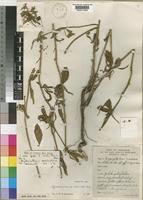
Type of Agathisanthemum assimile Bremek. [family RUBIACEAE]
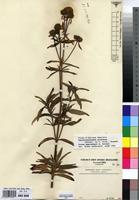
Type of Agathisanthemum quadricostatum Bremek. var. quadricostatum [family RUBIACEAE]
Previous
Next

Name

Identification
Agathisanthemum quadricostatum Bremek. [family RUBIACEAE ] Verified by Not on sheet, Agathisanthemum globosum (Hochst. ex A.Rich) Bremek. [family RUBIACEAE ] (stored under name); Verified by Robbrecht, 1992
Related name
  • Agathisanthemum quadricostatum
  • Oldenlandia bojeri
  • Agathisanthemum globosum
  • Agathisanthemum assimile

Flora

Entry for AGATHISANTHEMUM quadricostatum Bremek. [family RUBIACEAE]
Herbarium
Royal Botanic Gardens, Kew (K)
Collection
Flora of Tropical East Africa
Resource Type
Reference Sources
Entry From
Flora of Tropical East Africa, page 1, (1976) Author: B. VERDCOURT
Names
AGATHISANTHEMUM quadricostatum Bremek. [family RUBIACEAE], in Verh. K. Nederl. Akad. Wet., Afd. Natuurk., ser. 2, 48(2): 160 (1952). Type: Zaire, Katanga, Kasiki, de Witte 409 (BR, holo.)
?AGATHISANTHEMUM petersii Klotzsch [family ], in Peters, Reise Mossamb., Bot., 1: 295 (1861). Type: Mozambique, Querimba, Peters (B, holo. †)
AGATHISANTHEMUM quadricostatum Bremek. var. pubescens [family RUBIACEAE], in Verh. K. Nederl. Akad. Wet., Afd. Natuurk., ser. 2, 48(2): 161 (1952). Type: Malawi, Zomba, Purves 114 (K, holo.!)
Information
Erect herb with 1–several mostly sparsely branched glabrous to pubescent 4-ribbed stems 0.23–1.2 m. tall from a woody rootstock; bark eventually peeling from the older stems. Leaves subsessile; blades narrowly ovate to lanceolate, 1–7.5 cm. long, 0.2–2(–3) cm. wide, acute at the apex, cuneate at the base, glabrescent to scabridulous-pubescent on both surfaces or only margins and nerves beneath scabridulous; leaves mostly appearing whorled owing to the presence of short undeveloped leafy shoots at practically every node; stipule-sheath pubescent, 1–4(–7) mm. long with 3–9(–15) fimbriae 3–5(–10) mm. long. Flowers mostly heterostylous, in dense clusters arranged in corymbs or panicles, each cluster 0.7–2.2(–3.2) cm. wide; apparent peduncles 0–4.4 cm. long; pedicels 0.5–3 mm. long. Calyx-tube 0.9–1.5 mm. long, glabrous to densely pubescent; limb-tube 0.4–0.8 mm. long; lobes 2.5–3.5(–4.6) mm. long, glabrous save for ciliate margins, or densely pubescent. Corolla white, greenish or tinged purple, glabrous outside; tube 1.6–2 mm. long; lobes triangular-lanceolate, 1.7–2 mm. long, 0.8 mm. wide. Disc minutely papillate or sometimes with hairs. Style 1.4 mm. long in short-styled flowers, 2.6–4 mm. long in long-styled flowers. Capsule glabrous or pubescent, compressed-ellipsoid, 1.5–3 mm. tall, 1.6–2.8 mm. wide, grooved between the loculi, the beak ± 1 mm. long, crowned by the persistent calyx-lobes. Seeds blackish, ovoid-trigonous, 0.5 mm. long, reticulate.
Range
DISTR. T1, 4, 7, 8
Altitude range
500–1950 m.
Distribution
TANZANIA Buha District Kasakela Reserve, Melinda stream, 19 Nov. 1962, Verdcourt 3377!TANZANIA Mpanda District Kungwe Mt., Selimweguru, 24 July 1959, Newbould & Harley 4606!TANZANIA Tunduru District 96 km. from Masasi, 19 Mar. 1963, Richards 17950!
Distribution (external)
Zaire
Burundi
Mozambique
Malawi
Zambia
Rhodesia
South Africa
Transvaal (fide Bremekamp)
Notes
A. bojeri, with its usually rather open inflorescence of heterostylous flowers, short calyx-lobes, pubescent disc and mostly coastal distribution, is clearly distinct from A. globosum with isostylous flowers in very compact globose heads, longer calyx-lobes, finely papillate disc and mostly upland distribution. The “species” described above is in many ways intermediate between these two and, although undoubtedly not just direct hybrids since the two do not now occur together, it is very likely that it has arisen by hybridisation in the past. In Kenya and Uganda where the two could not have been in contact during any time relevant to the problem, no intermediate populations of any kind exist but in Tanzania, particularly in the west where it is very likely that A. bojeri could have occurred, it may have been eliminated through hybridisation with A. globosum to give rise to the ill-defined “species” here recognised for convenience. Heterostyly is not at all constant e.g. in Milne-Redhead & Taylor 8491 (Tanzania, 12 km. W. of Songea, by Kimarampaka stream) the inflorescence is as open as in many specimens of A. bojeri, the calyx-lobes are 4.6 mm. long, the disc has some hairs and the flowers have both anthers and style well exserted; it clearly has characters of both A. bojeri and A. globosum but the general appearance is that of A. quadricostatum. Another intermediate specimen is Lunan H 86/46 (Tanzania, E. of Tabora, Igalula), a poor specimen made the type of a supposed new species, A. assimile, by Bremekamp. This has an open inflorescence, calyx-lobes 4 mm. long, the disc distinctly hairy and the flowers with both anthers and style exserted. He distinguished it from A. bojeri by having the leaf-nerves all springing from the lower half of the leaf-blade (not true so far as can be seen from the specimen), the stipule-sheath, calyx-lobes and capsule all longer. Further it is distinguished from A. angolense Bremek. by not having a cork layer which peels, although in the type specimen the bark is clearly peeling off; in the diagnosis it is among other things distinguished from A. quadricostatum by its hairy disc and in not having a 4-angled stem, but the first character is variable in A. quadricostatum and the type of A. assimile has some parts of the stem very distinctly 4-ribbed. The genus is much commended to local workers in East Africa for field and experimental studies; only by such means will the confusion be resolved.

Related Materials

  • Terms and Conditions
  • Privacy Policy
  • Cookie Policy
  • Cookie Settings
  • Accessibility
  • Help
  • Contact Us
  • Facebook
  • Twitter
ITHAKA

JSTOR is part of ITHAKA, a not-for-profit organization helping the academic community use digital technologies to preserve the scholarly record and to advance research and teaching in sustainable ways.

©2000-2026 ITHAKA. All Rights Reserved. JSTOR®, the JSTOR logo, JPASS®, Aluka®, and ITHAKA® are registered trademarks of ITHAKA.

╳