JSTOR Global Plants Home
  • Home
  • Browse
  • About
  • Access
  • Account
    • Saved Items
    • Profile
  • Log in

Global Plants

Skip to Main Content
  • JSTOR Global Plants Home
  • Global Plants

    • Browse
    • About
    • Access
    • Account
      • Saved Items
      • Profile
Log in
  • Browse
  • About
  • Access
  • Account
    • Saved Items
    • Profile
Advanced Search

Compilation
Aeschynomene mearnsii

5 Images see all

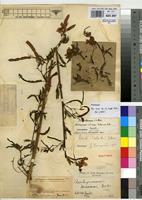
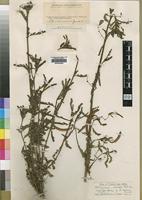
Syntype of Aeschynomene mearnsii De Wild. [family FABACEAE]
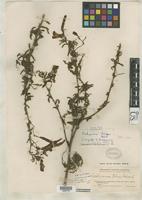
Isosyntype of Aeschynomene mearnsii Wildeman, E.A.J. de 1925 [family FABACEAE]
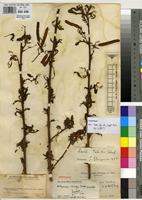
Syntype of Aeschynomene mearnsii De Wild. [family FABACEAE]
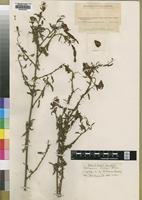
Syntype of Aeschynomene mearnsii DeWild. [family LEGUMINOSAE]
Previous
Next

Name

Identification
Aeschynomene schimperi Hochst. ex A.Rich. [family LEGUMINOSAE ] (stored under name); Aeschynomene mearnsii DeWild. [family LEGUMINOSAE ] Verified by Verdcourt,B.,
Related name
  • Aeschynomene mearnsii
  • Aeschynomene schimperi

Flora

Entry for AESCHYNOMENE schimperi A. Rich. [family LEGUMINOSAE-PAPILIONOIDEAE]
Herbarium
Royal Botanic Gardens, Kew (K)
Collection
Flora of Tropical East Africa
Resource Type
Reference Sources
Entry From
Flora of Tropical East Africa, page 1, (1971) Author: J. B. GILLETT, R. M. POLHILL & B. VERDCOURT
Names
AESCHYNOMENE schimperi A. Rich. [family LEGUMINOSAE-PAPILIONOIDEAE], Tent. Fl. Abyss. 1: 202 (1847); Bak. in F.T.A. 2: 146 (1871); L.T.A.: 287 (1929); J. Léon. in F.C.B. 5: 262, fig. 18/D (1954); Hepper in F.W.T.A., ed. 2, 1: 580 (1958); F.F.N.R.: 141 (1962). Types: N. Ethiopia, Debrasina, Quartin-Dillon (P, syn.) & Shire [Chiré], Quartin-Dillon (P, syn.) & Adua, Schimper 1073 (P, syn., BM, K, UPS, isosyn.!) & Axum, Schimper (P, syn., No. 1528, BM, isosyn.!)
AESCHYNOMENE telekii Schweinf. [family LEGUMINOSAE-PAPILIONOIDEAE], in von Höhnel, Zum Rud.-See und Steph.-See, Anhang: 866 (1892); L.T.A.: 286 (1929); W.F.K.: 42 (1948); F.P.N.A. 1: 320 (1948); T.T.C.L.: 407 (1949). Type: Kenya, N. Kikuyu, von Höhnel (B, †) & Sudan, Bahr el Ghazal, Bongo, Schweinfurth 1492 & 2500 (both B, †)
AESCHYNOMENE paludicola Harms [family LEGUMINOSAE-PAPILIONOIDEAE], in E.J. 30: 329 (1901); L.T.A.: 287 (1929),. Types: Tanganyika, Mbeya District, Ussangu, Msimasi swamp, Goetze 1027 (B, syn; †, K, iso!) & without locality, Stuhlmann 4187 (B, †, BM, K, iso!)
AESCHYNOMENE mearnsii De Wild. [family LEGUMINOSAE-PAPILIONOIDEAE], in Rev. Zool. Afr. 13, Suppl. Bot.: B 6 (1925); L.T.A.: 289 (1929). Types: Kenya, Sotik country, Uaso [Eusso] Nyiro R., Mearns 471 (BR, syn., BM, isosyn.!) & trail from Nyeri to Wambugu, Mearns 1997 (BR, syn., BM, US, isosyn.!)
AESCHYNOMENE schimperi Peter var. grandiflora [family LEGUMINOSAE-PAPILIONOIDEAE], in Abhandl. Ges. Wiss. Göttingen, Math.-Phys. Klasse, Neue Folge 13 (2): 82 (1928). Type: Tanganyika, no locality or specimens cited but following is written up as var. grandiflora– E. Usambara Mts., Longuza [Longusa] to Sigi, Peter 48600 (B, lecto.!)
Information
Shrubby aromatic herb or small shrub, 0.6–3 m. tall, usually erect but rarely straggling. Stems soft at the base, pubescent to hispid with yellow often viscid tubercular-based hairs, sometimes glabrous, often reddish. Leaves sometimes sensitive, (10–)18–68-foliolate; leaflets linear to linear-oblong, 0.2–1.2 cm. long, 1–2.5 mm. wide, rounded to slightly emarginate and with a deciduous bristle at the apex, obliquely rounded at the base, subentire or very finely serrulate, margins often ciliolate, glabrous; venation often obscure; petiole and rhachis 1–8(–11.5) cm. long, glabrescent to hairy; petiolules obsolete; stipules lanceolate, straight, spurred, 0.6–2 cm. long, 2–3 mm. wide, at length deciduous, veined. Inflorescences axillary, 1 (rarely 2–4)-flowered; rhachis 5–6 cm. long; peduncle 0.5–5 cm. long; pedicels 0.7–1.5(–3 in fruit) cm. long; upper bract sterile, ovate, 3–6 mm. long, acuminate; lower bract or bracts ovate, 2–4 mm. long, sometimes acuminate, amplexicaul; bracteoles ovate-lanceolate, 3–7 mm. long, 1–2 mm. wide, acuminate, mostly ciliate. Calyx glabrescent to hairy, 2-lipped, the lips oblong, subequal, 0.6–1.8 cm. long, 3–8 mm. wide, one entire or rarely 2-fid, the other entire or rarely 2–3-fid. Standard orange-yellow to orange, sometimes streaked with crimson, rounded, 0.8–3.3 cm. long and wide, glabrous; wings and keel greenish, speckled or lined with purple, the petals of the latter bristly and laciniate along their lower margins. Pods linear, straight or rarely curved, 3–10 cm. long excluding the 0.4–1.2 cm. stipe, (4–)6–28-jointed, glabrous to densely hairy, the margins straight; articles oblong, 3–6 mm. long, 4–7 mm. wide, compressed, smooth. Seeds brown or purplish-brown, irregularly oblong, produced slightly near the small eccentric hilum, longest dimension 3.8–4.5 mm., shorter dimension 2.8–3 mm., 1.5–1.7 mm. thick. Fig. 55.
Range
DISTR. U1–4; K1, 3, 4, 6, 7; T1–5, 7, 8 widespread throughout tropical Africa from Senegal and Ethiopia to Rhodesia, also in Madagascar
Altitude range
60–2340 m.
Distribution
KENYA Northern Frontier Province Mathews Range, Kichich R., 6 Dec. 1960, Kerfoot 2427!KENYA Kiambu District Ruiru, Gatundiri, 8 June 1952, Kirrika 178!KENYA Masai District Game reserve 24 km. SW. of Nairobi, Ritchie & Napier 2654 in C.M. 5146 !TANGANYIKA Mwanza District Bukumbi [Buhumbi], Kashishi, 16 May 1952, Tanner 812 !TANGANYIKA Ufipa District Rukwa Valley, Milepa, 8 Feb. 1947, Pielou 90 !TANGANYIKA Dodoma District 36.4 km. S. of Itigi Station on the Chunya road, 17 Apr. 1964, Greenway & Polhill 11615!UGANDA W. Nile District 0.4 km. S. of Maracha rest camp, 27 July 1953, Chancellor 57!UGANDA Ankole District Bushenyi, Apr. 1939, Purseglove 663!UGANDA Mbale District Bugishu, Bulucheke [Bulicheke], July 1926, Maitland 1217 !
Notes
Some specimens, e.g. Pielou 77 (Tanganyika, Rukwa Valley, Milepa), have small wing-petals, under half the length of the keel; this is not I think of much significance. Larger flowered specimens may be polyploids.

Related Materials

  • Terms and Conditions
  • Privacy Policy
  • Cookie Policy
  • Cookie Settings
  • Accessibility
  • Help
  • Contact Us
  • Facebook
  • Twitter
ITHAKA

JSTOR is part of ITHAKA, a not-for-profit organization helping the academic community use digital technologies to preserve the scholarly record and to advance research and teaching in sustainable ways.

©2000-2026 ITHAKA. All Rights Reserved. JSTOR®, the JSTOR logo, JPASS®, Aluka®, and ITHAKA® are registered trademarks of ITHAKA.

╳